

More than 80 percent of culinary travellers now say authentic food encounters shape their trips more than any other activity. If you are a curious British or American explorer searching for meaning beyond what is served on the plate, Paris, Seville, and Berlin offer the sensory thrills and personal chef connections other cities only promise. Dive into the traditions, stories, and hands-on experiences that reveal how real culinary heritage lives in every bite.
Table of Contents
- Authentic Food Experiences: Core Principles Defined
- Tradition, Place, and Cultural Narrative
- Role of Local Ingredients and Cooking Methods
- Chef Involvement and Personal Connection
- Risks of Commercialisation and Misrepresentation
Key Takeaways
| Point | Details |
|---|---|
| Embrace Local Ingredients | Prioritising local ingredients enhances cultural immersion and connects diners to regional identities. |
| Engage with Culinary Creators | Direct interaction with chefs and food artisans fosters personal connections and enriches cultural understanding. |
| Recognise Cultural Narratives | Understanding the historical and cultural context of dishes deepens appreciation and transforms meals into meaningful exchanges. |
| Beware of Commercialisation | Be cautious of commercialised offerings that often simplify and misrepresent authentic culinary experiences. |
Authentic Food Experiences: Core Principles Defined
Authentic food experiences transcend mere culinary consumption. They represent a profound intersection of cultural narrative, tradition, and sensory exploration. Understanding culinary heritage involves recognising food not just as sustenance, but as a dynamic storytelling medium that connects people to their cultural roots.
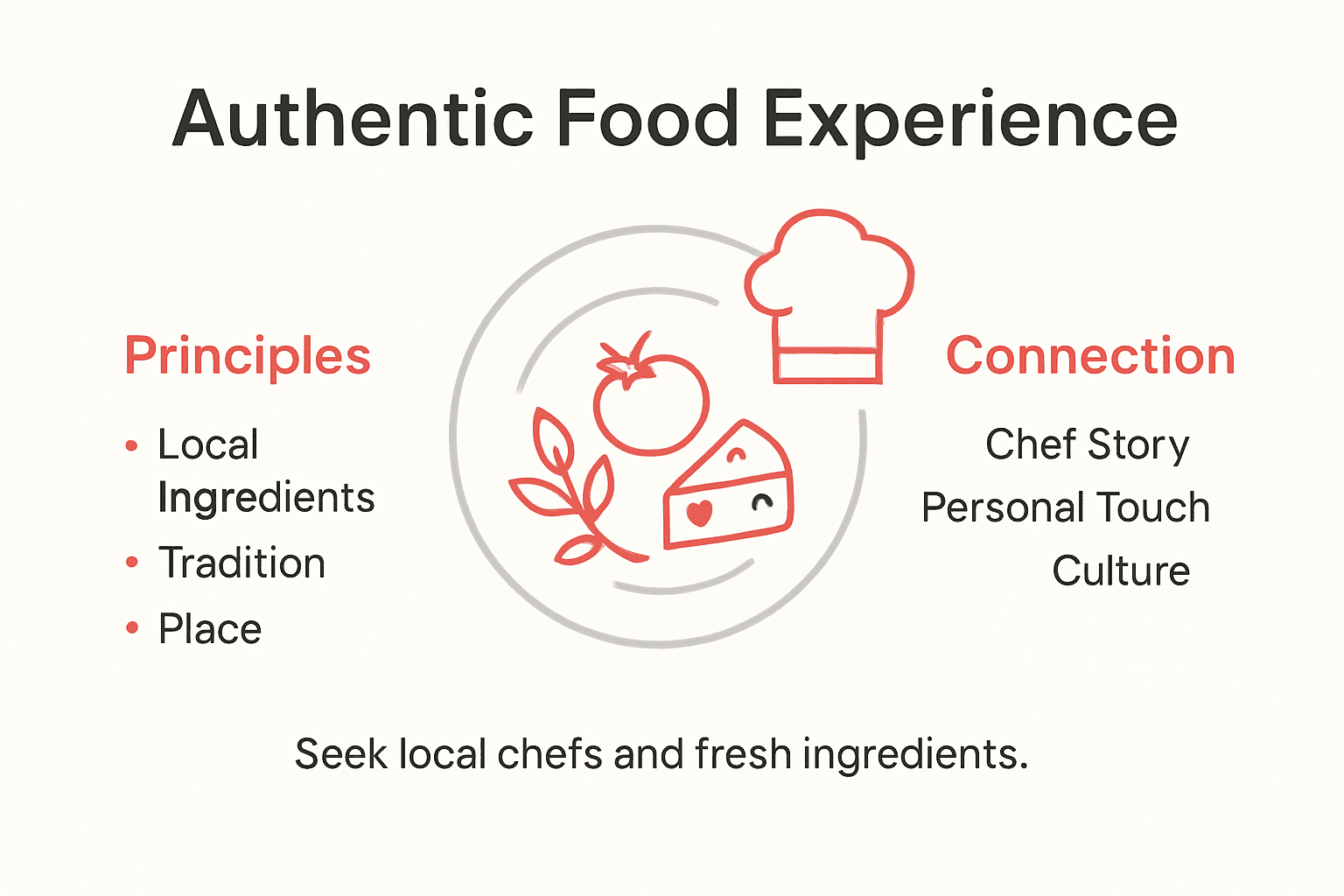
At its core, an authentic food experience comprises several fundamental principles. First, it demands the use of local ingredients sourced directly from regional producers. Second, it requires a deep engagement with the historical and cultural context surrounding each dish. Interpretive perspectives on food authenticity suggest that true authenticity emerges from understanding the socio-cultural narratives embedded within culinary traditions.
Authentic experiences also prioritise direct interaction with food creators. This means connecting with local chefs, farmers, and food artisans who carry generational knowledge. By understanding their techniques, stories, and emotional connections to ingredients, travellers transform from passive consumers to active cultural participants. The experience becomes less about eating and more about cultural immersion and meaningful exchange.
The following table summarises how different factors contribute uniquely to authentic food experiences:
| Factor | Unique Contribution | Impact on Experience |
|---|---|---|
| Local Ingredients | Reflect region’s environment | Enhance cultural immersion |
| Traditional Techniques | Preserve generational practices | Create memorable, unique flavours |
| Chef Involvement | Share personal narratives | Foster guest connection and engagement |
| Cultural Narratives | Communicate heritage and identity | Deepen understanding and appreciation |
Pro tip: When seeking authentic food experiences, prioritise small, family-run establishments and engage directly with local culinary experts to uncover hidden gastronomic narratives.
Tradition, Place, and Cultural Narrative
Tradition represents the foundational framework of authentic culinary experiences, where food becomes a living narrative connecting generations and communities. Authentic food experiences emerge as vehicles for cultural transmission, transcending simple sustenance to become profound expressions of heritage and identity.
Place plays a critical role in defining these experiences, anchoring culinary traditions in specific geographical and cultural landscapes. Regional ingredients, localised cooking techniques, and environmental influences create unique gastronomic signatures that cannot be replicated elsewhere. Each geographical context contributes distinctive flavour profiles, cooking methods, and cultural meanings that transform food from mere nutrition into a complex cultural artefact.

Cultural narratives embedded within culinary practices reveal deeper meanings beyond taste. These stories communicate historical migrations, agricultural practices, social structures, and community values. When travellers engage with these narratives, they move beyond passive consumption into active cultural understanding, experiencing food as a dynamic, living expression of human experience and collective memory.
Pro tip: Engage directly with local food producers and chefs to uncover the rich cultural stories behind each dish, transforming your culinary experience from a simple meal to a profound cultural encounter.
Role of Local Ingredients and Cooking Methods
Local ingredients form the fundamental cornerstone of authentic culinary experiences, representing far more than simple food components. Ingredient selection profoundly influences tourist perceptions and cultural understanding, transforming meals from mere sustenance into immersive cultural narratives. The provenance of each ingredient tells a story of landscape, agricultural heritage, and community traditions.
Traditional cooking methods represent another critical dimension of authenticity, preserving generational knowledge and cultural practices. These techniques—often passed down through family lineages—incorporate unique preparation styles that cannot be replicated through standardised approaches. From slow-cooking techniques in rural kitchens to specialised regional preservation methods, each cooking process reflects the intricate relationship between people, environment, and culinary traditions.
Authentic local cuisine significantly impacts tourist satisfaction and destination branding, demonstrating that food is more than nutrition. It is a powerful medium of cultural communication. Regional ingredients and heritage cooking practices create sensory experiences that connect travellers directly to local identities, transforming dining from a transactional activity into a profound cultural exchange that transcends geographical boundaries.
Pro tip: Seek out small, family-run establishments where traditional cooking methods are still practised, and engage directly with local chefs to understand the deeper cultural significance of each dish.
Chef Involvement and Personal Connection
Chef involvement transforms culinary experiences from mere dining into profound cultural storytelling. Chefs act as critical cultural ambassadors, transmitting regional identity through their personal passion and intimate knowledge. Their role extends beyond food preparation, becoming a bridge between traditional culinary practices and contemporary gastronomic exploration.
Personal connections emerge through narrative and technique, where chefs share generational wisdom and individual perspectives. Historical and contemporary practices demonstrate how individual chefs shape food culture, reconstructing culinary traditions through personal stories and unique interpretations. Each interaction becomes an opportunity to understand deeper cultural contexts, transforming dining from a transactional experience into a meaningful exchange of knowledge and emotion.
Authentic culinary experiences are fundamentally about human connection. Chefs do not simply prepare food; they curate experiences that reveal the soul of a culture. Through their personal narratives, cooking techniques, and willingness to share intimate culinary knowledge, they invite guests into a deeper understanding of regional identity, agricultural heritage, and community traditions. This personal engagement elevates dining from consumption to a form of cultural dialogue.
Pro tip: Engage directly with chefs during your culinary experiences, asking about their personal history and the stories behind their dishes to unlock deeper cultural insights.
Risks of Commercialisation and Misrepresentation
Commercialisation presents a significant threat to authentic culinary experiences, creating complex tensions between market demands and cultural integrity. Gastrotourism increasingly confronts challenges where market-driven imperatives distort traditional food narratives, transforming genuine cultural expressions into superficial, commodified performances designed primarily for tourist consumption.
Global supply chains introduce substantial risks of food fraud and misrepresentation, undermining the fundamental principles of authenticity. Commercial strategies frequently employ mislabelling, imitation, and counterfeiting techniques that deliberately obscure a dish’s true origins. These practices not only mislead consumers but also systematically erode the cultural significance and historical depth of traditional cuisines, reducing rich gastronomic traditions to simplified, standardised experiences.
The consequences of such commercialisation extend beyond culinary misrepresentation. They fundamentally compromise the cultural exchange that makes food experiences meaningful. When commercial interests prioritise marketability over cultural accuracy, they strip away the nuanced stories, generational techniques, and emotional connections that transform dining from a transactional activity into a profound cultural dialogue. This process of commodification risks creating a globalised, homogenised food landscape that fails to honour the unique identities of local communities.
Here is a comparison between authentic food experiences and commercialised food offerings:
| Aspect | Authentic Food Experiences | Commercialised Offerings |
|---|---|---|
| Ingredient Sourcing | Locally and seasonally sourced | Mass-produced, global supply |
| Preparation Methods | Traditional, artisanal | Standardised, efficiency-driven |
| Cultural Depth | Rich with genuine narratives | Simplified or surface-level |
| Consumer Engagement | Interactive, story-driven | Passive, transactional |
Pro tip: Seek out small, locally-owned establishments and engage directly with chefs to ensure your culinary experience remains genuine and culturally respectful.
Discover Authentic Culinary Journeys with The Chef’s Tours
Authenticity in food is about more than just taste. It is about connecting with local chefs who share personal stories, regional ingredients, and traditional techniques exactly as described in the article. For travellers seeking to escape commercialised dining and experience genuine cultural immersion, The Chef’s Tours offers curated culinary adventures in vibrant cities such as Paris, Seville, Berlin, and Mexico City. These small-group tours bring you face-to-face with passionate chefs creating memorable food experiences rooted in tradition and place.
Ready to step beyond ordinary dining and unlock authentic food narratives? Explore our The Chef Tour Cities – Explore Culinary Destinations to find your perfect cultural tasting journey.

Don’t settle for simplified or standardised meals. Connect directly with local chefs to discover the heart and soul of each culinary tradition. Read what fellow travellers say about their experiences on The Chef Tour Reviews | What Travelers Say. Start planning your immersive culinary experience today at https://thecheftours.com and transform your next trip into a profound cultural dialogue.
Frequently Asked Questions
What are the core principles of an authentic food experience?
Authentic food experiences focus on using local ingredients, engaging with cultural and historical contexts, and fostering direct interactions with food creators such as local chefs and farmers. These elements combine to create a meaningful cultural immersion rather than just a meal.
How do local ingredients enhance the authenticity of culinary experiences?
Local ingredients reflect the environment and agricultural heritage of a region, providing a richer, more genuine cultural narrative. They help transform meals from mere sustenance into immersive storytelling that connects eaters to the local identity and traditions.
Why is chef involvement important in creating authentic food experiences?
Chef involvement adds a personal narrative to the culinary experience. Chefs share their techniques and stories, helping diners connect more deeply to the culture and history behind the dishes. This engagement transforms eating into a form of cultural dialogue.
What risks does commercialisation pose to authentic food experiences?
Commercialisation can distort traditional food narratives, leading to the misrepresentation of dishes and the loss of cultural significance. This commodification often reduces food to a superficial experience, diminishing the genuine stories and techniques that make it meaningful.