

Every year, thousands of british culinary tourists arrive in Paris eager to uncover the true story behind the iconic croissant. Nearly 85 percent of Parisian bakeries now craft this flaky pastry daily, yet few visitors realize its roots stretch beyond French soil to Austrian origins. Exploring the croissant’s journey reveals a fascinating tale of European innovation, cultural symbolism, and exquisite craftsmanship that transforms every bite into a taste of history.
Table of Contents
- Defining The Croissant And Common Myths
- The Austrian Kipferl And Legendary Origins
- How French Boulangeries Reinvented The Croissant
- Modern Variations And Global Adaptations
- Cultural Role In Parisian Cuisine And Traditions
Key Takeaways
| Point | Details |
|---|---|
| Culinary Origins of the Croissant | The croissant evolved from the Austrian kipferl, showcasing a rich cultural exchange between Austria and France. Its transformation represents a significant culinary evolution in the art of French baking. |
| Cultural Significance in Paris | The croissant embodies French culinary heritage, symbolising tradition and identity within daily Parisian life. It plays a vital role in connecting individuals to their cultural roots. |
| Modern Innovations | The croissant has inspired diverse global adaptations, leading to creative variations such as the cronut, demonstrating the evolving nature of culinary traditions. |
| Expert Tips for Enjoyment | When enjoying a croissant, focus on the visual aspects such as layers and exterior colour, which reflect the baker’s skill in crafting this iconic pastry. |
Defining the Croissant and Common Myths
The croissant represents far more than a simple pastry – it is a culinary symbol deeply rooted in European gastronomic heritage. While many assume this flaky delicacy originated in France, historical evidence suggests a more nuanced origin story. Tracing the croissant’s true roots reveals a fascinating journey from Austrian bakeries to Parisian patisseries.
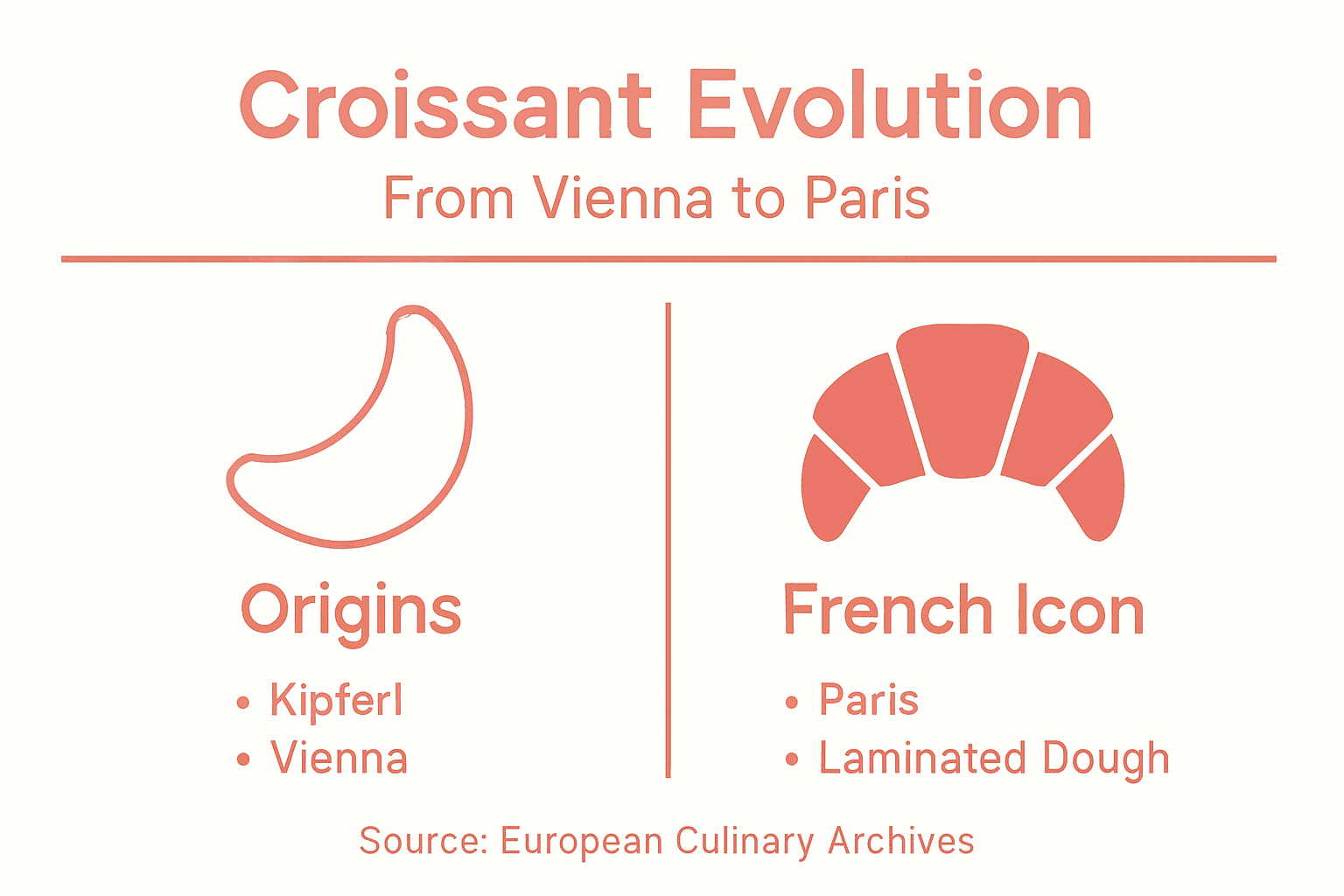
Contrary to popular belief, the croissant was not invented as a celebratory pastry marking the Ottoman Empire’s defeat, as many folk tales suggest. Instead, it evolved from the kipferl, a crescent-shaped Austrian bread dating back to the 13th century. French bakers gradually transformed this simple bread into the delicate, layered pastry we recognise today, perfecting the laminated dough technique that creates its signature buttery, flaky texture.
The cultural mythology surrounding the croissant is as complex as its preparation. Scholarly research on Viennoiserie traditions demonstrates how culinary narratives are often intertwined with personal experiences and collective memory. What began as a regional Austrian speciality became a quintessential French icon, reflecting the dynamic nature of gastronomic evolution and cultural exchange.
Expert tip: When enjoying a croissant, look for fine, even layers and a golden-brown exterior – true indicators of masterful laminated pastry technique.
The Austrian Kipferl and Legendary Origins
The story of the croissant begins in Vienna, where the kipferl emerged as a culinary treasure with a rich historical tapestry. Origins of the crescent-shaped pastry are deeply intertwined with legends of military triumph and cultural symbolism, particularly surrounding the Ottoman siege of Vienna in 1683.
According to popular folklore, the kipferl’s distinctive crescent shape was no accident. Historical narratives of Vienna’s bakeries suggest the pastry was deliberately crafted to symbolise the defeat of Ottoman forces, with its shape mimicking the crescent moon on the Ottoman emblem. Bakers reportedly created these pastries as a triumphant culinary commemoration, transforming a moment of military tension into a delectable symbol of resistance.
While the legendary account of the kipferl’s creation remains romanticised, its cultural significance cannot be understated. The pastry represents more than a mere baked good – it embodies a moment of historical resilience, cultural exchange, and gastronomic innovation. August Zang’s Viennese bakery would later play a crucial role in introducing this pastry to Paris, setting the stage for the croissant’s eventual transformation and global popularity.
Expert tip: When exploring European pastry history, remember that culinary traditions often carry deeper cultural narratives beyond their delicious exteriors.
To further clarify their evolution, here is a summary of the key differences between the Austrian kipferl and the French croissant:
| Attribute | Austrian Kipferl | French Croissant |
|---|---|---|
| Origin Period | 13th century | 19th-20th century |
| Key Ingredient | Simple yeast or brioche dough | Laminated butter dough |
| Texture | Dense, bread-like | Light, flaky, layered |
| Symbolism | Linked to military folklore | Icon of French craft |
| Typical Shape | Crescent | Crescent |
How French Boulangeries Reinvented the Croissant
The transformation of the Austrian kipferl into the quintessential French croissant represents a remarkable culinary evolution. French pastry innovation began with August Zang’s influential Viennese bakery in Paris, which introduced the foundational techniques that would ultimately revolutionise French baking.
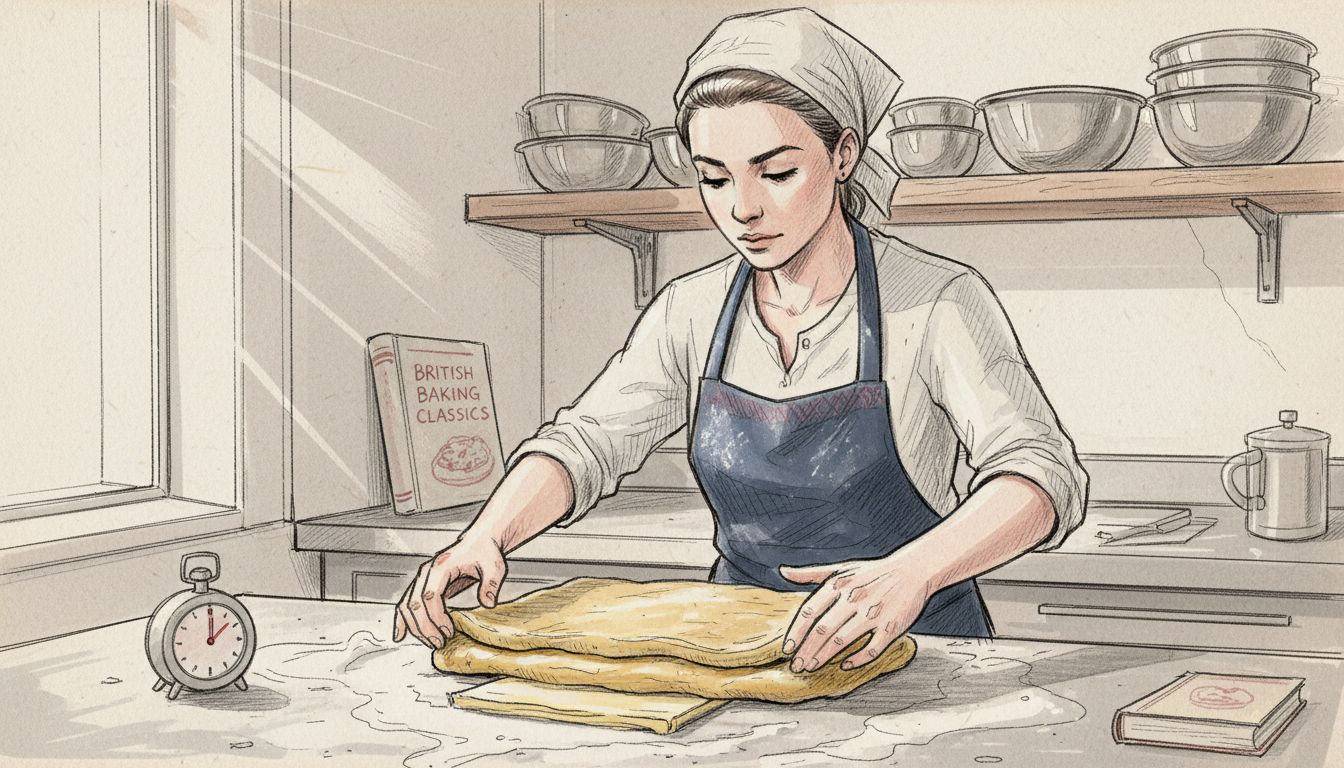
Crucial to the croissant’s development was the lamination technique – a sophisticated method of folding butter into multiple layers of yeast dough. Laminated dough techniques allowed French bakers to create the impossibly delicate, flaky pastry that distinguished the croissant from its heavier Austrian predecessor. Sylvain Claudius Goy’s 1915 recipe codified this transformation, replacing the dense brioche-style dough with the now-legendary multi-layered pastry.
The French boulangeries did more than merely adapt a foreign recipe; they elevated the kipferl into a culinary art form. By meticulously layering butter and dough, rolling and folding with precision, and baking to achieve a golden, crisp exterior, they created a pastry that would become a global symbol of French gastronomic excellence. The croissant emerged not just as a breakfast item, but as a cultural icon representing the refined craftsmanship of Parisian bakeries.
Expert tip: To truly appreciate a perfect croissant, observe its layers – the more delicate and numerous the layers, the more skilful the baker.
Modern Variations and Global Adaptations
The humble croissant has transformed from a traditional French pastry into a global culinary phenomenon, inspiring unprecedented creativity among bakers worldwide. Global croissant innovations have expanded far beyond its original butter-based recipe, introducing an extraordinary array of sweet and savoury variations that challenge traditional boundaries.
Modern pastry chefs have reimagined the croissant through inventive hybrid creations, most notably the cronut – a revolutionary pastry blending croissant and donut techniques. Contemporary culinary experimentation has driven these innovations, with social media amplifying unique interpretations from around the globe. Bakeries now offer fillings ranging from classic ham and cheese to unexpected combinations like matcha cream, chocolate-hazelnut spread, and even experimental savoury options with spinach, feta, and sundried tomatoes.
This global reinvention reflects more than culinary trends; it represents a cultural dialogue where traditional techniques meet contemporary creativity. From Tokyo’s intricate matcha-infused croissants to New York’s avant-garde interpretations, bakers are transforming this quintessential French pastry into a canvas for local flavours and innovative techniques. The croissant has become a global ambassador of gastronomic imagination, proving that true culinary excellence knows no geographical boundaries.
Expert tip: When exploring croissant variations, embrace unexpected combinations – the most extraordinary flavours often emerge from the most surprising pairings.
Below is a quick reference to notable modern croissant variations and their key features:
| Variation | Main Flavour/Style | Region of Popularity |
|---|---|---|
| Classic Butter | Rich, buttery layers | France, Europe |
| Ham & Cheese | Savoury, filled | France, UK, Australia |
| Matcha Cream | Earthy, green tea cream | Japan, East Asia |
| Chocolate-Hazelnut | Sweet, nutty filling | Italy, Western Europe |
| Cronut | Hybrid, sweet doughnut | United States, globally |
Cultural Role in Parisian Cuisine and Traditions
The croissant transcends mere sustenance in Paris, embodying a profound cultural narrative that connects generations through culinary craftsmanship. Croissant’s cultural significance extends far beyond its delectable layers, representing a ritual of daily life that symbolises French identity and gastronomic pride.
In the vibrant café culture of Paris, the croissant is more than breakfast – it is a daily communion with tradition. Parisian culinary heritage reveals how this pastry encapsulates the nuanced art of French baking, where each buttery fold represents generations of skill, patience, and uncompromising quality. Morning routines in Parisian households and cafés are incomplete without the gentle crackle of a freshly baked croissant, a sensory experience that connects individuals to their cultural roots.
Beyond its gustatory pleasure, the croissant serves as a subtle ambassador of French refinement. Its preparation demands precision, its consumption requires appreciation, and its cultural meaning reflects a society that values craftsmanship, leisure, and the art of savouring life’s simple pleasures. From bustling street-corner bakeries to prestigious Michelin-starred establishments, the croissant remains a democratic symbol of French culinary excellence.
Expert tip: When in Paris, observe local patrons – the way they select, break, and enjoy a croissant reveals volumes about the pastry’s deep cultural significance.
Discover the True Flavour of Parisian Croissants with Expert Chef-Led Tours
Understanding the rich history behind the croissant reveals much about cultural traditions and culinary artistry. If you have ever wondered how the Austrian kipferl transformed into the iconic French croissant known for its delicate, flaky layers and buttery taste then joining a Parisian culinary experience is the perfect next step. Our tours provide an insider’s glimpse into the craftsmanship and story behind every croissant enjoyed at authentic local boulangeries.

Step into the world of Parisian food culture with Chef PJ as your guide. Savour expertly crafted pastries while uncovering the layered history of viennoiserie and lamination techniques that make croissants truly special. Don’t miss this chance to taste tradition and innovation combined. Book your exclusive food tour today at The Chef’s Tours and embrace the deep cultural narratives that accompany every bite.
Frequently Asked Questions
What is the origin of the croissant?
The croissant originated from the kipferl, a crescent-shaped Austrian bread dating back to the 13th century. It evolved in France into the flaky pastry we know today through the development of laminated dough techniques.
How did the croissant become a French icon?
The croissant became a French icon through the efforts of bakers in France who transformed the original Austrian kipferl into a delicate pastry, perfecting the lamination process which created its signature flaky texture.
What is the significance of the croissant in Parisian culture?
In Parisian culture, the croissant represents a daily ritual connected to French culinary tradition. It embodies craftsmanship and is a symbol of pride, forming a staple in the morning routines of locals, as well as showcasing the artistry of French baking.
What are some modern variations of the croissant?
Modern variations of the croissant include hybrid pastries like the cronut, filled options such as ham and cheese, and inventive flavours like matcha cream and chocolate-hazelnut. These adaptations reflect a blend of traditional techniques and contemporary culinary creativity.