

Every british culinary traveler searching for authentic connections will be surprised that more than 30 UNESCO World Heritage sites shape Mexico City’s cultural food scene. Stepping into this vibrant capital means uncovering layers of Aztec innovation and colonial history where markets and restaurants blend ancient tradition with bold chef-driven creativity. Expect to discover how global heritage, sustainable farming, and local expertise turn every bite into a lesson in living history.
Table of Contents
- Unesco World Heritage: Core Definition
- Aztec Legacy And Pre-Hispanic Foundations
- Historic Centre And Xochimilco Canals
- Criteria For Unesco Selection In Mexico City
- Impacts On Culinary Culture And Local Chefs
Key Takeaways
| Point | Details |
|---|---|
| UNESCO World Heritage Significance | UNESCO World Heritage designation showcases sites of outstanding universal value, transcending national boundaries and highlighting shared human heritage. |
| Cultural and Natural Heritage Categories | The classification encompasses both cultural and natural heritage, emphasising the importance of preserving diverse global legacies. |
| Impact on Culinary Culture | UNESCO recognition enhances Mexico City’s culinary landscape, empowering local chefs as cultural ambassadors and promoting traditional practices. |
| Historical Layers in Urban Design | Mexico City’s Historic Centre exemplifies a unique fusion of pre-Hispanic and colonial architectures, revealing complex cultural narratives through its urban layout. |
UNESCO World Heritage: Core Definition
UNESCO World Heritage represents a global recognition programme designed to protect and celebrate extraordinary cultural and natural sites that possess outstanding universal value. Established in 1972 through the UNESCO World Heritage Convention, this international framework identifies landmarks and locations deemed critically important to humanity’s collective heritage.
At its core, the World Heritage designation represents more than a simple label. It signifies that a particular site possesses exceptional significance across multiple dimensions – historical, artistic, scientific, or environmental. These sites are considered so remarkable that they transcend national boundaries and represent shared human achievement. To qualify, locations must demonstrate exceptional universal value, meeting rigorous criteria established by UNESCO’s intergovernmental committee.
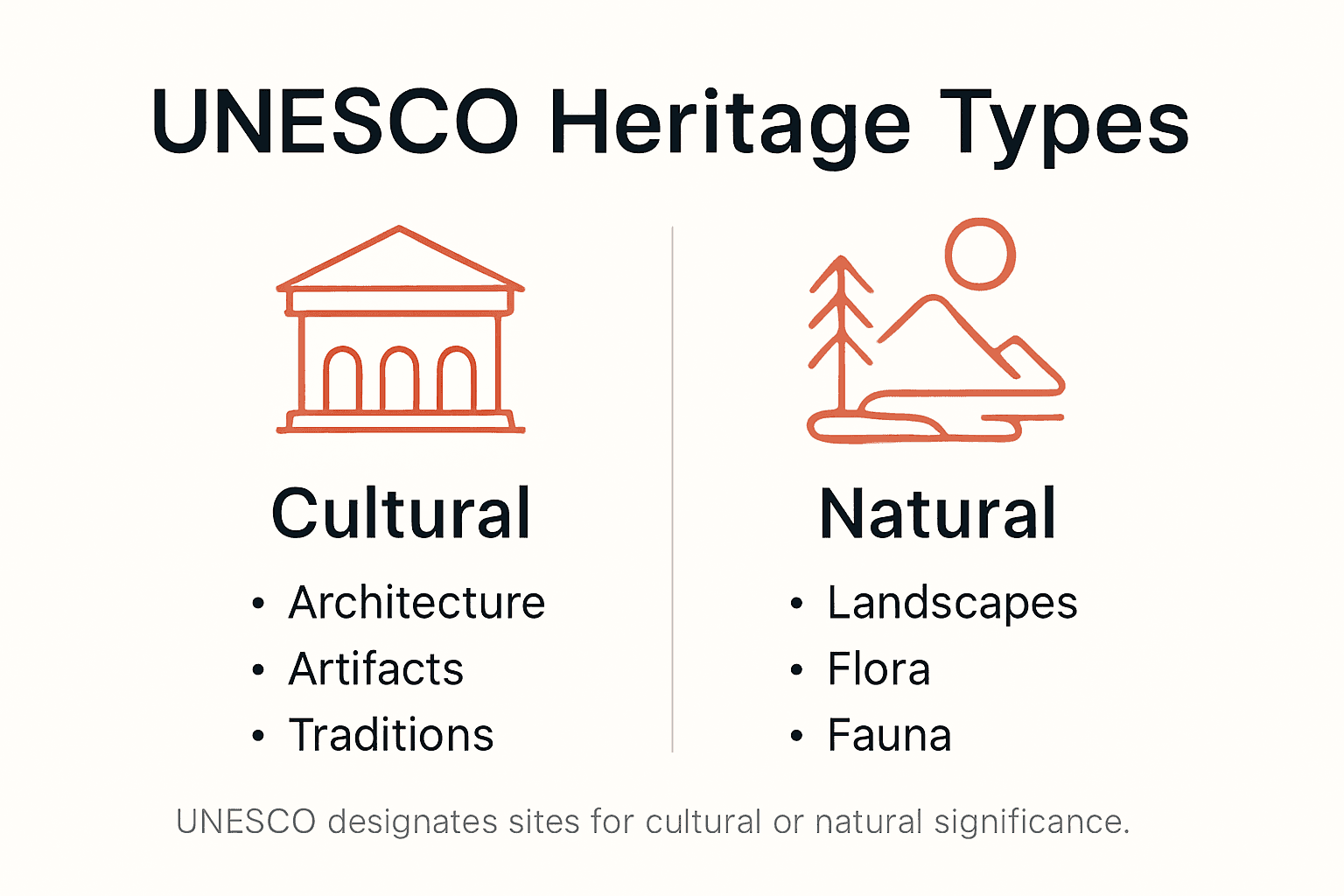
The classification encompasses two primary categories: cultural heritage and natural heritage. Cultural heritage includes monuments, archaeological sites, historical city centres, and cultural landscapes that reflect human creativity and historical development. Natural heritage encompasses extraordinary geological formations, significant ecological regions, and areas representing major stages of Earth’s evolutionary history. Mexico City, with its rich archaeological and architectural heritage, exemplifies how urban environments can embody complex historical narratives worthy of global preservation.
To better understand UNESCO’s approach, here is a comparison of Cultural and Natural World Heritage types:
| Heritage Type | Key Qualities | Typical Examples |
|---|---|---|
| Cultural Heritage | Human achievement, creativity, traditions | Monuments, historical city centres |
| Natural Heritage | Ecological, geological, environmental | Natural parks, unique ecosystems |
Pro tip: When visiting a UNESCO World Heritage site, take time to understand its specific designation criteria, as this provides deeper appreciation of its global significance beyond typical tourist experiences.
Aztec Legacy and Pre-Hispanic Foundations
Mexico City’s profound UNESCO recognition stems from its extraordinary Aztec archaeological heritage, which represents one of the most sophisticated pre-Hispanic civilisations in human history. The ancient city of Tenochtitlan, now the historic centre of Mexico City, stands as a remarkable testament to the advanced urban planning and complex social structures of the Aztec Empire, which flourished between the 14th and 16th centuries.
The Aztec civilisation represented an intricate society with remarkable architectural, agricultural, and astronomical achievements. Their capital, Tenochtitlan, was a marvel of engineering, constructed on a series of artificial islands in Lake Texcoco. The city featured sophisticated hydraulic systems, intricate canal networks, and monumental pyramids that demonstrated extraordinary mathematical and architectural knowledge. These achievements were so advanced that they continue to astound contemporary scholars and archaeologists.
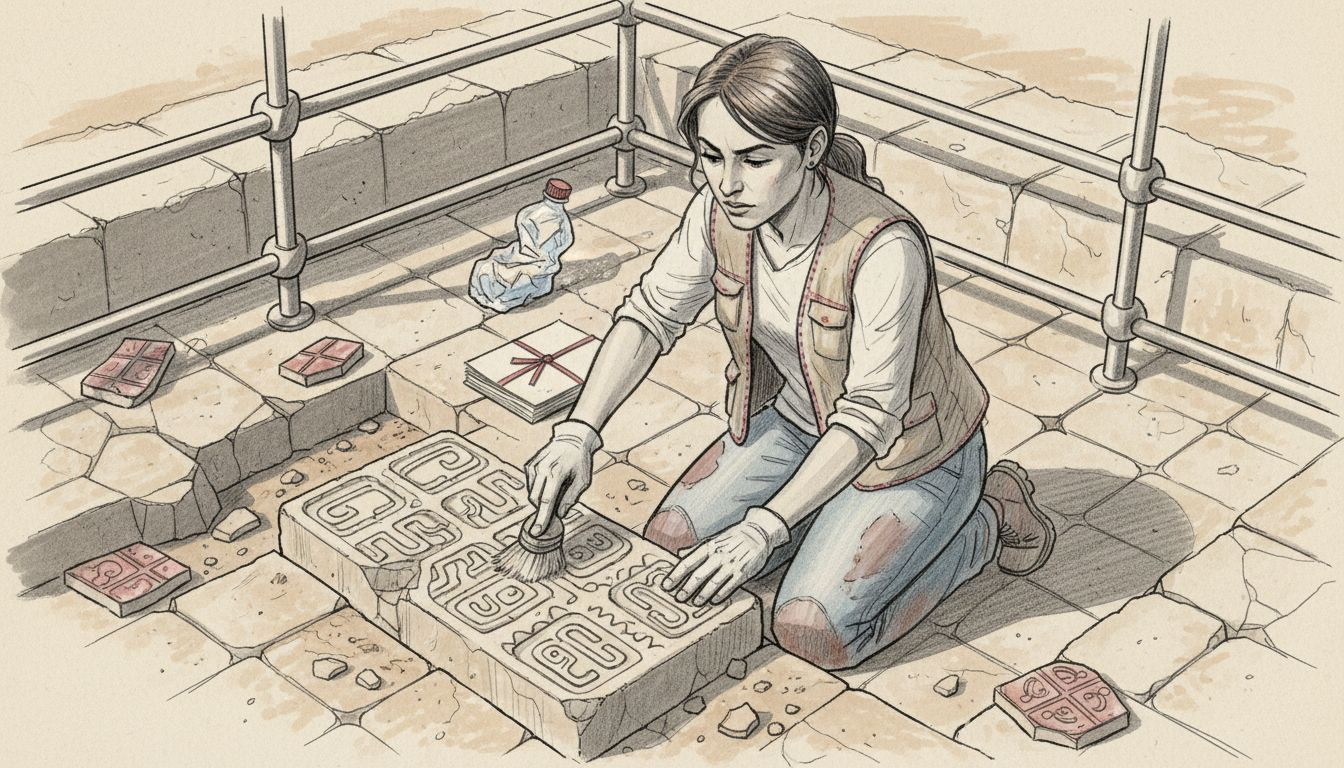
Pre-Hispanic foundations of Mexico City are particularly significant because they represent a complex urban landscape that predates European colonisation. The archaeological sites within the city, such as the Templo Mayor, reveal layers of sophisticated cultural development. These sites showcase the Aztecs’ advanced understanding of urban design, religious practices, and social organisation. Their legacy is not merely historical but living – many contemporary Mexican cultural practices, linguistic elements, and social structures can be traced directly to these pre-Hispanic foundations.
Pro tip: When exploring Mexico City’s historical sites, consider hiring a local archaeologist or historian as a guide to gain deeper insights into the nuanced layers of Aztec cultural heritage.
Historic Centre and Xochimilco Canals
Mexico City’s UNESCO World Heritage designation encompasses two remarkable sites that collectively represent an extraordinary urban landscape: the Historic Centre and the Xochimilco Canals. These interconnected spaces embody centuries of cultural evolution, architectural innovation, and ecological significance. The historic urban complex reveals a multilayered narrative of human settlement, from pre-Hispanic Aztec foundations to Spanish colonial architecture and contemporary urban development.
The Historic Centre, centred around the Zócalo (main square), showcases an extraordinary architectural palimpsest where Aztec temples coexist alongside magnificent colonial-era buildings. Magnificent structures like the Metropolitan Cathedral and the National Palace stand atop ancient Aztec foundations, symbolising the city’s complex historical layers. The urban layout itself represents a remarkable fusion of Indigenous urban planning and European architectural principles, creating a unique architectural dialogue that spans multiple centuries.
Xochimilco, often referred to as the “Venice of Mexico”, represents a living cultural landscape with profound historical significance. These ancient canal systems, originally developed by Aztec agriculturalists, demonstrate sophisticated hydraulic engineering and agricultural techniques. The chinampas – artificial agricultural islands created by the Aztecs – represent an extraordinary example of sustainable land management. These floating gardens not only supported complex agricultural practices but also maintained intricate ecological balance, providing a testament to Indigenous environmental knowledge that continues to inspire contemporary sustainable urban design.
Pro tip: When exploring these UNESCO sites, hire a local guide specialising in archaeological and cultural history to uncover the nuanced stories hidden within Mexico City’s architectural landscapes.
Criteria for UNESCO Selection in Mexico City
UNESCO’s selection process for Mexico City’s World Heritage status involves rigorous evaluation of outstanding universal value, focusing on multiple layers of historical, cultural, and architectural significance. The UNESCO committee meticulously examines sites that represent exceptional human achievement, cultural interchange, and environmental innovation. Specific criteria for Mexico City’s recognition highlight the extraordinary fusion of pre-Hispanic and colonial cultural expressions preserved within the urban landscape.
The selection criteria encompass several critical dimensions of cultural heritage. First, the architectural integrity of the Historic Centre demonstrates an unparalleled blend of Indigenous urban planning and European architectural principles. Structures like the Templo Mayor and Metropolitan Cathedral represent layers of historical development, showing how different civilisations have physically and symbolically constructed the urban environment. The preservation of these architectural elements provides tangible evidence of Mexico City’s complex cultural evolution, revealing how different societies have reimagined and reconstructed urban spaces across centuries.
Xochimilco’s inclusion in the UNESCO designation represents a unique recognition of sustainable agricultural practices. The chinampa agricultural system – an ingenious method of creating artificial islands for cultivation – exemplifies Indigenous environmental knowledge that continues to inspire contemporary sustainable design. These floating gardens are not merely historical artifacts but living landscapes that demonstrate sophisticated ecological management techniques developed by Aztec agriculturalists. The UNESCO recognition acknowledges how these agricultural systems represent an extraordinary example of human interaction with natural environments, balancing human needs with ecological sustainability.
Pro tip: When visiting these UNESCO sites, engage with local historians and archaeologists to understand the nuanced layers of cultural significance that extend beyond typical tourist narratives.
Impacts on Culinary Culture and Local Chefs
The UNESCO World Heritage status profoundly transforms Mexico City’s culinary landscape, elevating local chefs from mere food preparers to cultural ambassadors. Traditional Mexican cuisine represents more than gastronomic practice – it embodies a living cultural heritage that connects generations, preserves agricultural knowledge, and sustains complex social practices deeply rooted in Indigenous traditions.
Local chefs have emerged as critical interpreters of this culinary heritage, transforming UNESCO recognition into a powerful narrative of cultural preservation. They are reimagining traditional techniques like chinampa agriculture and pre-Hispanic cooking methods, integrating ancient wisdom with contemporary culinary innovations. By showcasing ingredients sourced from historic agricultural systems and employing cooking techniques passed through generations, these culinary professionals create dining experiences that are simultaneously educational, authentic, and transformative.
The UNESCO designation has catalysed a renaissance in Mexico City’s culinary ecosystem, encouraging chefs to explore and celebrate the city’s multilayered gastronomic identity. Female cooks, particularly, have been instrumental in safeguarding culinary traditions, maintaining intricate knowledge of ingredient sourcing, preparation techniques, and cultural rituals associated with food preparation. This recognition validates their role not just as cooks, but as custodians of a living cultural system that connects past and present through the universal language of cuisine.
The following table summarises the UNESCO World Heritage impacts on Mexico City’s culinary culture:
| Impact Area | Change Brought by UNESCO Status | Notable Results |
|---|---|---|
| Chefs’ Roles | Elevated to cultural ambassadors | Promoting indigenous food heritage |
| Culinary Practices | Revival of traditional techniques | Use of chinampa-grown ingredients |
| Social Recognition | Validation of female culinary leaders | Preservation of ancestral recipes |
Pro tip: When dining in Mexico City, seek out restaurants and food experiences led by local chefs who explicitly connect their dishes to UNESCO’s cultural heritage narrative.
Discover Mexico City’s Culinary Heritage with Expert Chef Tours
Mexico City’s UNESCO World Heritage status reveals its rich tapestry of cultural, historical, and ecological significance shaping the city’s unique identity. The challenge for travellers is connecting deeply with this heritage beyond surface-level visits. Understanding the Aztec pre-Hispanic roots and the intricate blend of colonial and indigenous influences requires more than just sightseeing. It demands immersive experiences where local knowledge brings hidden stories and authentic flavours to life. This is where our curated chef-led tours become invaluable, providing personalised access to Mexico City’s vibrant culinary scene rooted in this remarkable heritage.

Explore Mexico City like a true insider by joining The Chef Tour Cities – Explore Culinary Destinations. Our expert Chef Karl Wilder guides small groups to authentic restaurants and markets where traditional techniques and UNESCO-recognised culinary practices come alive. Experience dishes inspired by ancient chinampa agriculture and indigenous ingredients while learning the cultural narratives that enrich every bite. Don’t miss the chance to elevate your visit into a meaningful journey touching the heart of Mexico City’s heritage. Book your exclusive food tour today at The Chef Tours and savour the legacy behind every flavour.
Frequently Asked Questions
What is UNESCO World Heritage status?
UNESCO World Heritage status is a global recognition programme that identifies and protects cultural and natural sites of outstanding universal value, celebrating their significance to humanity’s collective heritage.
Why is Mexico City designated as a UNESCO World Heritage site?
Mexico City is designated as a UNESCO World Heritage site due to its rich Aztec archaeological heritage, complex urban landscape, and the historical significance of its Historic Centre and Xochimilco Canals, which reflect centuries of cultural evolution and innovation.
How does UNESCO recognition impact local culinary culture?
UNESCO recognition elevates local chefs to cultural ambassadors, revitalising traditional cooking techniques and ensuring the preservation of ancestral recipes and indigenous food practices, thereby enhancing Mexico City’s rich culinary identity.
What criteria does UNESCO use to evaluate sites for World Heritage designation?
UNESCO evaluates sites based on their outstanding universal value, which includes architectural integrity, cultural significance, and sustainable practices, ensuring they represent remarkable achievements in human history and environmental management.