

TL;DR:
- Culinary team events foster genuine connections through shared creative cooking challenges.
- Planning involves clear objectives, balanced teams, inclusive menus, and safety protocols.
- Success depends on prioritizing engagement and vulnerability over culinary perfection.
Typical corporate team events, from trust falls to quiz nights, rarely build the genuine connections organisations need. Culinary experiences are different. They place colleagues side by side in a shared creative challenge, turning strangers into collaborators over a chopping board. The core steps to plan culinary team events include setting clear objectives, selecting the right format, balancing teams, and gathering feedback afterwards. This guide walks you through each stage, giving you practical tools to design an event that people will actually remember and that genuinely strengthens how your team works together.
Table of Contents
- Define clear objectives and requirements
- Survey dietary needs and balance your teams
- Select venue, chef, and event timeline
- Execute, monitor safety, and measure outcomes
- What most corporate culinary events miss: Maximising inclusivity and impact
- Unlock more culinary team-building possibilities
- Frequently asked questions
Key Takeaways
| Point | Details |
|---|---|
| Start with clear objectives | Define your event goals and requirements to shape the planning process. |
| Prioritise inclusivity | Survey dietary needs early and balance teams to ensure everyone participates. |
| Safety and schedule matter | Hold kitchen safety briefings and appoint a timekeeper to keep the event smooth. |
| Mix teams for stronger bonds | Encourage cross-department teams and fun, creative activities to boost engagement. |
| Feedback enhances future events | Always gather feedback post-event to improve outcomes and team satisfaction. |
Define clear objectives and requirements
Before you book anything, you need to know exactly what success looks like. Is the goal to improve communication between departments? Celebrate a company milestone? Welcome new hires? Vague intentions produce forgettable events. Specific goals produce ones that people talk about for months.
Start by writing down two or three measurable outcomes. For example: “At least 80% of attendees will interact with someone from a different department” or “Participants will report higher confidence in cross-team communication in a post-event survey.” These benchmarks give you something to measure against once the aprons come off.
Once you have your goals, map your core requirements. The culinary team building best practices framework recommends considering group size, available budget, and timeline from the outset. These three factors will shape every decision that follows, from venue capacity to menu complexity.
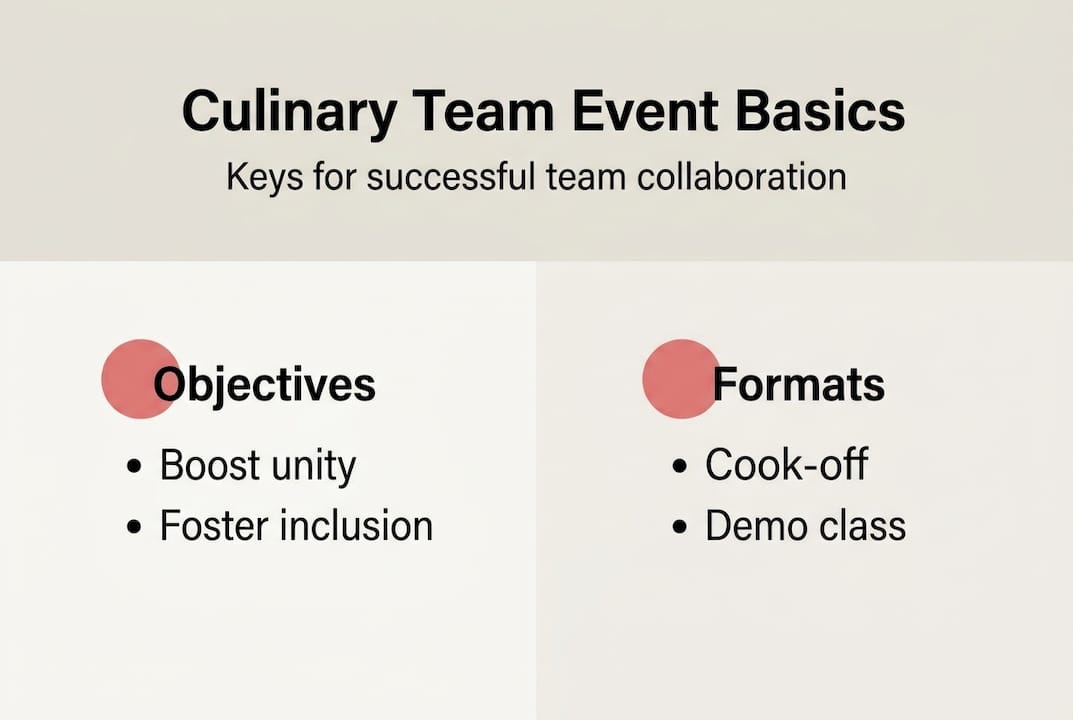
Choosing the right format is equally important. Each option creates a different atmosphere and serves different goals:
- Cook-off competition: Teams race to prepare a dish, encouraging healthy rivalry and fast decision-making
- Chef demonstration: A professional chef leads the group through a recipe, ideal for larger audiences or mixed skill levels
- Collaborative recipe building: Everyone contributes to one shared dish, reinforcing collective ownership
- Food tasting tour: Groups explore local food culture together, perfect for [choosing culinary team experiences](https://thecheftours.com/corporate-food-tours-choose-best culinary team experience) in a new city
The corporate catering guide confirms that selecting the right venue and format is one of the most critical early steps. Here is a quick comparison to help you decide:
| Format | Best for | Group size | Skill needed |
|---|---|---|---|
| Cook-off | Energetic, competitive teams | 10 to 40 | Low to medium |
| Chef demo | Large or mixed groups | 20 to 100+ | None |
| Collaborative recipe | Cross-department bonding | 8 to 30 | Low |
| Tasting tour | Cultural exploration | 6 to 20 | None |
Understanding which format aligns with your objectives and the impact on team cohesion you want to achieve will save you considerable time and budget later.
Pro Tip: For medium-sized groups of 15 to 40 people, book your venue and chef at least four to eight weeks in advance. Popular spaces and experienced facilitators fill up quickly, especially around end-of-quarter and festive periods.
Survey dietary needs and balance your teams
Once you have defined your requirements, inclusivity and team balance become the next priorities. An event where someone cannot eat a single dish on the menu, or where colleagues feel sidelined because of a health condition, is not a team-building success. It is a liability.
Conducting a dietary survey early is non-negotiable. Here is a simple process to follow:
- Send a short survey to all attendees at least three weeks before the event
- Ask specifically about allergies (nuts, shellfish, dairy, gluten), intolerances, and lifestyle choices (vegan, halal, kosher)
- Collate responses and share them with your chef or catering partner immediately
- Confirm that the menu has been adjusted and that cross-contamination risks have been addressed
- Follow up with any attendees who flagged severe allergies to confirm their comfort with the arrangements
Managing dietary restrictions via surveys is considered a best practice across professional culinary events, and it protects both your attendees and your organisation. Here is a quick reference for common restrictions and practical ingredient swaps:
| Restriction | Avoid | Safe swap |
|---|---|---|
| Nut allergy | All tree nuts, peanuts | Seeds (sunflower, pumpkin) |
| Dairy intolerance | Milk, butter, cream | Oat milk, coconut cream |
| Gluten intolerance | Wheat, barley, rye | Rice flour, polenta |
| Vegan | Meat, fish, eggs, dairy | Legumes, tofu, vegetables |
| Halal | Pork, non-halal meat | Certified halal proteins |
Team formation deserves just as much thought. Resist the temptation to let people self-select into groups with their closest colleagues. That simply reinforces existing silos. Instead, mix departments deliberately. Pair someone from finance with a colleague from marketing. Put a senior leader alongside a new graduate.
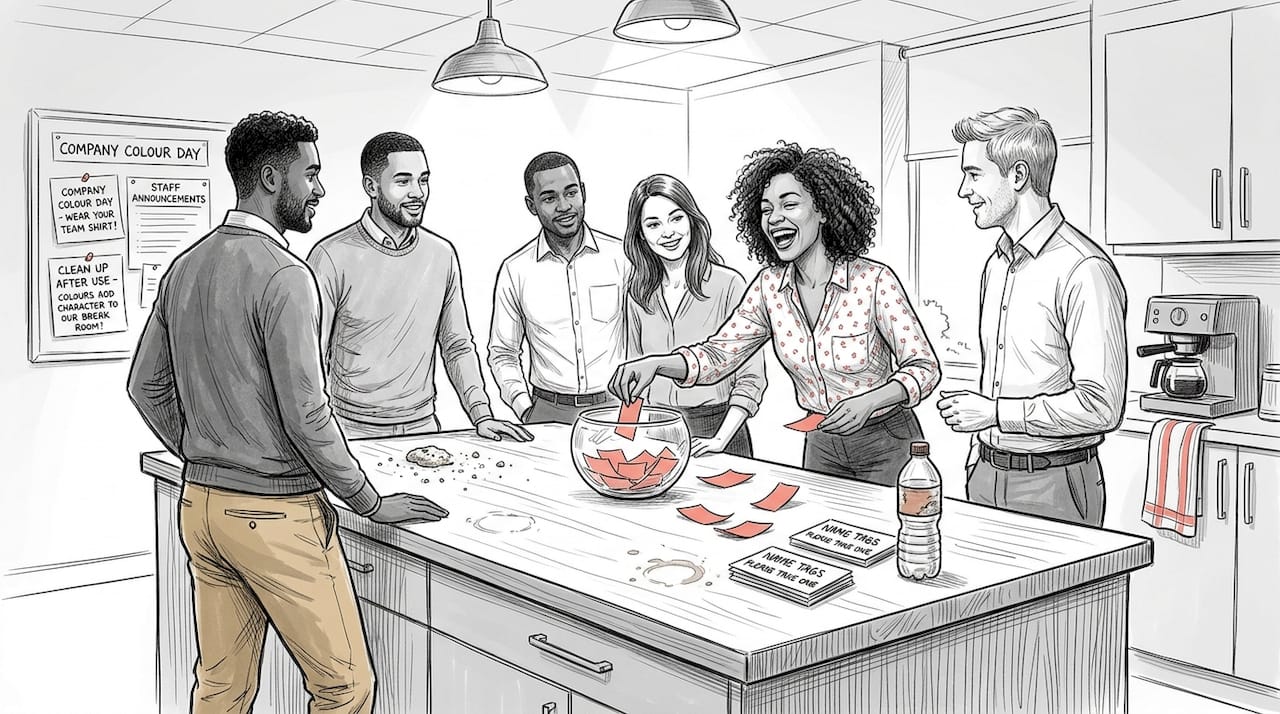
For inclusive chef selection, look for facilitators who are experienced in working with diverse groups and who actively encourage quieter participants to contribute.
Pro Tip: When forming teams, prioritise fun and creativity over professional hierarchy. Assign roles such as “head taster” or “chief decorator” to draw out personalities and give everyone a moment in the spotlight.
Select venue, chef, and event timeline
With your teams balanced and dietary needs mapped, it is time to secure the physical space and the person who will lead the experience. These two decisions will define the energy and quality of your event more than almost anything else.
When evaluating venues, consider the following:
- Capacity and flow: Can the space comfortably accommodate your group without feeling cramped?
- Kitchen facilities: Are there enough workstations, hobs, and utensils for simultaneous cooking?
- Scalability: If your group grows by ten people at the last minute, can the venue adapt?
- Location and accessibility: Is it easy to reach by public transport, and does it have accessible facilities?
- Ambience: Does the space feel inspiring and appropriate for your company culture?
Choosing the right chef or facilitator is equally critical. A private chef brings customising culinary experiences to the table, tailoring menus and activities to your specific goals. A group facilitator with event experience can manage large numbers and keep energy levels high throughout.
The corporate event catering guide recommends that most chefs be booked at least four to eight weeks in advance for medium-sized events, and even earlier for bespoke or authentic food experiences that require specialist sourcing.
Your timeline should include these milestones:
- Eight weeks out: Define objectives, set budget, shortlist venues and chefs
- Six weeks out: Confirm venue and chef, send dietary survey
- Four weeks out: Finalise menu, form teams, share event agenda
- One week out: Confirm headcount, brief chef on dietary requirements
- Day of event: Arrive early, set up stations, conduct safety briefing
The venue and chef tips from experienced corporate caterers consistently emphasise one point above all others:
“A thorough safety briefing before any cooking activity is not optional. For large groups especially, clear communication about equipment, allergens, and emergency procedures sets the tone for a professional and enjoyable event.”
Never skip this step, regardless of how experienced your group appears to be.
Execute, monitor safety, and measure outcomes
As your event unfolds, execution and safety take centre stage. Even the best-planned event can unravel without clear roles and a firm hand on the schedule.
Follow these steps on the day:
- Brief your team leads and timekeeper before guests arrive
- Conduct a kitchen safety walkthrough covering equipment, hot surfaces, and emergency exits
- Deliver the safety briefing to all attendees before any cooking begins
- Start activities on time and maintain the schedule with your designated timekeeper
- Monitor team dynamics throughout and intervene gently if any group is struggling
- Close the cooking phase with a shared tasting or presentation moment
- Gather feedback immediately after the event while impressions are fresh
Kitchen safety is not just a formality. The kitchen safety briefing essentials for large groups include clear instruction on knife handling, fire safety, and what to do if an allergic reaction occurs. Assign a named first-aider for every event.
For culinary safety tips that go beyond the basics, preparation is always the deciding factor between a smooth event and a stressful one.
“Allergy management during live cooking events requires more than labelling dishes. Cross-contamination at shared workstations is a genuine risk, and dedicated utensils and surfaces for allergen-free cooking are essential.”
The event safety guidance from professional caterers reinforces this point consistently. Build it into your briefing script, not as an afterthought.
After the event, send a short feedback survey within 24 hours. Ask whether objectives were met, what participants enjoyed most, and what could be improved. Compare results against the measurable outcomes you set at the start. This debrief loop is what separates a one-off event from a repeatable programme.
What most corporate culinary events miss: Maximising inclusivity and impact
Here is something most event guides will not tell you. The biggest mistake organisers make is treating a culinary team event as a cooking lesson rather than a people experience. They obsess over the quality of the dishes and lose sight of the quality of the connections being formed.
We have seen events where technically impressive menus were prepared in near silence, with colleagues too intimidated by the complexity of the recipe to relax and engage. The food was beautiful. The team-building outcome was minimal.
The most successful events we have been part of prioritise inclusive engagement over culinary perfection. They give every participant a meaningful role, celebrate effort over skill, and create space for laughter and storytelling. The dish is almost irrelevant. What matters is the conversation that happens while making it.
The team cohesion insights we have gathered across corporate events in Paris, Seville, Berlin, and Mexico City consistently point to one truth: people bond through shared vulnerability, not shared expertise.
Pro Tip: Always close your event with a structured debrief. Ask each team to share one story from their cooking experience. These moments of reflection embed the emotional memory of the event far more effectively than any trophy or certificate.
Unlock more culinary team-building possibilities
You now have a practical framework for planning a culinary team event that is inclusive, safe, and genuinely impactful. The next step is finding the right experience to bring it to life.
At The Chef’s Tours, we specialise in exactly this. Whether you want to explore culinary experiences across Paris, Seville, Berlin, or Mexico City, or you need to customise a culinary event around your team’s specific goals, our chef-led programmes are designed for corporate groups. Chef PJ in Paris, Chef Crestani in Seville, and Chef Karl Wilder in Berlin and Mexico City bring insider knowledge and professional facilitation to every event. Discover what culinary travel for professionals can look like when it is built around your people.
Frequently asked questions
How far in advance should I plan a corporate culinary team event?
Start planning four to eight weeks ahead to secure your preferred venue and chef and allow enough time to conduct dietary surveys and finalise team formations.
What are the most common culinary event formats for teams?
Popular formats include cook-off competitions, chef demonstrations, collaborative recipe building, and food tasting tours. The right format depends on your group size, objectives, and the level of hands-on participation you want.
How can organisers address dietary restrictions or allergies?
Send a dietary survey early to all attendees, share results with your chef immediately, and confirm that the menu and workstations account for cross-contamination risks.
What makes culinary events effective for team-building?
They break down departmental silos by placing colleagues in a shared creative challenge, encouraging collaboration, laughter, and communication that rarely happens in a standard meeting room setting.