

TL;DR:
- Food has become the most influential factor in travel choices, with a significant increase in culinary tourism expected by 2026. Travelers seek authentic, locally sourced experiences led by chefs, favoring cities like Mexico City, Paris, Seville, and Berlin. Sustainability and genuine local connections are now essential components of memorable food journeys.
Food has quietly become the most powerful force in travel decisions. 62% of travellers now prioritise food when choosing a destination, and 75% of millennials actively seek authentic cuisine when they travel. That is not a niche preference; it is a seismic shift in how people plan their journeys. Whether you are drawn to the sizzle of a Mexico City taqueria, the wine-soaked tapas bars of Seville, the bistro revival sweeping Paris, or the gloriously multicultural food scene in Berlin, 2026 is shaping up to be the most exciting year yet for culinary explorers. This guide breaks down exactly what is driving this movement and how to make the most of it.
Table of Contents
- Why culinary travel is booming in 2026
- Top cities turning flavour into a journey
- The rise of sustainability and localism in food journeys
- Booking immersive culinary experiences: What matters most
- A different flavour: What most guides won’t tell you about culinary travel
- Ready to book your authentic food adventure?
- Frequently asked questions
Key Takeaways
| Point | Details |
|---|---|
| Follow food trends | Modern travellers increasingly choose destinations for culinary reasons, so align your trip with the hottest food scenes. |
| Experience signature cities | Destinations like Mexico City, Paris, Berlin, and Seville offer unmatched local cuisine through chef-led exploration. |
| Prioritise sustainability | Look for farm-to-table, hyper-local sourcing, and zero-waste practices for both great taste and positive impact. |
| Book with intent | Choose tours focused on chef expertise, small groups, and authentic, immersive experiences. |
Why culinary travel is booming in 2026
With culinary travel at the centre of 2026’s journeys, why is this phenomenon accelerating so rapidly? The short answer: food has become personal. People no longer want to sit in a tour bus and photograph famous buildings. They want to press dough beside a Parisian baker, argue cheerfully about which taqueria in Colonia Roma is the finest, and share a table with strangers who become friends over a plate of jamón ibérico.
The numbers tell the same story. The culinary tourism market is projected to top $2 trillion by 2030, driven by double-digit growth in immersive food experiences. Food influences somewhere between 28% and 35% of all travel spending globally, which means restaurants, markets, and cooking classes are no longer incidentals. They are the point.
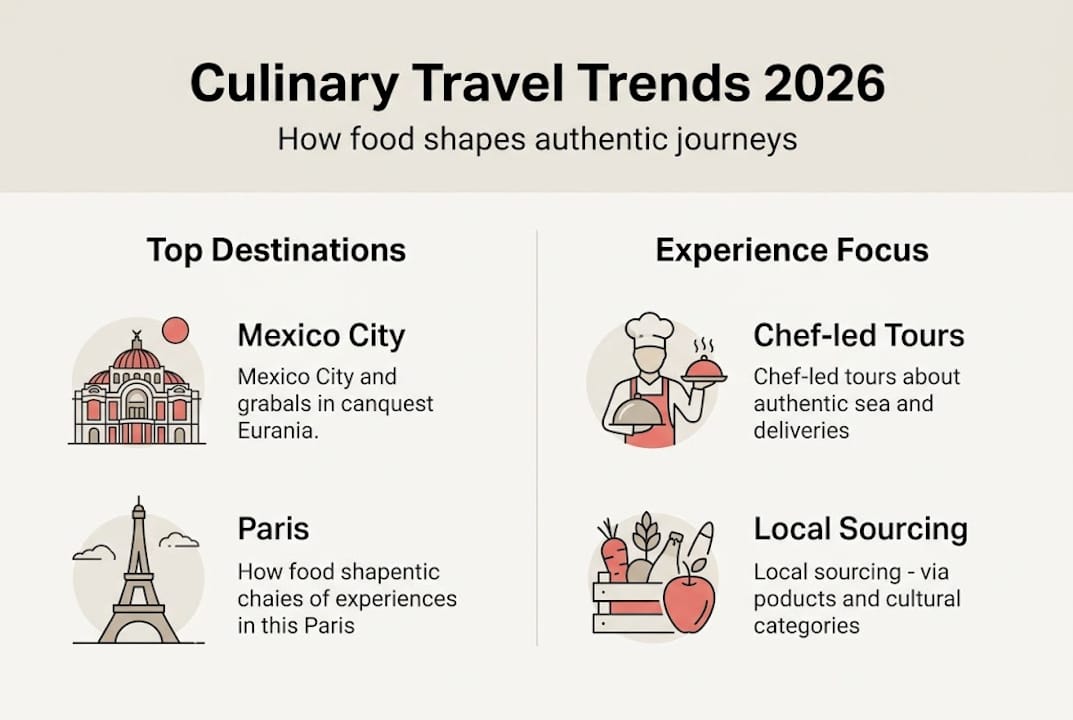
| Metric | 2024 figure | 2026 projection |
|---|---|---|
| Global culinary tourism market value | $1.1 trillion | $1.4 trillion |
| Travellers prioritising food | 57% | 62% |
| Millennials seeking authentic cuisine | 70% | 75% |
| Food’s share of total travel spend | 28% | 35% |
So what is fuelling this? A few forces are working together:
- Authenticity fatigue. Travellers have grown tired of sanitised, copy-paste tourist experiences. They want real flavour.
- Social influence. Food content dominates travel platforms, making a street taco or a market discovery instantly shareable and deeply aspirational.
- Local chef access. Platforms connecting travellers directly to working chefs have turned what was once exclusive into something achievable.
- Cultural curiosity. Food is one of the fastest routes into understanding a culture, its history, and its people.
“The traveller who eats where locals eat, guided by someone who grew up cooking those dishes, experiences more of a city in one afternoon than most visitors do in a week.”
The rise of culinary tourism trends shows no sign of slowing. For those seeking depth over distance, authentic chef-led food tours remain the single most effective way to convert a holiday into a genuine cultural encounter.
Top cities turning flavour into a journey
Once you know why food matters, the next step is choosing your destination based on flavour, not just famous landmarks. The good news is that a handful of cities stand above the rest in 2026 for sheer depth, originality, and chef-driven energy.
Mexico City, Paris, Berlin, and Seville are ranked among the world’s top destinations for authentic cuisine, spanning everything from street food revelations to sophisticated bistro revivals. Each city offers a completely different register of flavour, and each rewards the curious traveller in its own way.
| City | Signature experience | Best for |
|---|---|---|
| Mexico City | Street-to-fine-dining spectrum | First-timers and adventurous eaters |
| Paris | Bistro revival and artisan markets | Classic French cuisine lovers |
| Seville | Tapas culture, sherry, jamón | Slow travel and regional depth |
| Berlin | Multicultural, modern European | Eclectic, boundary-pushing palates |
Here is a quick look at what not to miss in each:
Mexico City: The taco al pastor, mezcal bars in Roma Norte, and the extraordinary breadth of pre-Hispanic ingredients woven into modern cooking.
Paris: Natural wine bars, fromageries in Le Marais, and the quiet renaissance of the neighbourhood bistro.
Seville: Montaditos at a bar that has been open since before your grandparents were born, manzanilla poured ice-cold, and slow-roasted pork in the Triana district.
Berlin: Turkish-German fusion, outstanding Vietnamese food in Lichtenberg, and zero-waste restaurants that make sustainability taste spectacular.
Explore insider tips for top food cities before you book, and compare best food tour destinations to understand which city suits your palate. For a curated preview, browse our must-try food experiences in Paris and Seville.
Pro Tip: When booking a city tour, always look for small groups led by a working chef rather than a general guide. A chef notices things on a market stall that most guides walk straight past.
The rise of sustainability and localism in food journeys
Travelling for flavour is not just about the food. It is increasingly about how it is sourced and made. The shift towards sustainable, hyper-local culinary travel has moved from trend to expectation in 2026.
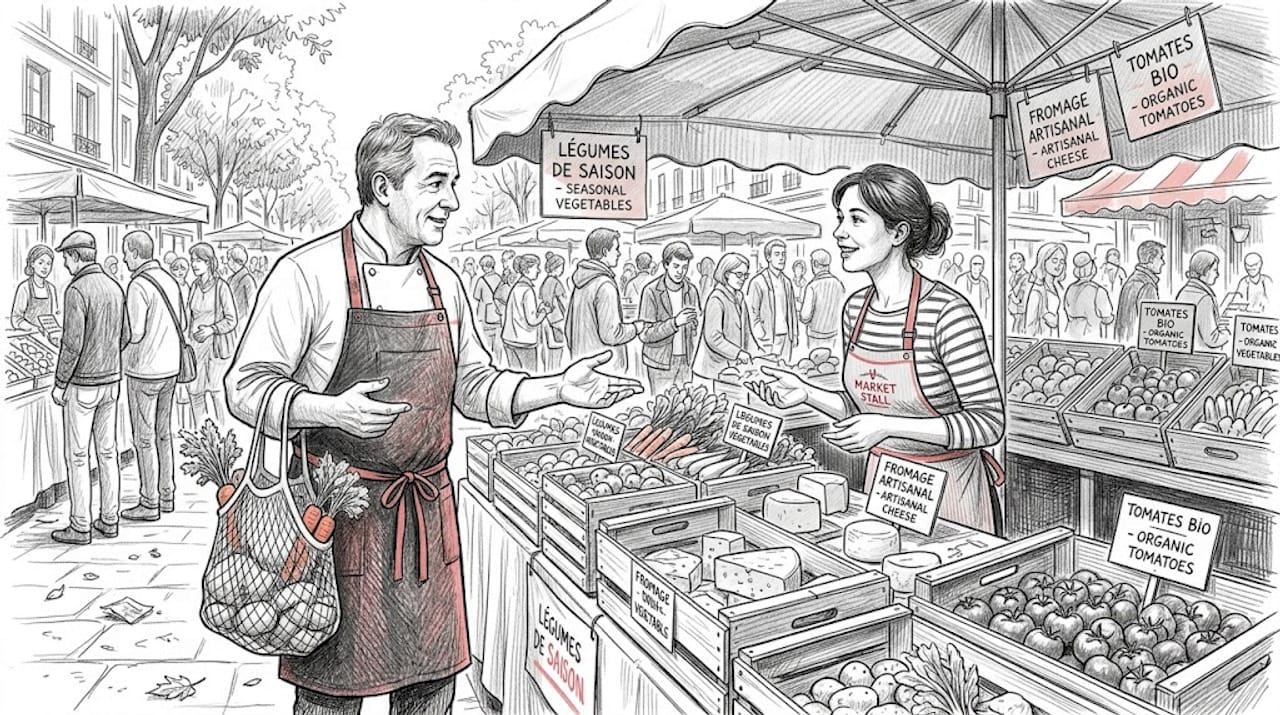
Sustainability is now central to the best culinary tourism experiences, with farm-to-table sourcing, hyper-local ingredients, and zero-waste kitchens gaining significant momentum. This is not simply a marketing phrase. When a chef in Seville sources his tomatoes from a farm 12 kilometres away, you taste the difference. The flavour is more vivid, the story is more compelling, and the meal becomes part of the landscape.
Sustainable practices now common in top culinary cities include:
- Hyper-local sourcing: Chefs building direct relationships with nearby farms and fishers.
- Seasonal menus: Dishes change with what is available, not what is convenient to ship.
- Zero-waste cooking: Offcuts, fermentation, and creative repurposing reduce waste without reducing interest.
- Community investment: Revenue from food tours feeding back into local producers and artisan businesses.
- Low-impact venues: Smaller, neighbourhood-focused restaurants rather than large tourist-facing operations.
Local and sustainable food spending now accounts for a growing share of tourism budgets, particularly among travellers aged 25 to 45. The data reflects a meaningful values shift, not just a passing preference.
There is a challenge worth naming honestly: overtourism. When a restaurant becomes famous, it often stops feeling like a discovery. The solution is timing and curiosity. Off-peak visits, conversations with your chef guide about their current favourites, and a willingness to explore less-photographed neighbourhoods will consistently deliver richer encounters. Learning to explore local food culture with a genuine local is, in our experience, the most reliable path to something genuinely memorable. Our inspiring cultural food examples page shows exactly what this looks like in practice.
Booking immersive culinary experiences: What matters most
With sustainability and authenticity so important, here is how to ensure your next culinary adventure delivers the depth you seek. Not all food tours are created equally, and the gap between a mediocre experience and a life-changing one often comes down to a handful of specific decisions made at the booking stage.
Authentic chef-led tours provide the best access to insider food culture, but quality varies widely. The key markers to look for are sustainability credentials and genuine local connections. Here is what to prioritise:
- Vet the chef. Is the guide an actual chef or a food-passionate local? Both can be wonderful, but a working chef brings technical depth that transforms a tasting into a lesson.
- Check local supplier use. Ask directly which farms, fishers, or producers the tour engages with. Vague answers are a warning sign.
- Confirm the group size. Anything over 12 people tends to feel impersonal. The best tours cap at 6 to 8 guests.
- Look for hands-on elements. Whether it is making tortillas in Mexico City or folding pastry in Paris, doing something anchors the memory far more than watching.
- Read real reviews carefully. Look for mentions of specific dishes, chef names, and moments of genuine surprise. Generic five-star comments say very little.
The tours that disappoint almost always share the same flaws: no named chef, no local sourcing story, large groups herded between tourist-facing restaurants that pay commission for the visit.
Pro Tip: Before booking, ask whether your guide has personal roots in the region or maintains direct relationships with local chefs and producers. If they do, your experience will almost certainly be richer for it.
When you are ready to choose chef-led food tours, our platform makes it straightforward to compare options across cities. Our chef-led food tours for 2026 are built on exactly the criteria above.
A different flavour: What most guides won’t tell you about culinary travel
Beyond the booking rules and lists, most guides miss a crucial truth about what makes truly memorable food journeys: the best meal you eat on a trip is rarely in the restaurant you planned to visit.
It is the one your chef guide mentioned almost as an aside. The neighbourhood spot that has been serving the same dish since 1987. The market stall that only appears on Thursday mornings. These discoveries do not come from a top-ten list. They come from patience, curiosity, and a relationship with someone who genuinely belongs to that place.
There is also a persistent myth worth challenging directly: the idea that the most famous venues serve the most authentic food. In Paris, Berlin, Seville, and Mexico City alike, the genuinely iconic flavours are often found in places that have never been reviewed. The family-run trattoria, the taqueria with three plastic tables, the bar where the owner still makes the vermouth by hand. These are the unique food tour experiences that people describe years later, not the Michelin-starred tasting menus.
Go off-peak. Go curious. Go with a chef who knows where the interesting things are hiding.
Ready to book your authentic food adventure?
Having revealed the key ingredients for an unforgettable trip, here is how to transform inspiration into action. 2026 is genuinely the finest moment to experience the world through its food. The chef-led, sustainability-focused, neighbourhood-rooted movement is at full strength across Paris, Seville, Berlin, and Mexico City.
At The Chef’s Tours, Chef PJ leads our acclaimed Paris experiences, Chef Crestani brings Seville to life, and Chef Karl Wilder covers Berlin and Mexico City with unmatched depth. Explore our full range of culinary experiences to try, browse our chef-led tours for 2026, or discover what makes us an international leader in best food tours in Paris and beyond. Your table is waiting.
Frequently asked questions
What is a chef-led food tour and why is it different in 2026?
A chef-led food tour is guided by a local culinary expert who combines personal storytelling, hyper-local ingredients, and hands-on participation. In 2026, chef-led tours emphasise authenticity and region-specific experiences far beyond what standard commercial tours offer.
How can I tell if a food experience is truly authentic?
Look for small group sizes, local chefs with established community ties, and menus that change seasonally. Authenticity is tied to local sourcing, direct chef involvement, and hyper-local practices rather than generic scripted itineraries.
Which city offers the best food experiences for first-timers?
Mexico City stands out for its extraordinary range from vibrant street food to world-acclaimed fine dining. However, Paris, Seville, and Berlin also lead with diverse, deeply chef-driven options suited to every kind of curious eater.
What should I look for when booking a culinary travel experience?
Prioritise chef-led, sustainable, and locally focused tours rather than generic group offerings. Sustainability and chef connection are the clearest markers of a tour that will genuinely deliver cultural depth and memorable flavour.