

Bold flavours and centuries-old rituals await those who crave a deeper connection with Parisian culture. Escargot is more than a dish—it is a symbol of French gastronomic heritage that has graced royal tables and local bistros alike since prehistoric times. For culinary tourists seeking chef-led escapades, unravelling the traditions behind authentic escargot offers a rare chance to taste, learn, and savour the essence of French cuisine at its source.
Table of Contents
- Escargot In Parisian Cuisine Explained
- Different Types Of Edible Snails Used
- How Escargot Is Prepared And Served
- Cultural Significance And Dining Etiquette
- Health, Safety, And Sourcing Considerations
Key Takeaways
| Point | Details |
|---|---|
| Culinary Significance | Escargot is a celebrated dish in Parisian cuisine, reflecting centuries of French gastronomic tradition. |
| Types of Snails | The most common species used are Helix pomatia and Helix aspersa, each offering distinct flavours and textures. |
| Preparation & Serving | Escargot requires meticulous preparation, often served with garlic butter, and accompanied by crusty bread and white wine. |
| Health & Sourcing | As a sustainable protein, escargot must be sourced ethically, ensuring high quality and safety standards are maintained. |
Escargot in Parisian Cuisine Explained
Escargot represents more than a dish in Parisian cuisine – it embodies a rich culinary tradition spanning centuries. These delicate snails have been part of French gastronomic heritage since prehistoric times, transforming from humble food to an elegant delicacy appreciated by both royalty and common people.
Traditionally prepared with meticulous care, escargot involves selecting specific snail species like the Burgundy snail (Helix pomatia) or petit gris. Chefs carefully purge, clean, and prepare these gastropods, typically baking them at 400°F in their shells with a luxurious garlic butter sauce. The preparation method reflects the precision and artistry fundamental to French cooking techniques.
Parisian restaurants and bistros have elevated escargot from a simple protein to a sophisticated starter. Often served on special occasions or as an appetiser, these snails represent more than sustenance – they symbolise the intricate relationship between French culture and its culinary practices. Historically significant food traditions reveal how escargot became permissible during fasting periods, thanks to a papal decree, further embedding it in the cultural narrative.
Pro tip: When ordering escargot in Paris, request the traditional Bourguignonne style for an authentic experience that showcases the classic garlic butter preparation.
Different Types of Edible Snails Used
In the world of French gastronomy, not all snails are created equal. Culinary snail species represent a nuanced landscape of flavour, texture, and regional significance. The most prestigious among these are the Helix pomatia, commonly known as the Burgundy snail, which holds a place of honour in traditional French cuisine.
Two primary species dominate the escargot market: Helix pomatia and Helix aspersa (petit gris). The Burgundy snail, larger and considered more premium, is typically harvested from wild or protected European stocks. In contrast, the petit gris is smaller, more adaptable, and widely farmed across Mediterranean regions. Snail farming techniques known as heliciculture have expanded the availability of these gastropods beyond seasonal constraints.
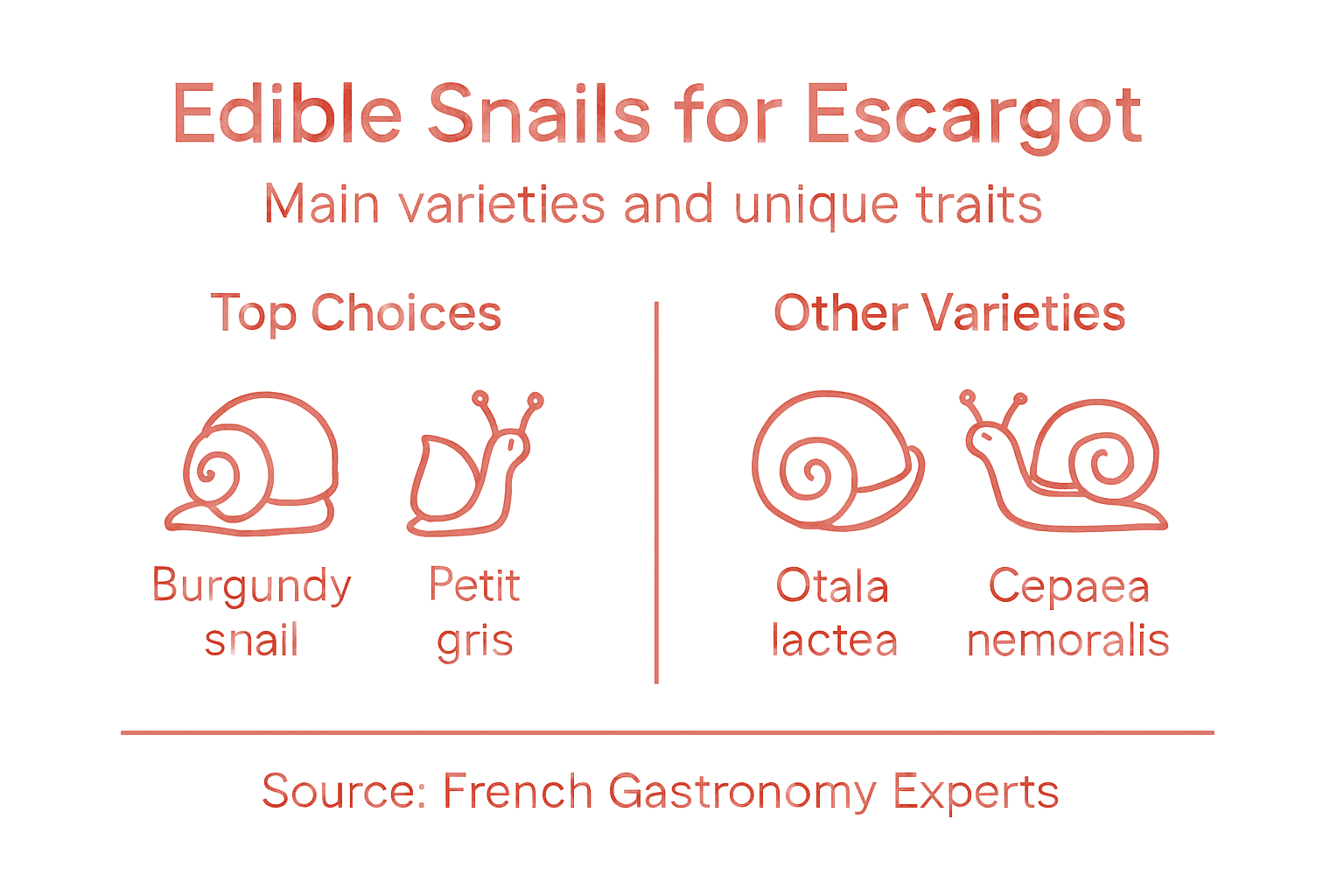
Beyond these primary varieties, additional edible snails include Otala lactea, Iberus alonensis, and Cepaea nemoralis. Each species brings its unique characteristics to the table, offering chefs and gourmands a diverse palette of culinary experiences. The selection of a specific snail variety can dramatically influence the dish’s flavour profile, making the choice of species a critical aspect of preparing authentic escargot.
Here’s a comparison of key edible snail species used in French cuisine:
| Snail Species | Origin & Habitat | Culinary Value | Texture & Flavour |
|---|---|---|---|
| Helix pomatia (Burgundy) | Wild, protected European regions | Highly prized, classic choice | Firm texture, subtle flavour |
| Helix aspersa (Petit gris) | Farmed across Mediterranean | Popular, adaptable for farming | Tender, mild flavour |
| Otala lactea | Southern Europe, North Africa | Used in regional dishes | Slightly chewy, earthy taste |
| Iberus alonensis | Iberian Peninsula | Valued for unique profile | Robust, distinctive flavour |
| Cepaea nemoralis | Western Europe gardens | Occasionally used | Milder taste, softer flesh |
Pro tip: When purchasing snails for cooking, always verify their origin and farming practices to ensure the highest quality and most authentic flavour.
How Escargot Is Prepared and Served
Escargot preparation is a meticulous culinary art that transforms humble snails into an exquisite delicacy. The process begins with a crucial purging stage, where snails are carefully fed herbs to cleanse their digestive systems, ensuring pristine quality and removing any potential impurities before cooking.

Traditional preparation involves several intricate steps. Chefs first clean the snail shells thoroughly, then carefully blanch and cook the snails, typically baking them at 400°F for 10-12 minutes. The hallmark of exceptional escargot is its rich garlic butter sauce, which infuses the tender meat with deep, aromatic flavours. Specialized escargotiers – ceramic or metal serving dishes with individual wells – are often used to present these delicate morsels, accompanied by specialised tongs and small forks designed specifically for extracting the meat.
Serving escargot is an elegant affair in Parisian cuisine. The dish is traditionally presented piping hot, with a crusty baguette to soak up the sumptuous garlic butter. A crisp, dry white wine serves as the perfect accompaniment, helping to cut through the richness of the butter and complement the subtle flavour of the snails. The entire experience is a testament to the French culinary philosophy of transforming simple ingredients into extraordinary gastronomic moments.
Pro tip: Always serve escargot immediately after cooking to preserve the optimal texture and temperature of both the snails and their luxurious butter sauce.
Cultural Significance and Dining Etiquette
National Escargot Day exemplifies the profound cultural importance of this delicacy in French culinary traditions. Far more than a mere appetiser, escargot represents a sophisticated gastronomic ritual that connects diners to centuries of French culinary heritage, symbolising the art of refined dining and social connection.
The dining etiquette surrounding escargot is a carefully choreographed experience. Diners use specialised escargot tongs and small forks to extract the tender meat from its shell, transforming the act of eating into a subtle performance of culinary skill. Proper technique involves holding the shell with tongs while delicately using the fork to remove the snail, accompanied by crusty bread to soak up the rich garlic butter sauce. White wine is traditionally served alongside, creating a harmonious flavour profile that elevates the entire dining experience.
Beyond its technical preparation, escargot embodies the French philosophy of communal dining. It is rarely consumed in isolation but rather shared during celebratory meals, symbolising social connection and collective appreciation of culinary craftsmanship. The dish transcends mere sustenance, representing a cultural expression of sophistication, tradition, and the art of savouring food as a shared, meaningful experience.
Pro tip: When dining on escargot, observe and mimic the technique of local Parisians to fully embrace the authentic cultural experience.
Health, Safety, and Sourcing Considerations
Sustainable protein alternatives are increasingly important in modern culinary practices, and escargot emerges as a compelling option. This protein source offers remarkable health benefits, being low in cholesterol and high in essential nutrients while presenting an environmentally conscious alternative to traditional meat proteins.
Food safety in escargot production demands rigorous standards. Professional heliciculture operations implement comprehensive hygiene protocols, including controlled hibernation practices and meticulous cleaning processes. These procedures ensure that snails are harvested humanely and processed under strict international food safety guidelines, minimising potential health risks and maintaining exceptional quality throughout the production chain.
Sourcing high-quality escargot requires understanding specific farming practices and species selection. The Helix aspersa maxima variety has become particularly favoured for commercial production due to its consistent quality and adaptability. Ethical consumers should seek producers who demonstrate transparent farming methods, prioritising animal welfare, environmental sustainability, and adherence to stringent food safety management systems.
This summary table highlights essential safety and sourcing considerations for escargot:
| Consideration | Why It Matters | Impact on Quality |
|---|---|---|
| Farming method | Affects sustainability and ethics | Higher welfare, consistent product |
| Species selection | Influences dish flavour and texture | Premium taste, ideal texture |
| Hygiene protocols | Reduces health risks | Safe, contaminant-free escargot |
| Origin documentation | Ensures traceability and authenticity | Confidence in product’s provenance |
Pro tip: When purchasing escargot, always request documentation about the snail’s origin and farming practices to ensure both quality and ethical production.
Discover the True Essence of Escargot and Parisian Culinary Culture with Expert-Led Food Tours
Escargot is more than just a traditional delicacy—it’s a window into centuries of Parisian food culture, craftsmanship, and sophisticated dining rituals. If you want to move beyond the typical tourist experience and truly understand the artistry behind this iconic dish, then simply reading about it is not enough. The key challenge lies in accessing authentic preparations, insider tasting spots, and learning proper dining etiquette from passionate local chefs who live and breathe French gastronomy.
At The Chef9s Tours, we connect you with exclusive, personalised culinary experiences led by Parisian chefs like Chef PJ who know the hidden gems where escargot is prepared in the traditional Bourguignonne style. Imagine savouring escargot fresh from signature bistros, paired perfectly with crisp white wines while uncovering the history and health considerations of this unique protein alternative. This immersive approach transforms your meal into a lasting cultural memory rather than just food on a plate.

Don9t settle for the ordinary when you can join the best food tour in Paris to experience escargot and so much more. Book your journey today at The Chef9s Tours and step into a world where culinary heritage meets personalised discovery.
Frequently Asked Questions
What types of snails are commonly used in escargot?
The primary snail species used in escargot are Helix pomatia (Burgundy snail) and Helix aspersa (petit gris). These varieties are chosen for their distinct flavour and texture, contributing to the dish’s culinary excellence.
How is escargot prepared before serving?
Escargot preparation involves purging the snails, cleaning their shells, and then baking them, typically with a rich garlic butter sauce at 400°F for about 10-12 minutes. This meticulous process ensures high quality and complex flavours in the final dish.
What is the traditional way to serve escargot?
Escargot is traditionally served piping hot in individual ceramic or metal dishes, accompanied by crusty bread for soaking up the garlic butter sauce. A crisp, dry white wine is often recommended as a complementary beverage.
Why is escargot considered a cultural delicacy?
Escargot embodies the sophisticated culinary traditions of French cuisine, representing communal dining and social connection. It is often enjoyed during special occasions, symbolising the artistry and history of French gastronomy.