

Craving a taste of Berlin’s vibrant street food culture? Few dishes capture the city’s spirit quite like currywurst, the ingenious pork sausage drenched in curry-spiced ketchup invented by Herta Heuwer in West Berlin. With vendors serving up around 800 million portions every year, this comfort food has grown from a resourceful post-war staple into a beloved cultural icon. Discover how currywurst blends history, tradition, and local creativity to offer food enthusiasts an essential Berlin experience.
Table of Contents
- Currywurst Defined: Taste, History, and Myths
- Classic Berlin Currywurst: Characteristics and Recipe
- Regional and Modern Variations Explained
- Currywurst’s Place in Berlin Street Food Culture
- How to Eat, Where to Find, and Common Mistakes
Key Takeaways
| Point | Details |
|---|---|
| Currywurst as a Cultural Icon | Originating in 1949, currywurst has evolved from humble street food to a cherished symbol of German resilience and culinary innovation. |
| Authentic Preparation Essentials | Choose freshly grilled sausages served with a warm, well-balanced curry-spiced sauce, ensuring a true taste of Berlin. |
| Regional Variations | Currywurst varies significantly across Germany, reflecting local preferences and culinary creativity, from the sweeter Berliner style to the bolder Ruhrgebiet versions. |
| Dining Etiquette and Mistakes | Watch for fresh preparation and avoid cold sauce; enhance your experience by selecting the right accompaniments and engaging with local vendors. |
Currywurst Defined: Taste, History, and Myths
Currywurst represents more than just a street food – it’s a culinary symbol of post-war German resilience and creativity. Invented in 1949 by Herta Heuwer, this iconic dish emerged from an era of scarcity and resourcefulness in West Berlin, transforming simple ingredients into a national sensation.
The classic currywurst consists of a pork sausage sliced into bite-sized pieces and generously covered with a vibrant curry-spiced ketchup sauce. Heuwer’s original recipe reportedly involved mixing ketchup, Worcestershire sauce, and curry powder obtained from British soldiers stationed in the divided city. This ingenious combination created a flavour profile that quickly captured Berlin’s collective imagination, turning an improvised meal into a cultural phenomenon.
Today, currywurst has transcended its humble origins to become a quintessential German street food. With approximately 800 million servings consumed annually, the dish symbolises Berlin’s adaptability and culinary innovation. Street vendors, restaurants, and even gourmet establishments now offer their unique interpretations, celebrating a recipe born from necessity and transformed into a beloved national treasure.
Pro tip: When enjoying currywurst in Berlin, ask locals about their favourite vendor for the most authentic experience.
Classic Berlin Currywurst: Characteristics and Recipe
The classic Berlin currywurst embodies a unique culinary tradition that goes far beyond simple street food. Authentic preparation begins with selecting the right sausage, typically a pork bratwurst that can be served either with or without its skin. The sausage is carefully pan-fried or grilled to achieve a perfect golden-brown exterior that seals in the succulent flavours.
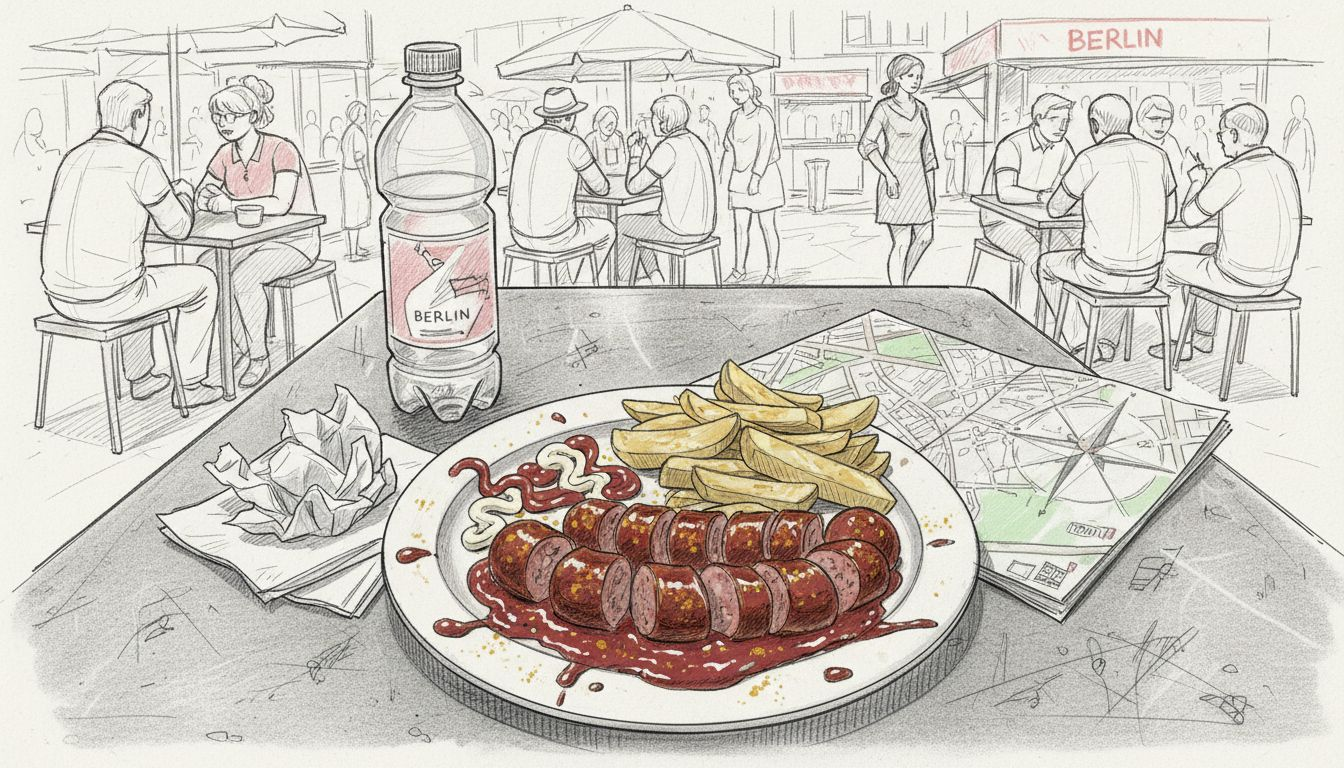
The true magic of currywurst lies in its signature sauce – a complex blend of ketchup, tomato paste, and carefully balanced spices. Traditional recipes incorporate curry powder, apple cider vinegar, and Worcestershire sauce, with some creative vendors adding unexpected ingredients like smoked paprika or plum jam to enhance the depth of flavour. Berlin street vendors have perfected this sauce over decades, creating a harmonious balance between sweet, tangy, and subtly spicy notes that define the dish’s character.
Serving currywurst is an art form in itself. The sausage is typically sliced into bite-sized pieces and generously coated with the vibrant curry sauce, then sprinkled with an additional dusting of curry powder. Accompanying sides are crucial – most commonly, crisp french fries or a simple bread roll complement the dish, allowing diners to soak up every last drop of the flavourful sauce. Each vendor takes pride in their unique interpretation, making every currywurst experience slightly different yet unmistakably Berlin.
Pro tip: Ask local street vendors about their secret sauce recipe to uncover the most authentic currywurst experience in Berlin.
Regional and Modern Variations Explained
Currywurst reveals fascinating regional diversity across Germany, with each area adding its unique culinary signature. Regional interpretations showcase remarkable differences, particularly between Berlin’s traditional approach and the Ruhrgebiet’s bolder style. While Berlin typically favours a softer, skinless sausage with a sweeter sauce, the Ruhrgebiet region prefers more robust sausages with spicier, more complex flavour profiles that often incorporate additional ingredients like onions or paprika.
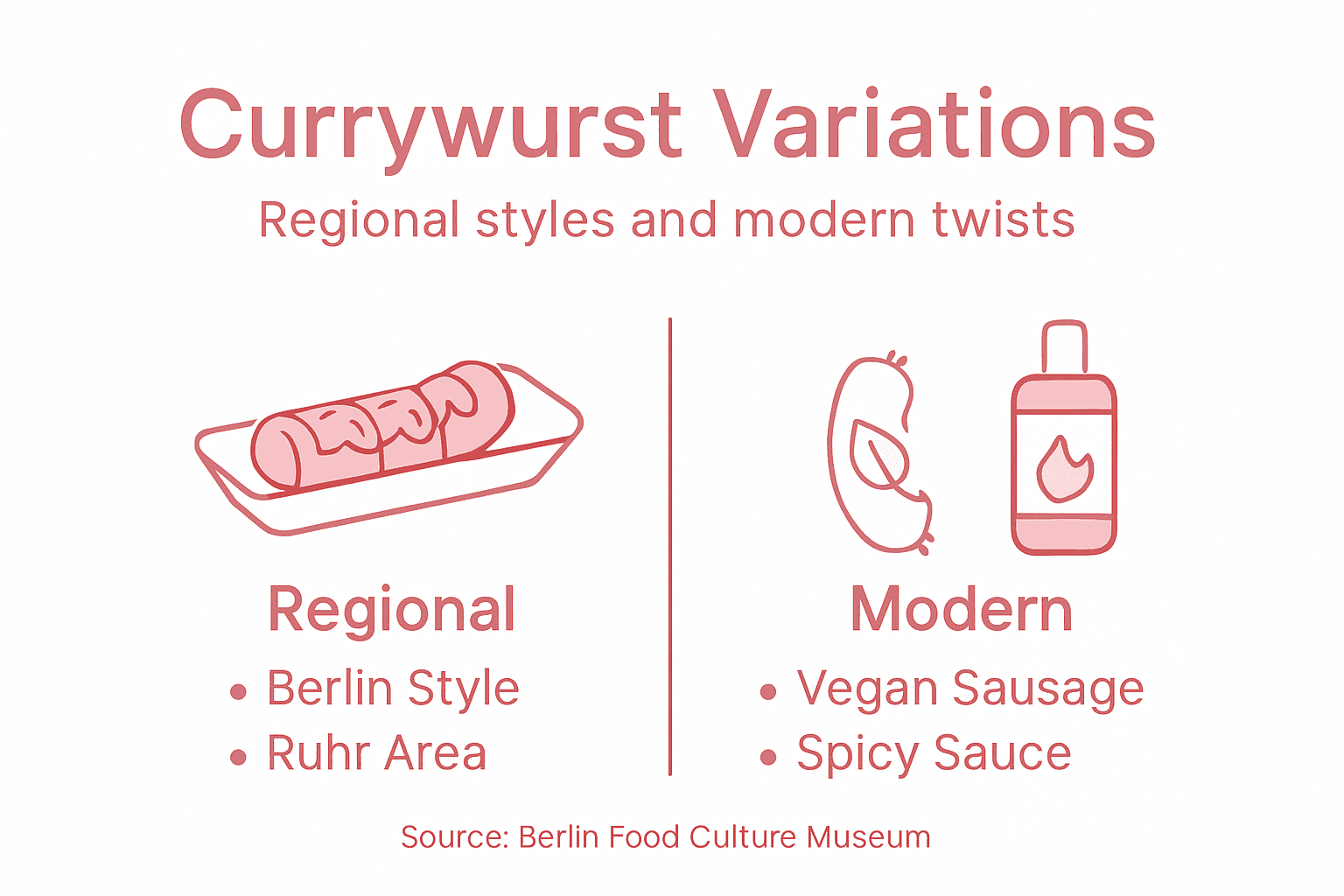
Modern culinary innovations have transformed currywurst from a simple street food into a canvas for gastronomic creativity. Contemporary chefs and food entrepreneurs are reimagining the classic dish through vegan alternatives, artisanal sausage varieties, and experimental sauce recipes. Halal versions using beef sausages demonstrate how the dish adapts to diverse cultural and dietary preferences, reflecting Germany’s multicultural culinary landscape. Some innovative interpretations now include globally-inspired spice blends, gourmet sausage cuts, and plant-based proteins that maintain the dish’s essential character while appealing to changing consumer tastes.
The evolution of currywurst mirrors broader social changes, transforming from a post-war street food staple to a flexible, inclusive culinary tradition. Regional variations now range from traditional interpretations celebrating local meat-preparation techniques to cutting-edge versions that challenge conventional definitions. Whether served by a classic street vendor in Berlin or a trendy urban restaurant in the Ruhrgebiet, currywurst remains a beloved national dish that continues to surprise and delight food enthusiasts.
Here is a comparison of key regional and modern currywurst variations:
| Variation Type | Typical Sausage Style | Sauce Profile | Notable Ingredients |
|---|---|---|---|
| Berlin Traditional | Skinless pork, mild texture | Sweeter, tomato-based, tangy | Curry powder, Worcestershire sauce |
| Ruhrgebiet Style | Skinned, robust pork sausage | Spicier, richer, bolder blend | Onions, smoked paprika |
| Vegan/Modern | Plant-based sausage alternatives | Experimental, diverse spices | Plum jam, exotic spice blends |
| Halal Interpretation | Beef or poultry sausage | Custom to dietary needs | Halal-certified meat |
Pro tip: When exploring currywurst variations, sample versions from different regions to appreciate the subtle yet significant local nuances.
Currywurst’s Place in Berlin Street Food Culture
Berlin’s street food culture finds its quintessential expression in currywurst, a dish that transcends mere sustenance to become a powerful social symbol. Originating in the challenging post-war era, currywurst emerged as an affordable, satisfying meal that democratically served everyone from construction workers to corporate executives. The humble currywurst stand represents more than a food outlet – it’s a social equaliser where diverse Berliners converge, sharing a common culinary experience that reflects the city’s inclusive spirit.
The proliferation of currywurst stands across Berlin’s neighbourhoods tells a story of urban resilience and creativity. Iconic locations like Konnopke’s and Curry 36 have become more than simple food vendors; they are cultural institutions that preserve a collective memory of the city’s gastronomic heritage. Culinary landmarks celebrating post-war innovation demonstrate how a simple street food can encapsulate an entire city’s social narrative, bridging generations and social classes through a shared love of a beloved dish.
Beyond its practical origins, currywurst has evolved into a cultural phenomenon that extends far beyond nutrition. Celebrated through dedicated festivals, commemorated in museums, and continually reinvented by innovative chefs, the dish represents Berlin’s dynamic culinary landscape. Its ongoing popularity reflects the city’s capacity for transformation – taking a basic concept and elevating it into something that speaks to broader social values of accessibility, creativity, and communal experience.
Pro tip: Visit multiple currywurst stands to experience the subtle variations that make each vendor’s interpretation unique.
How to Eat, Where to Find, and Common Mistakes
Authentic currywurst experiences demand more than casual consumption – they require understanding specific eating etiquette and selecting the right vendor. Traditional street food stands serve the dish on paper trays, accompanied by a small wooden or plastic fork designed specifically for this culinary tradition. When ordering, look for stands that prepare sausages fresh and maintain a hot, generously spiced sauce that is immediately sprinkled with curry powder – a critical element that distinguishes an exceptional serving from a mediocre one.
Locating the best currywurst requires insider knowledge of Berlin’s street food landscape. Iconic stands like Curry 36 and Konnopke’s are legendary, but discerning diners should evaluate vendors based on specific criteria. The best currywurst comes from stands maintaining high cooking standards, where sausages are freshly grilled, sauce is perfectly balanced, and curry powder is applied with generous enthusiasm. Accompaniments matter too – crisp pommes (fries) or a soft bread roll can elevate the entire experience, allowing diners to soak up every last drop of the rich, spiced sauce.
Avoiding common mistakes is crucial for those seeking an authentic Berlin street food experience. Novice consumers often err by accepting cold sauces, overlooking sauce-to-sausage ratios, or neglecting the importance of fresh preparation. The ideal currywurst should feature a sausage cooked moments before serving, a warm sauce with a complex flavour profile, and a liberal dusting of curry powder that adds depth and character to each bite. Pairing the dish with the right beverage – perhaps a cold German beer – can transform a simple street food encounter into a memorable culinary moment.
Below is a quick summary of common mistakes and tips for eating authentic Berlin currywurst:
| Mistake to Avoid | Impact on Experience | Tip for Authentic Enjoyment |
|---|---|---|
| Accepting cold sauce | Diminished flavour and texture | Always request freshly heated sauce |
| Poor sauce-to-sausage ratio | Unbalanced taste | Opt for stands with generous sauce portions |
| Ignoring sides | Missed traditional pairing | Choose fries or bread roll as accompaniments |
| Overlooking preparation | Lower freshness and quality | Watch sausage being grilled to order |
Pro tip: Always watch the vendor prepare your currywurst to ensure maximum freshness and authenticity.
Discover Currywurst and Berlin’s Culinary Secrets with Chef Karl Wilder
Currywurst is not just a dish it is a taste of Berlin’s rich culture and history. If you want to go beyond ordinary street food and truly understand why currywurst holds such a special place in Berlin’s heart this is your chance. Many travellers struggle to find authentic vendors or miss the subtle regional flavours and eating traditions that make the experience unforgettable. By joining a chef-led tour with Chef Karl Wilder you unlock the exclusive insider knowledge and get to taste carefully curated currywurst variations paired perfectly with the city’s best local delicacies.

Take this opportunity to explore Berlin’s vibrant food scene through the eyes of a local chef. Learn the nuances of currywurst from its classic preparation to modern twists while enjoying personalised, small-group tastings in hidden venues. Do not just eat currywurst, experience it fully with The Chef’s Tours. Book your authentic Berlin culinary adventure now and savour the flavours of history and innovation combined.
Frequently Asked Questions
What is currywurst?
Currywurst is a popular German street food consisting of a pork sausage sliced into bite-sized pieces and covered with a curry-spiced ketchup sauce. It originated in Berlin in 1949 and has since become a cultural symbol of the city.
How is currywurst traditionally prepared?
Currywurst is typically prepared using a pork bratwurst that is either pan-fried or grilled to create a crispy exterior. It is then served with a sauce made from ketchup, curry powder, and various spices, sometimes accompanied by fries or a bread roll.
What are some common mistakes to avoid when eating currywurst?
Common mistakes include accepting cold sauce, overlooking the sauce-to-sausage ratio, ignoring the importance of sides, and not ensuring the sausage is freshly prepared. For the best experience, always check that your currywurst is served hot and generously sauced.
How has currywurst evolved in modern culinary culture?
Currywurst has evolved to incorporate regional variations and modern interpretations, including vegan options and gourmet twists. Chefs are experimenting with new flavour combinations and ingredients to reflect contemporary culinary trends while maintaining the dish’s core identity.