

TL;DR:
- Shared meals build trust, improve collaboration, and boost team morale.
- Food experiences promote social bonding through neuroscience and collective shared moments.
- Inclusive, well-designed culinary events enhance long-term relationships and team performance.
Most corporate team-building strategies focus on workshops, away days, and structured exercises. Yet one of the most powerful tools for building trust sits right on the dinner table. Shared team meals boost collaboration, deepen relationships, and even improve performance in high-pressure environments. This guide explores the psychology and science behind food-based bonding, outlines the practical benefits for your organisation, and gives you a clear framework for designing culinary experiences your team will genuinely value and remember long after the meal ends.
Table of Contents
- Why food experiences matter for team bonding
- The science behind sharing meals: How it works
- Key benefits of culinary experiences for corporate teams
- Designing inclusive and effective team food experiences
- The overlooked art of simple sharing: What most leaders miss
- Take your team further with curated culinary experiences
- Frequently asked questions
Key Takeaways
| Point | Details |
|---|---|
| Shared meals foster trust | Eating together helps teams communicate openly and build genuine relationships. |
| Better performance and satisfaction | Teams who share meals are happier and collaborate more effectively. |
| Inclusivity is essential | Address dietary needs and create events everyone can enjoy for true team cohesion. |
| Simplicity beats novelty | Simple, authentic food experiences outshine elaborate team-building activities. |
Why food experiences matter for team bonding
Having outlined the surprising impact of shared meals, let’s look closer at what actually happens when teams gather around food.
Most of us take meals for granted. A packed lunch at your desk. A rushed coffee between meetings. Yet eating together is one of the oldest and most instinctive forms of human connection. When you share food with someone, you signal safety, openness, and trust at a level words simply cannot reach. That is precisely why food experiences are becoming a serious strategy for team leaders who want lasting results.
Research makes the case powerfully. Teams that eat together collaborate more across departments, leading to greater creativity and stronger problem-solving. It is not just about being sociable. The act of sharing a meal physically shifts how people relate to one another, breaking down hierarchy and creating a level playing field where everyone has a voice.
“Sharing meals with others is one of the strongest predictors of social connection and wellbeing, comparable in impact to factors like income and employment status.”
The World Happiness Report found that sharing meals predicts higher life satisfaction at rates comparable to income and employment. That is a striking finding. It means that for your team members, the experience of eating together is not merely pleasant. It is genuinely meaningful.
Here is what shared food experiences consistently deliver:
- Improved trust between colleagues who rarely interact outside their department
- Reduced social anxiety, particularly for newer team members still finding their footing
- Stronger cross-team communication, which feeds creativity and reduces silos
- Greater belonging, which directly impacts retention and morale
The human connection through food is not a vague concept. It is measurable, repeatable, and strategically valuable. Understanding this is the first step to designing team events that actually work.
The science behind sharing meals: How it works
Now that we see why shared meals are powerful, it helps to understand the science behind their impact.
When you sit down to eat with others, your brain responds in ways that a team meeting never triggers. The relaxed atmosphere of a shared meal releases oxytocin and dopamine, the hormones responsible for trust, pleasure, and social bonding. These are not abstract benefits. They translate directly into how willing your colleagues are to share ideas, admit mistakes, and support one another.
Passing food around a table is particularly significant. The act of offering something to another person, and accepting something in return, creates a micro-exchange of reciprocity. It subtly reinforces equality. Nobody is in charge of the bread basket. Everyone contributes and receives. This is the neuroscience of what researchers call commensality, the practice of eating together.
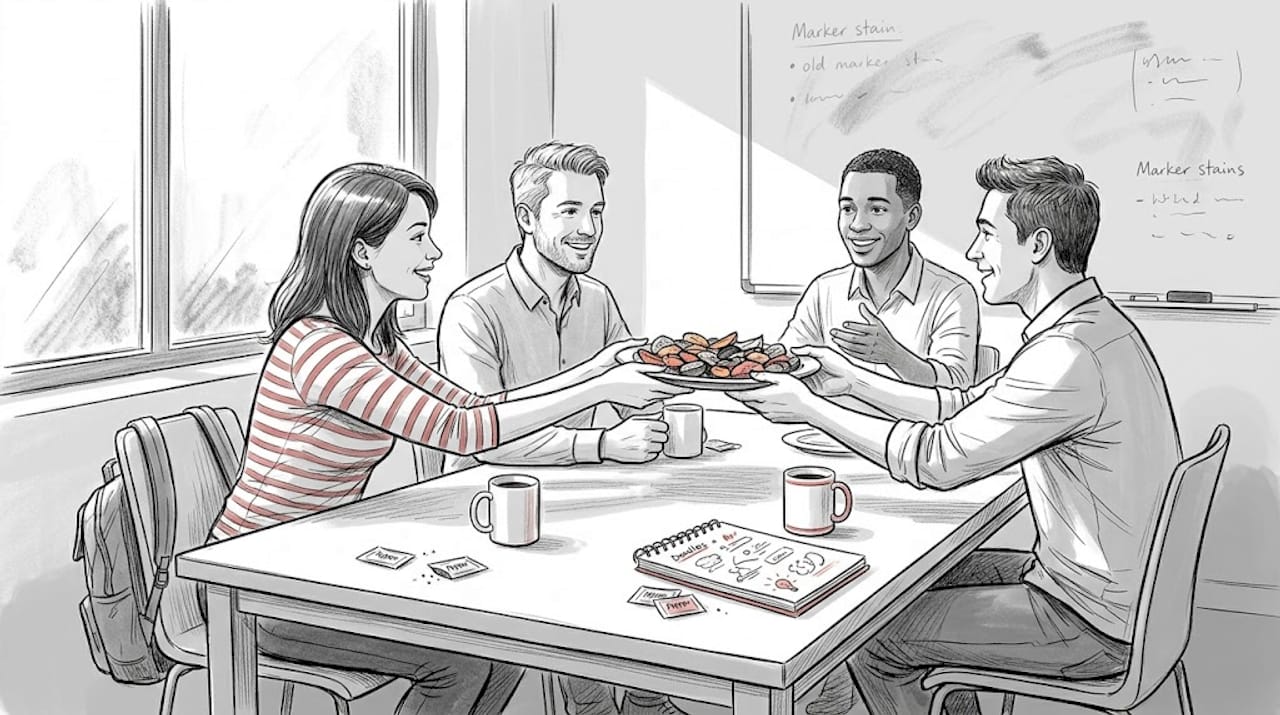
A Swiss Armed Forces study found that shared meals among military recruits facilitated acquaintance, the formation of shared values, a collective sense of reality, and deep interpersonal bonds. If structured communal meals can build cohesion under the extreme pressures of military training, they can absolutely work in a corporate setting.
Pro Tip: Structure your team meal to include natural moments for passing food, choosing dishes, and making small collective decisions. Even choosing toppings together creates tiny bonding moments that add up.
Here is a simple breakdown of how a well-designed bonding meal works:
- Arrival and settling — informal chat before food arrives lowers defences and sets a relaxed tone
- Sharing dishes — communal plates encourage interaction and physical reciprocity
- Conversation deepens — as comfort grows, topics move beyond the surface
- Mutual appreciation — finishing a meal together creates a shared experience and a natural sense of closure
The table below shows how different meal formats support team cohesion:
| Meal format | Bonding potential | Best for |
|---|---|---|
| Shared plates | Very high | Breaking hierarchies, new teams |
| Chef-led tasting | High | Creative industries, senior teams |
| Cooking together | Very high | Problem-solving, cross-department groups |
| Individual set menus | Low | Formal occasions, less interaction |
Choosing the right format is part of the corporate culinary experience impact, and it shapes everything from engagement levels to the conversations that emerge.
Key benefits of culinary experiences for corporate teams
Understanding the mechanisms makes it clear why so many organisations turn to food-based activities. Here is what your team could gain.
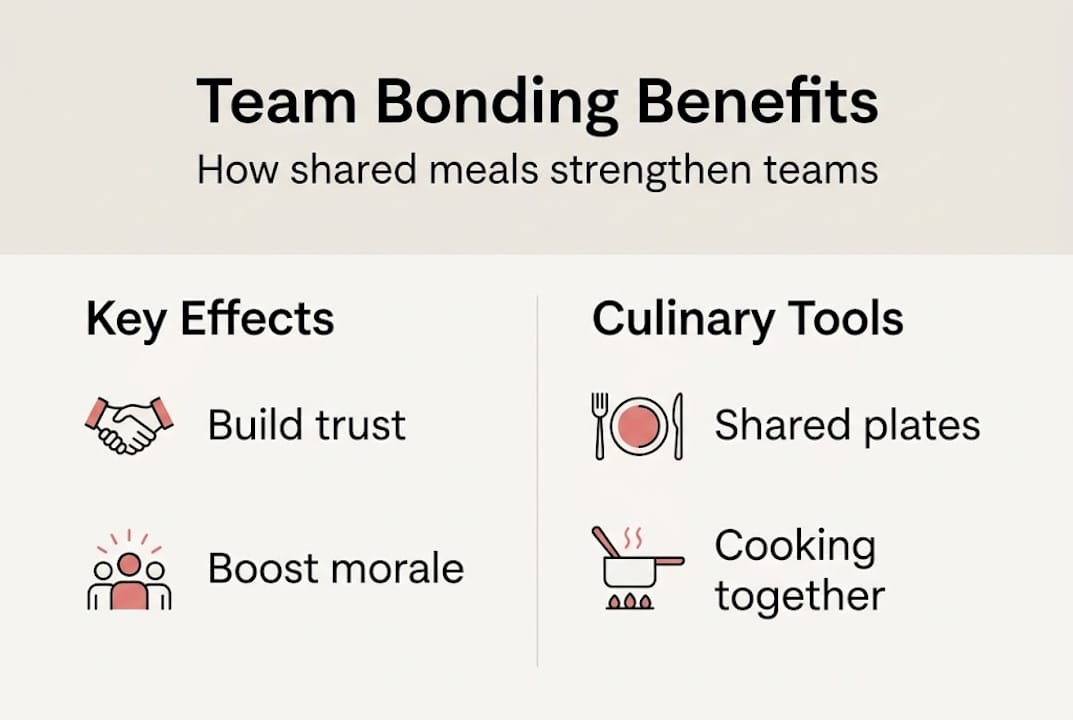
The benefits go well beyond a pleasant afternoon out. Culinary team experiences deliver measurable, practical outcomes that traditional team-building rarely matches. The evidence is compelling. Firefighters who eat together perform better as teams, with improved communication identified as the key factor. If it works for emergency responders under life-or-death pressure, it works for your sales team or your product development group.
Here is what organisations consistently report after investing in food-based team experiences:
- Improved communication across teams that previously worked in silos
- Higher morale and a stronger sense of group identity
- Greater creativity, fuelled by relaxed, open conversations
- Stronger loyalty to the company, particularly among mid-level staff
- Better performance on collaborative tasks in the weeks that follow
Culinary experiences are also uniquely flexible. They work brilliantly for newly formed teams who need to build rapport quickly, but they are equally powerful for long-standing groups that have grown a little stale. Spanish cuisine team benefits are a great example of how regional food culture can add an extra layer of engagement and novelty to the experience.
Pro Tip: For established teams, introduce an element of discovery, such as a new cuisine or a chef-led tasting, to reignite curiosity and spark fresh conversations between people who already know each other well.
Compared to traditional team-building, food experiences hold up extremely well:
| Factor | Traditional team-building | Culinary experience |
|---|---|---|
| Cost per head | Medium to high | Medium |
| Participation rate | Often low | Typically very high |
| Lasting memory | Short term | Long term |
| Emotional impact | Variable | Consistently strong |
| Inclusive appeal | Mixed | Broadly inclusive |
For leaders thinking about where to invest, planning culinary team events carefully maximises both the experience and the return. And for those still choosing between formats, guidance on choosing food tours for bonding can help narrow down the right fit.
Designing inclusive and effective team food experiences
With the benefits clear, planning an event that works for everyone is key. Here is how to make your food-based team bonding truly effective and inclusive.
A great culinary team event does not happen by accident. It takes deliberate design, and the most important element is inclusion. If even one team member feels overlooked because of dietary restrictions or cultural preferences, the bonding effect is undermined for the whole group. Research from the Swiss Armed Forces study confirms that inclusive, structured shared meals are what build genuine cohesion, particularly in diverse or high-pressure groups.
Follow these steps to set your event up for success:
- Collect dietary requirements early — send a simple form two to three weeks before the event
- Choose a venue or experience that accommodates variety — chef-led experiences are ideal as menus can be adapted
- Mix teams intentionally — seat people next to colleagues they do not usually work with
- Include shared elements — communal dishes, group tastings, or cooking challenges create natural interaction
- Brief your facilitator or chef — ensure they know the team’s dynamic and any relevant context
For remote or hybrid teams, food bonding is still entirely achievable. Home-delivered meal kits, virtual cooking sessions, and guided online tastings all recreate the shared experience across distances. The key is synchronicity. Everyone eating and engaging at the same time preserves the communal quality that makes shared meals effective.
Gourmet dining for teams offers one strong example of how thoughtfully curated food settings support connection, even for groups with different tastes and backgrounds.
Pro Tip: For hybrid events, send identical ingredient kits to all participants and guide them through a simple recipe together. The physical act of preparing and eating the same dish simultaneously creates a strong sense of shared experience, regardless of location.
When customising culinary events, always prioritise authenticity over novelty. A genuinely local food experience, led by someone who knows and loves the cuisine, will always outperform a generic themed event.
The overlooked art of simple sharing: What most leaders miss
Here is something we have observed time and again at The Chef’s Tours. Leaders often spend considerable budgets on elaborate team-building experiences, rope courses, escape rooms, competitive challenges, only to find that the moments their teams actually remember are the ones spent sharing a plate of something delicious with no agenda attached.
The science supports this instinct. Authentic, humble food experiences frequently outperform high-budget novelty activities for lasting emotional impact. The reason is vulnerability. When you sit down to eat with someone, there is nowhere to hide behind professionalism or performance. You are just a person, sharing food with another person.
True connection does not come from completing a challenge together. It comes from the unguarded moments at the table. A laugh over an unfamiliar ingredient. A conversation sparked by a dish from someone’s home country. A moment of genuine curiosity about a colleague’s story.
We encourage every leader to resist the urge to over-engineer these moments. Book a culinary tour for team bonding, find a chef who genuinely loves what they cook, and then simply let the food do what food has always done. Bring people together.
Take your team further with curated culinary experiences
Ready to create meaningful moments and deepen team trust?
At The Chef’s Tours, we design culinary experiences for corporate groups across Paris, Seville, Berlin, and Mexico City. Whether you want a small-group food tour led by a local chef or a private tasting event tailored to your team’s size and interests, we handle every detail so you can focus on your people.
Our experiences are built for connection, not just consumption. Every tour is led by a chef who knows their city intimately, from hidden restaurants to the stories behind every dish. Explore our full range of culinary experiences to try or discover the specific culinary experience benefits for corporate teams. Your next great team moment starts at the table.
Frequently asked questions
Why are food experiences more effective than traditional team-building activities?
Food experiences create a naturally relaxed setting where authentic connections form organically. Teams that share meals show measurably better communication and trust, outcomes that structured activities rarely replicate.
How can we include remote or hybrid teams in food-based bonding?
Virtual cooking workshops, home-delivered meal kits, and synchronised online tastings all preserve the communal quality of shared meals. Structured communal formats work across distances when everyone participates at the same time.
What should we do about dietary restrictions or allergies?
Always collect dietary requirements well in advance and partner with a chef or venue experienced in accommodating diverse needs. Inclusive meal planning is essential, as overlooking any team member undermines the bonding effect for everyone.
Is the team-bonding effect of sharing meals scientifically proven?
Studies show a strong and consistent correlation between shared meals and improved teamwork, though definitive causation has not yet been fully established. The evidence across multiple disciplines is nonetheless compelling and consistent.
Recommended
- The Importance of Human Connection Through Food –
- How culinary tours create bonding breaks for families
- Why corporate culinary tours boost team bonding in 2026
- Plan culinary team events to boost collaboration
- Isle of Skye traditional food – Your Culinary Adventure Awaits!
- FLEGGAARD “Team Building” – Push Pull Production