

TL;DR:
- Food has become the main motivation for travel, with culinary experiences driving tourism growth.
- Chef-led tours offer authentic cultural immersion through local producer relationships and insider knowledge.
- Culinary tourism impacts local economies and appeals to diverse travelers seeking meaningful, personalized food adventures.
Food has overtaken landmarks as the primary motivator for travel. 62% of travellers now prioritise food experiences when choosing a destination, and that number is only growing. Culinary tours are not simply a nice addition to a trip. They are fast becoming the reason people book flights in the first place. In 2026, the way we experience cities through their kitchens, markets, and back-street eateries has fundamentally changed what travel means. If you have ever finished a meal in a foreign city and thought, “I wish I knew more about this,” a culinary tour is exactly what you have been missing.
Table of Contents
- The rise of culinary tourism in 2026
- Why food is the new compass for travellers
- Chef-led culinary tours: redefining authenticity
- Practical considerations: accessibility, sustainability, and customisation
- Why culinary tours are no longer optional for true food explorers
- Ready to taste the world? Start planning your ultimate culinary tour
- Frequently asked questions
Key Takeaways
| Point | Details |
|---|---|
| Experiential travel boom | Culinary tours are driving the demand for immersive, authentic travel in 2026. |
| Chef-led tours unlock culture | Travelling with chefs offers deeper access to local food traditions and authentic cuisine. |
| Food guides travel choices | Most travellers now pick destinations for their culinary scene, not just landmarks. |
| Accessible and customisable | Culinary tours in 2026 suit all budgets and preferences with a focus on sustainability. |
The rise of culinary tourism in 2026
The numbers are striking. The culinary tourism market is projected to grow from $1.23 trillion in 2026 to $2.19 trillion by 2030. That is not a niche trend. That is a global economic force reshaping how entire cities position themselves for visitors.
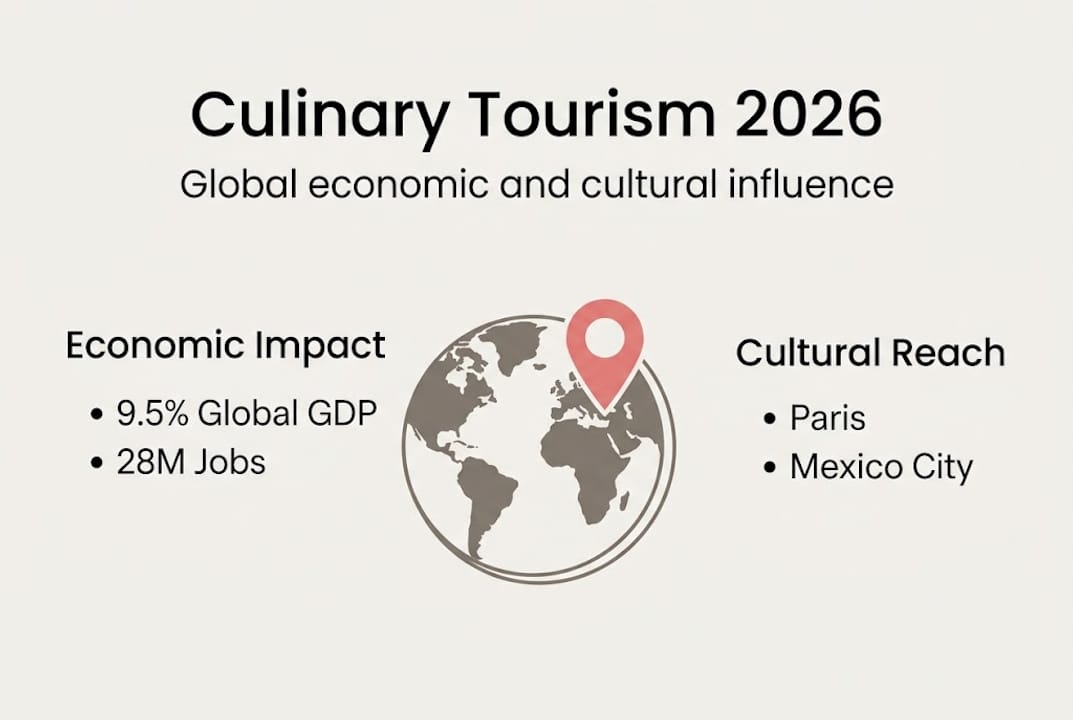
Food tourism contributes 9.5% to the global GDP and supports 28 million jobs worldwide. Every tasting tour, every street food walk, every chef-guided market visit feeds into an economy that sustains farmers, producers, restaurateurs, and local communities.
Here is a snapshot of how culinary tourism compares across key dimensions:
| Dimension | Standard tourism | Culinary tourism |
|---|---|---|
| Primary motivation | Sightseeing, history | Food, flavour, culture |
| Type of engagement | Passive observation | Active participation |
| Economic impact | Broad | Strongly local |
| Repeat visit likelihood | Moderate | High |
The shift is being driven by a genuine hunger for meaning in travel. People are tired of queuing at the same monuments everyone else photographs. They want to sit in a kitchen, taste something unexpected, and understand why a dish exists. That desire for cultural depth is what the culinary tourism trends in 2026 reveal most clearly.
What is fuelling this boom?
- Growing awareness of regional food cultures thanks to streaming documentaries and food media
- Post-pandemic desire for genuine human connection through shared meals
- A rejection of homogenised travel experiences in favour of neighbourhood-level discovery
- Increased access to local chefs and food experts through specialist platforms
“Food tourism is no longer a subgenre of travel. It is the new benchmark for how deeply a destination is truly experienced.”
The cities benefiting most are those with rich, layered culinary identities: Paris, Seville, Berlin, and Mexico City among them. These are places where food is not decoration. It is the story.
Why food is the new compass for travellers
Nearly 80% of travellers consider food important or very important when selecting a destination. That figure alone reframes what destination marketing should prioritise. Landmarks and hotel pools have competition.
What separates food travellers from general tourists? The motivations differ considerably:
| Motivation | General tourist | Food traveller |
|---|---|---|
| Primary goal | See famous sites | Taste authentic cuisine |
| Tour preference | Bus or group sightseeing | Walking or chef-led food tour |
| Memory driver | Visual landmarks | Flavour and shared experience |
| Engagement with locals | Minimal | Frequent and meaningful |
Over half of travellers cite discovering local food spots as the primary reason for joining walking tours, and there has been a 54% increase in coffee tour bookings. People are not just eating. They are learning where food comes from, who makes it, and what it means to a community.
The appeal of walking tours in particular comes from their pace. You are not rushed past a dish. You stop, you ask questions, you try something you cannot find in any guidebook. That combination of movement, discovery, and flavour creates memories that outlast any museum visit.
Pro Tip: When booking a food-focused walking tour, choose one that covers no more than five or six stops. Fewer stops mean more time at each location, better conversation with local producers, and a far richer experience overall.
For anyone weighing up their options, chef-led food tours offer something uniquely valuable: expert curation. A chef does not just know where to eat. They know why a particular dish is made this way, who the supplier is, and what story the plate is telling. That layer of context transforms eating into understanding.
The best food tour destinations share a common thread: they have chefs willing to open doors that are otherwise closed to visitors. That access is everything.
Chef-led culinary tours: redefining authenticity
Authenticity has become the most sought-after quality in travel. Not luxury. Not novelty. Authenticity. And nothing delivers it more consistently than a chef who has spent years cooking in, learning from, and living within a city’s food culture.
“A chef does not show you a city’s food. They help you understand it from the inside out.”
The shift to experiential travel post-pandemic has placed chef-led culinary tours at the centre of how people seek genuine cultural immersion. Standard tours follow scripts. Chef-led tours follow seasons, relationships, and instinct.
Here is what makes the difference in practice:
- Local producer relationships — Chefs source from specific suppliers and introduce you to the people behind the food, not just the food itself.
- Neighbourhood knowledge — They know which side-street bakery opens at 6am, which market stall has the best cured meats, and which bar has been run by the same family for three generations.
- Culinary context — Understanding why a dish exists, how it evolved, and what it reveals about a region’s history transforms tasting into genuine cultural learning.
- Spontaneity — A good chef-led tour adapts. If something exceptional appears at the market that morning, the tour shifts to include it.
- Small groups — Intimacy matters. Fewer people means better access, more conversation, and a more personal experience.
How chef expertise adds value goes beyond culinary knowledge. It is about trust. Locals respect chefs. Doors open. Conversations happen. You are no longer a tourist. You are a welcomed guest.
Pro Tip: Always ask your tour operator whether the guiding chef actively cooks in the city. A chef who still works in local kitchens will have far more current knowledge than one who retired from cooking to become a guide.
The culinary insight from chef-led tours is what separates a good meal from a formative travel experience. In Paris, Chef PJ brings that depth to every neighbourhood he walks. In Seville, Chef Crestani reveals the city’s flavour from the inside. In Berlin and Mexico City, Chef Karl Wilder connects guests to food cultures that most visitors never reach.
Practical considerations: accessibility, sustainability, and customisation
Choosing the right culinary tour means thinking beyond the menu. Budget, dietary needs, group composition, and environmental impact all factor into finding an experience that truly fits.
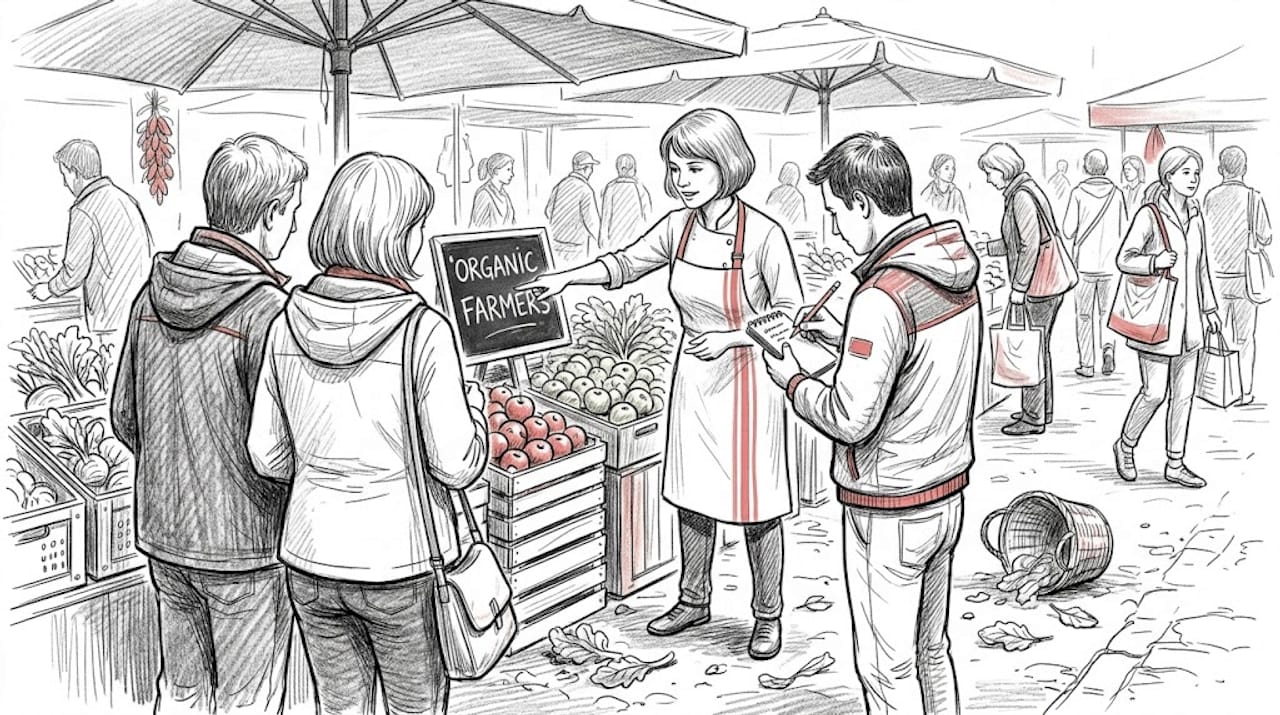
Culinary tourism appeals across demographics, but rising costs and sustainability are emerging concerns that responsible operators are taking seriously. Price should not be a barrier to authentic food experiences, and the best platforms offer options across a wide range of budgets.
Here is what to consider when evaluating a tour:
- Budget fit — Many excellent food experiences are affordable. Street food tours, market visits, and neighbourhood walks often cost far less than a restaurant tasting menu, yet deliver equal or greater insight.
- Dietary needs — A good operator customises the route for vegetarians, vegans, people with allergies, or those with religious dietary requirements. Always confirm before booking.
- Group type — Private tours suit couples and families. Small-group tours work brilliantly for solo travellers wanting to meet like-minded food lovers. Corporate tours can be tailored for team experiences.
- Sustainability — Tours that prioritise local, seasonal produce and direct producer relationships have a far lower environmental footprint and a far greater positive impact on local communities.
| Tour type | Best for | Average group size |
|---|---|---|
| Private chef-led | Couples, families, VIPs | 2 to 6 |
| Small group | Solo travellers, food lovers | 6 to 12 |
| Corporate | Teams, events | 10 to 30 |
Pro Tip: When customising your culinary tour, ask the operator to include at least one stop that involves meeting a producer or maker directly. That human connection is what stays with you long after the flavours fade.
For those keen on finding local chefs for tours, the key is specificity. A chef who specialises in a city’s regional cuisine will always outperform a generalist guide. Expertise is narrow by design.
Why culinary tours are no longer optional for true food explorers
Here is an uncomfortable truth: most travellers eat well but understand nothing. They sit in a beautiful restaurant, enjoy excellent food, and leave with no greater understanding of the culture that produced it than when they arrived. That is a missed opportunity on a significant scale.
The food travel revolution is not being misunderstood because people do not care about food. It is being misunderstood because most tourists default to safety. They pick restaurants with English menus, choose spots near their hotel, and avoid anything that feels unfamiliar. The result is a version of a city that has been curated for outsiders rather than lived in by locals.
Chef-led tours disrupt that entirely. They put you in places you would never find alone, eating things you would never order without guidance, and talking to people you would never otherwise meet. The most authentic cities for food tours reward this kind of curiosity generously. Paris, Seville, Berlin, and Mexico City each hold food worlds that exist parallel to the tourist trail. You need a chef to open the door. Once you have experienced travel this way, eating in isolation at a hotel restaurant feels like a genuine loss.
Ready to taste the world? Start planning your ultimate culinary tour
If this has shifted how you think about food-driven travel, the next step is straightforward. The culinary experiences to try span cities, budgets, and flavour profiles, all led by chefs who know their cities from the inside out.
At The Chef’s Tours, we connect you with Chef PJ in Paris, Chef Crestani in Seville, and Chef Karl Wilder across Berlin and Mexico City. Every tour is small, personal, and built around genuine food culture. Whether you are after a private experience or a small-group adventure, you can discover the difference with chef-led tours and browse our full range of culinary city tours to find the experience that suits you perfectly.
Frequently asked questions
What makes a culinary tour chef-led?
Chef-led tours are guided by culinary professionals who provide insider access to authentic flavours, local markets, and behind-the-scenes experiences that standard guides simply cannot offer. The shift to experiential travel post-pandemic has made this distinction more significant than ever.
Why are culinary tours so popular in 2026?
Travellers crave immersive, authentic food experiences, and the industry reflects that demand, with a $1.23 trillion market projected to nearly double by 2030.
Are culinary tours suitable for all budgets?
Yes. Options range from affordable street food walks to premium private chef experiences, with rising costs prompting operators to offer greater flexibility across price points and dietary requirements.
How do culinary tours support local communities?
They channel spending directly into local economies, and food tourism already contributes 9.5% to global GDP while supporting 28 million jobs, making every tour booking a meaningful act of community investment.