

TL;DR:
- Curated food experiences involve personalized journeys led by local experts, emphasizing authenticity and cultural storytelling.
- They offer access to hidden venues, exclusive interactions with chefs, and deeper cultural connections.
- Choosing a curated experience enhances learning, human connection, and appreciation of regional flavors beyond standard tours.
Think a curated food experience is simply a restaurant recommendation list? Think again. For culinary tourists who crave genuine connection with local chefs, secret venues, and authentic regional flavours, curation means something far richer. Standard dining guides point you toward popular spots; curated experiences take you somewhere deeper. They reveal the people, stories, and traditions behind every dish. This guide explains exactly what makes curated food experiences different, how they are built, what benefits you gain, and how to choose the right one for your next adventure. By the end, you will know precisely what to look for and why it matters.
Table of Contents
- Defining curated food experiences: More than just a meal
- How curated food experiences are crafted
- Unique benefits for culinary travellers
- Applying your curiosity: How to choose and maximise your curated food journey
- Why authenticity beats novelty: A fresh perspective on curated food experiences
- Ready to savour the best curated food experiences?
- Frequently asked questions
Key Takeaways
| Point | Details |
|---|---|
| Personal touch matters | Curated food experiences are thoughtfully designed by local experts to ensure every bite has purpose and meaning. |
| Exclusive access | These journeys unlock chef-led events and hidden spots not found in typical guides or tours. |
| Deeper cultural connection | Curated dining brings you closer to local traditions, stories, and the people behind the food. |
| Easy to customise | Most curated experiences happily adapt to your tastes, needs, and curiosity for the best adventure possible. |
Defining curated food experiences: More than just a meal
With the need for clarity out of the way, it is important to identify what truly sets curated food experiences apart from ordinary dining.
A curated food experience is not simply eating at a well-reviewed restaurant or joining a large group walking tour. It is a carefully assembled journey, shaped by expert knowledge, personal attention, and genuine cultural intent. As local chef-curated experiences show, these journeys involve personalised touches by local experts, connecting travellers with authentic regional flavours. That distinction matters enormously. You are not a passive diner; you are an active participant in a living culinary tradition.
The hallmarks of a truly curated food experience include:
- Intentional selection: Every stop, dish, and producer is chosen with purpose, not convenience.
- Local expert involvement: A chef, food historian, or passionate local shapes the itinerary.
- Small group sizes: Intimacy allows for real conversation and personal attention.
- Exclusive access: Hidden markets, private kitchens, and family-run establishments rarely found online.
- Storytelling: Each bite is accompanied by context, history, and human connection.
Contrast this with a standard food tour. Many popular options herd twenty or thirty guests between tourist-friendly restaurants, offering little more than samples and scripted commentary. There is nothing wrong with enjoying popular food spots, but they rarely reveal what defines a curated journey in terms of depth, access, or cultural nuance.
“The difference between eating and experiencing food is the presence of a knowledgeable guide who turns every flavour into a conversation about place, people, and history.”
Local chef involvement is perhaps the most powerful variable. A chef does not simply introduce you to good food; they explain technique, share personal relationships with suppliers, and offer candid opinions shaped by years of professional experience. In cities such as Paris, Seville, Berlin, and Mexico City, this insider knowledge changes everything. Chef PJ in Paris navigates the city’s boulangeries and bistros with authority no guidebook can replicate. Chef Crestani in Seville draws on relationships built across years of working in the city’s culinary scene. The food becomes a doorway, not a destination.
How curated food experiences are crafted
Now that the definition is established, let’s look behind the scenes to see how these experiences are brought to life.
Crafting a curated food experience is a deliberate and collaborative process. It does not happen by accident, and it cannot be rushed. How custom food experiences work reveals that personalisation and exclusive access are two defining elements of the curated food movement driving culinary tourism. Here is how the process typically unfolds:
- Identifying local gastronomic highlights: Chefs and local experts scout the city for producers, venues, and dishes that genuinely represent the region’s food culture, favouring authenticity over popularity.
- Collaborating with producers and restaurateurs: Relationships with market vendors, family-run trattorie, and artisan producers are built over time. These connections open doors that remain firmly shut to conventional tourists.
- Gathering guest preferences: Dietary needs, flavour preferences, culinary interests, and travel goals are collected before the experience begins.
- Building and refining the itinerary: Stops are sequenced to tell a coherent story, from morning market visits through to evening tastings, creating a natural culinary arc.
- Integrating storytelling: Every location is given context. History, anecdote, and personal chef perspective transform tasting into genuine education.
Guest input plays a larger role than many people expect. Culinary tour customisation confirms that customisation is a central value proposition for culinary tourists choosing curated tours over generic offerings. A well-designed experience should flex around you, not the other way around.
| Feature | Chef-led curation | Non-chef-led curation |
|---|---|---|
| Cultural depth | High | Moderate |
| Flexibility | High | Low to moderate |
| Access to exclusive venues | Frequent | Occasional |
| Storytelling quality | Expert level | Variable |
| Personalisation | Strong | Limited |
The table makes it clear: chef partnerships add a measurable layer of value that generic operators simply cannot replicate.
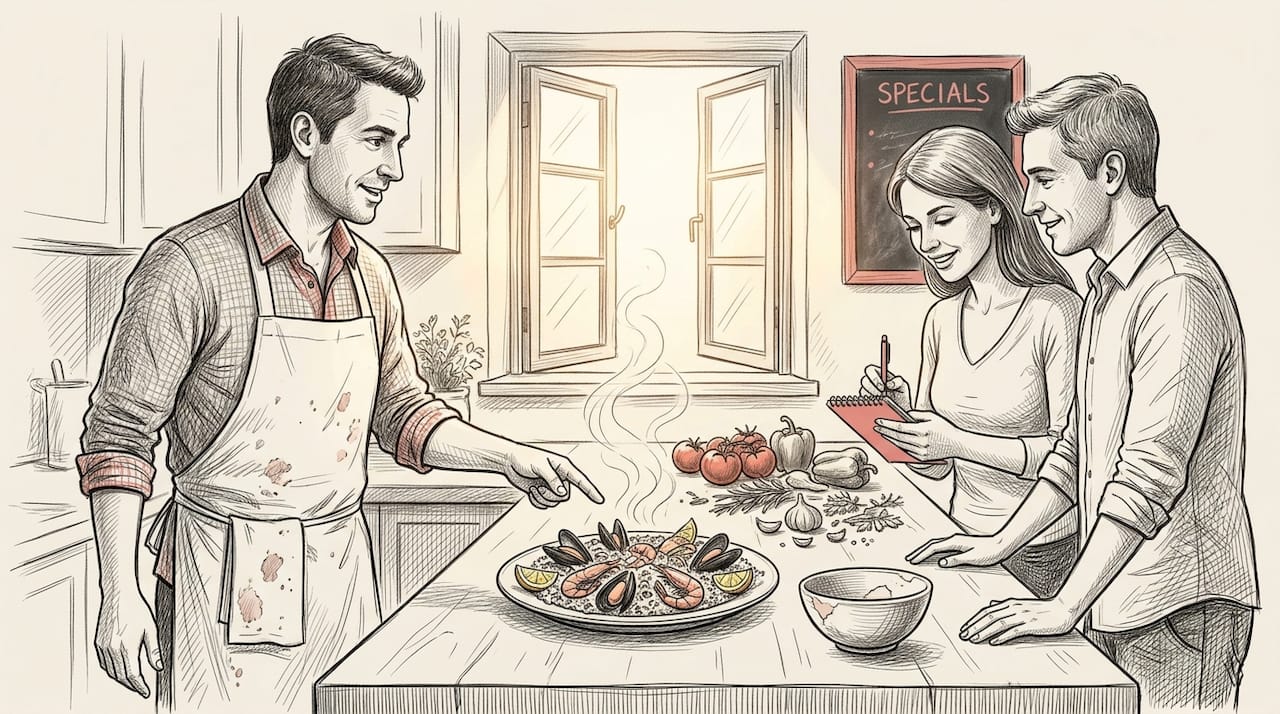
Pro Tip: When booking any curated food experience, send a short message detailing your three favourite flavours, any dishes you genuinely dislike, and one culinary tradition you have always wanted to explore. This simple act helps your chef design something truly memorable for you.
Unique benefits for culinary travellers
Understanding the creation process, it is now vital to see what sets these experiences apart for travellers.
The benefits of a curated food experience extend well beyond a satisfying meal. Personalised tours for authenticity consistently deliver things that conventional travel simply cannot.
Consider what you actually gain:
- Skills and stories not found in guidebooks: A chef sharing a family recipe or explaining why a particular olive oil is pressed in a specific region gives you knowledge you can carry home and use.
- Access to unseen venues: Hidden courtyard restaurants, dawn market runs with local chefs, basement wine cellars, and private cheese-ageing rooms are entirely off the tourist map.
- Meaningful cultural bonds: Sharing a meal around a table with a local chef and a small group of fellow travellers builds genuine human connection, not just holiday memories.
- Regional specialities discovered in context: Eating jamón ibérico in a back-street Seville bar with Chef Crestani explaining the breed and the curing process is an entirely different experience from reading about it in a travel magazine.
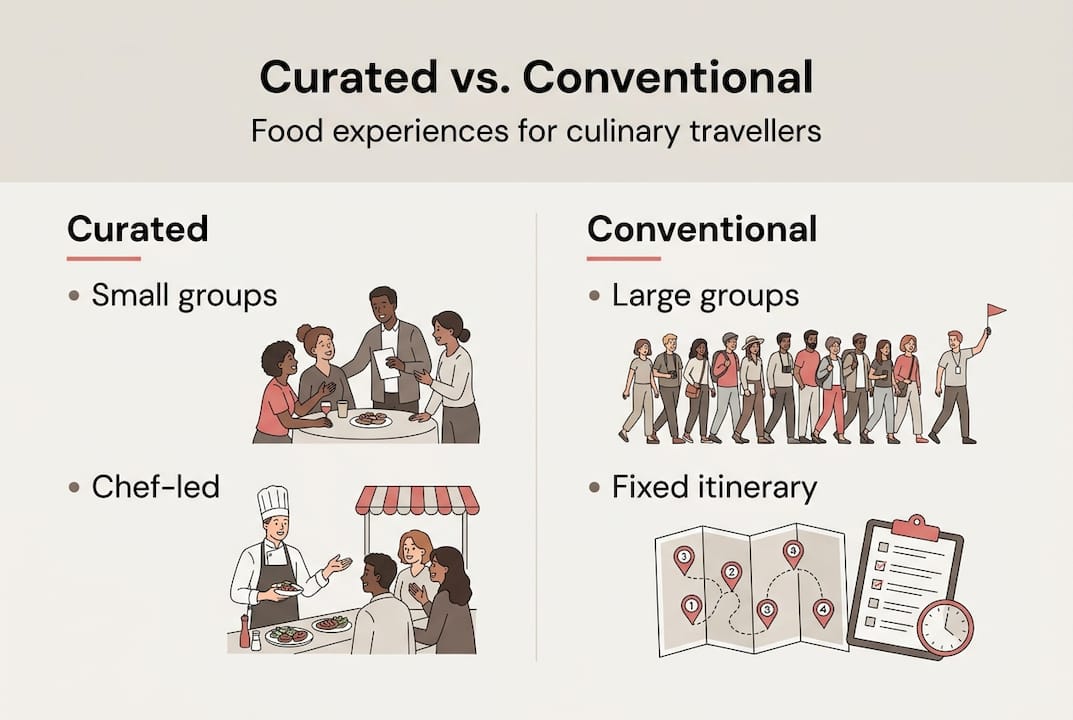
| Aspect | Curated experience | Conventional tour |
|---|---|---|
| Group size | Small (often 6 to 12) | Large (often 20 to 40) |
| Chef or expert involvement | Central | Rare |
| Venue exclusivity | High | Low |
| Cultural depth | Deep and personal | Surface level |
| Flexibility | High | Low |
| Value for culinary curious | Exceptional | Moderate |
The preference for curated dining is growing fast; culinary tourists rate personalisation and authenticity as the top reasons for choosing curated experiences over mainstream options. That is not a passing trend. It reflects a genuine shift in how people want to travel, prioritising meaning over mere sightseeing.
Applying your curiosity: How to choose and maximise your curated food journey
Armed with understanding and the benefits, here is how culinary explorers can turn knowledge into rich, memorable journeys.
Choosing the right curated food experience requires a little homework, but it is far simpler than it sounds. In major cities such as Paris, Berlin, or Mexico City, the range of options can feel overwhelming. Focusing on a few key questions cuts through the noise immediately.
Ask prospective providers:
- Who leads the experience, and what are their chef credentials or local expertise?
- How large are the groups?
- Does the itinerary focus on seasonal and regional produce?
- How much genuine interaction will you have with the chef or guide?
- Can the experience accommodate dietary requirements or personal interests?
Once you have found a trusted provider, follow these steps to get the very most from your booking:
- Research the region’s food culture before you arrive. Knowing a little about local ingredients and dishes helps you ask smarter questions and appreciate context more fully.
- Communicate your interests clearly at the time of booking. Customising your own experiences is often possible and dramatically improves what you receive.
- Arrive hungry but not starving. Pacing yourself through multiple stops is an art. Trust your chef’s guidance on portion sizes.
- Take notes or photographs of dishes and producers you love. This gives you a record to revisit and share.
- Ask questions freely. Chefs genuinely enjoy talking about their craft. As what defines a curated food journey for travellers confirms, experienced chef-led tours offer insider access to taste the real character of a locale, and that access works best when you are curious and engaged.
Pro Tip: Embrace at least one food you would not normally choose. A curated experience is precisely the right setting to try something unexpected because you have an expert by your side to explain, reassure, and inspire. Chef Karl Wilder in Berlin and Mexico City is brilliant at coaxing even the most hesitant tasters into rewarding new territory.
Why authenticity beats novelty: A fresh perspective on curated food experiences
After practical strategies, let’s take a step back and consider what matters most in your culinary adventures.
Most food tourists arrive in a new city hunting for novelty: the strangest dish, the most Instagrammable plate, the newest opening. That impulse is understandable. But novelty fades within hours. What stays with you for years is something far quieter.
It is the moment a chef in a Seville market tells you why her grandmother always added saffron last. It is the silence of a Berlin cellar as Chef Karl Wilder explains how divided-city politics shaped what people ate. It is connecting with chefs as real people, not performers, that transforms a meal into a memory.
Conventional wisdom suggests you need the rarest ingredients or the most exclusive reservations to have a meaningful food experience. We disagree. The human element, the shared table, the unscripted dialogue, the honest recommendation from someone who genuinely loves what they do, carries more weight than any Michelin star. Authenticity is not about finding the most obscure dish; it is about understanding why a dish exists and who it feeds. Seek that, and every bite becomes richer for it.
Ready to savour the best curated food experiences?
Motivated to find your next great gastronomic adventure? Discover tailored options with trusted partners.
At The Chef’s Tours, our chef-led journeys in Paris, Seville, Berlin, and Mexico City are designed precisely for travellers who want more than a meal. Browse our culinary experiences to try and find the perfect match for your tastes, travel dates, and curiosity.
Whether you are drawn to Chef PJ’s intimate Paris tours, Chef Crestani’s vibrant Seville markets, or Chef Karl Wilder’s bold Berlin and Mexico City itineraries, we offer tours in Paris and beyond that fit every appetite. Need something truly bespoke? Start planning a culinary vacation with us today and let our team craft an experience built entirely around you.
Frequently asked questions
What exactly makes a food experience ‘curated’?
A curated food experience is personally planned by local experts and chefs to showcase authentic dishes, stories, and venues you would not find on your own. Unlike a generic restaurant visit, it is built around authentic regional flavours and genuine cultural connection.
How can I tell if a food tour or event is truly curated?
Look for small group sizes, chef involvement, flexible menus, and local storytelling. These details all signal genuine curation, as personalisation and exclusive access are the clearest markers of a well-designed culinary experience.
Is a curated food experience suitable for dietary restrictions?
Yes, curated experiences can often accommodate dietary needs precisely because of their personalised nature. Always communicate your requirements in advance, since customisation is a central value in properly curated culinary tours.
Are curated food experiences only for foodies or chefs?
Not at all. These experiences suit anyone curious about regional cultures through food, regardless of culinary expertise. 72% of culinary tourists in 2026 rate personalisation and authenticity as their top reasons for choosing curated experiences, reflecting a very broad appeal.