

TL;DR:
- Most culinary tourists now rely on social media reviews rather than star ratings for travel decisions, shaping their experiences through peer stories. Authentic testimonials, rich with specific details and emotional candor, better reveal local culture and genuine immersion than generic praise or photos. However, assessing review authenticity requires critical evaluation of recency, reviewer history, and cross-platform consistency to avoid bias and fake feedback.
Three quarters of culinary tourists now turn to social media reviews for inspiration before booking a single food experience. That single figure should stop you in your tracks. It means peer stories, not glossy brochures or star ratings alone, are quietly steering the most important decisions in food travel. Whether you are planning a market crawl in Seville, a hidden-bistro evening in Paris, or a street-food deep dive in Mexico City, the testimonials you read before you book will shape what you taste, who you meet, and how deeply you connect with a place. This guide unpacks exactly how that influence works and what you can do with it.
Table of Contents
- Why testimonials matter: The psychology behind food tourism choices
- Signals of authenticity: How testimonials unlock true local experiences
- Strengths and pitfalls: Trust, bias and fraud in culinary testimonials
- Turning testimonials into actionable travel planning: Practical tips
- A chef’s perspective: The untold value of testimonial stories in culinary travel
- Find your next authentic food adventure
- Frequently asked questions
Key Takeaways
| Point | Details |
|---|---|
| Testimonials drive decisions | Most culinary tourists base their choices on testimonials and reviews rather than advertisements or official sources. |
| Review authenticity is crucial | Authentic stories and emotional details signal trustworthy culinary experiences and reveal genuine travel highlights. |
| Bias and fraud require vigilance | Tourist bias and fake reviews can mislead, making it vital to check for detail, recency and reviewer expertise. |
| Use testimonials smartly | By looking for emotion, specifics, and mentions of local chefs, you can plan more authentic culinary adventures. |
Why testimonials matter: The psychology behind food tourism choices
Culinary tourism sits in a unique category of travel decisions. Unlike booking a flight or reserving a hotel room, choosing a food tour is choosing an intangible experience. You cannot try before you buy, and no amount of marketing photography fully conveys the smell of a Parisian fromagerie or the theatre of a tableside guacamole lesson in Mexico City. That is precisely why social proof, the human tendency to look at what others have done when we are uncertain, wields such enormous power here.
When a stranger writes about the moment a Berlin chef explained why a particular cut of pork has been smoked the same way for 200 years, that story triggers something marketing copy cannot replicate: emotional resonance. Psychologists describe this through the concept of self-congruity, the degree to which an experience matches our self-image. When you read a testimonial from someone who sounds like you, shares your curiosity about food, and describes an unexpected discovery in a backstreet tapas bar, your brain essentially pre-experiences the tour. That pre-experience drives bookings.
The numbers confirm this. A remarkable 94% of diners let online reviews influence their restaurant choices, making testimonials one of the most decisive forces in food tourism. And this is not merely passive browsing. Reviews actively shape which chefs people trust, which neighbourhoods feel worth exploring, and which tours feel genuinely local rather than packaged for tourists. The food-driven travel trends emerging right now show that this reliance on peer feedback is only intensifying as culinary tourism grows.
Testimonials also deliver what standard tour marketing simply cannot:
- Unscripted moments. A review might reveal that the chef stopped mid-tour to greet a market vendor by name, signalling true local roots.
- Honest comparisons. Guests who have travelled widely can frame one experience against others, giving context a brochure never could.
- Sensory language. Words like “the broth hit me like a memory” do more work than “delicious soup.”
- Warnings and nuance. Genuine feedback flags pace, group size, and physical demands so you can match the tour to your needs.
Understanding these psychological foundations sets the stage for the next question: how exactly do testimonials communicate authenticity, and how do you spot the ones that truly matter?
Signals of authenticity: How testimonials unlock true local experiences
Authenticity is the word every food tour operator uses, but it is testimonials that actually prove or disprove it. Research involving 389 tourists confirms that authentic culinary experiences significantly enhance visitor satisfaction, and critically, testimonials that emphasise genuine cultural immersion are the clearest signal of this quality.
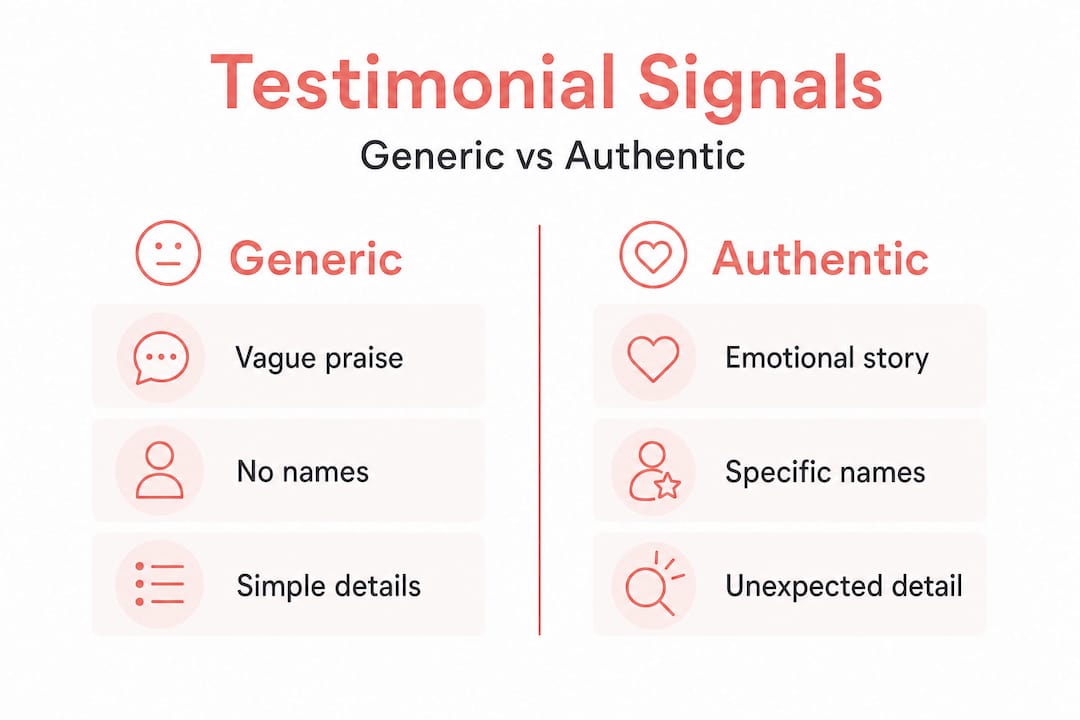
The difference between a generic and a genuinely authentic testimonial is not subtle once you know what to look for. Consider this comparison:
| Generic testimonial | Authentic testimonial |
|---|---|
| “Great food, really enjoyed it.” | “Chef PJ introduced us to a cheesemonger who has supplied the same Montmartre bistro for 30 years.” |
| “Nice guide, would recommend.” | “Chef Crestani argued passionately with the market seller over which olive oil deserved to go home with us.” |
| “Lots of food, good value.” | “We ate standing at a zinc counter while Chef Karl explained how Berlin’s division shaped its food culture.” |
| “Fun experience, good group.” | “I did not expect to feel emotional watching a 70-year-old tortilla maker in Mexico City, but I did.” |
The authentic testimonials share three qualities: specific names or places, emotional candour, and unexpected details that no marketing team would think to invent. The expert-led authenticity that chefs like these provide generates exactly this kind of story.
Testimonials also reveal how well a tour unlocks cultural experiences that go beyond the plate. When guests write about conversations with producers, moments of laughter in a back kitchen, or being handed a recipe card by a grandmother who never normally shares it, they are describing cultural immersion that no tourist attraction can manufacture.
It is also worth examining the role of visual platforms. There is a growing Instagram and authenticity tension in food travel: a beautifully styled photo can misrepresent an experience just as powerfully as a fake written review. Written testimonials, particularly long-form ones, tend to carry more nuance.
Pro Tip: When reading testimonials for a culinary tour, filter specifically for mentions of the guide or chef by name, descriptions of unexpected or unscripted moments, and any reference to local producers or hidden venues. These markers are the clearest indicators of a genuinely immersive experience. You can also cross-reference against a Barcelona authenticity checklist to calibrate your expectations when vetting food experiences in other cities.
Strengths and pitfalls: Trust, bias and fraud in culinary testimonials
Testimonials are powerful, but they come with real vulnerabilities. Before you rely on them entirely, it pays to understand the structural biases and outright fraud that can distort what you read.
The most significant bias is a systematic one. Tourists rate restaurants 13.4% more generously than locals reviewing the same venues, according to published research. The reason is straightforward: you are on holiday, you are in a good mood, the novelty of an unfamiliar city amplifies pleasure, and the social cost of a disappointing meal feels lower when you are far from home. This means a five-star review from a tourist carries different information than a four-star review from a local regular.
Then there is outright fraud. In 2024, TripAdvisor blocked 2.7 million fraudulent reviews from its platform, representing roughly 8% of all submissions. That is a staggering volume of fabricated feedback, and it affects culinary tourism as directly as any other sector. Fake reviews do not just inflate ratings. They actively mislead travellers into mediocre or inauthentic experiences. Independent fake review detection analysis confirms platforms are improving their systems, but the problem has not disappeared.
“Not all five-star reviews are created equal. A flood of short, enthusiastic reviews posted within a narrow time window is one of the clearest warning signs of coordinated manipulation.”
Here is a practical framework for evaluating testimonials with a critical eye:
- Check the reviewer’s history. A profile with one single review, posted years ago, warrants scepticism. Active reviewers with a track record across multiple venues are far more reliable.
- Look for time variation. Authentic reviews trickle in over months and years. A sudden cluster of five-star reviews in a single week is a red flag.
- Read the one and two-star reviews. These often contain the most specific, honest information, even when the complaint is minor.
- Prioritise narrative reviews. A 400-word story about a specific evening is almost impossible to fake convincingly. Short, generic praise is easy to manufacture.
- Cross-check platforms. If a tour scores brilliantly on one platform but has mixed feedback elsewhere, dig deeper before booking.
The local chefs’ impact on testimonial quality is also worth noting. Tours led by chefs with verifiable professional backgrounds and genuine community ties tend to generate more specific, honest reviews because guests have something real and memorable to write about. When you are trusting chef guides with verifiable credentials and public profiles, the testimonials around them tend to self-correct over time.
Turning testimonials into actionable travel planning: Practical tips
Knowing what makes a testimonial trustworthy is only useful if you can translate that knowledge into smarter booking decisions. Here is how to use reviews actively rather than passively scrolling through star ratings.
The most important principle is to read for emotional resonance rather than summary scores. Research into food tourism confirms that emotional experiences are the primary driver of positive word-of-mouth, the kind of testimonials that predict genuinely memorable tours. When a review makes you feel something, when you find yourself thinking “I want exactly that,” pay attention. That emotional pull is telling you the experience is likely to deliver on its promise.
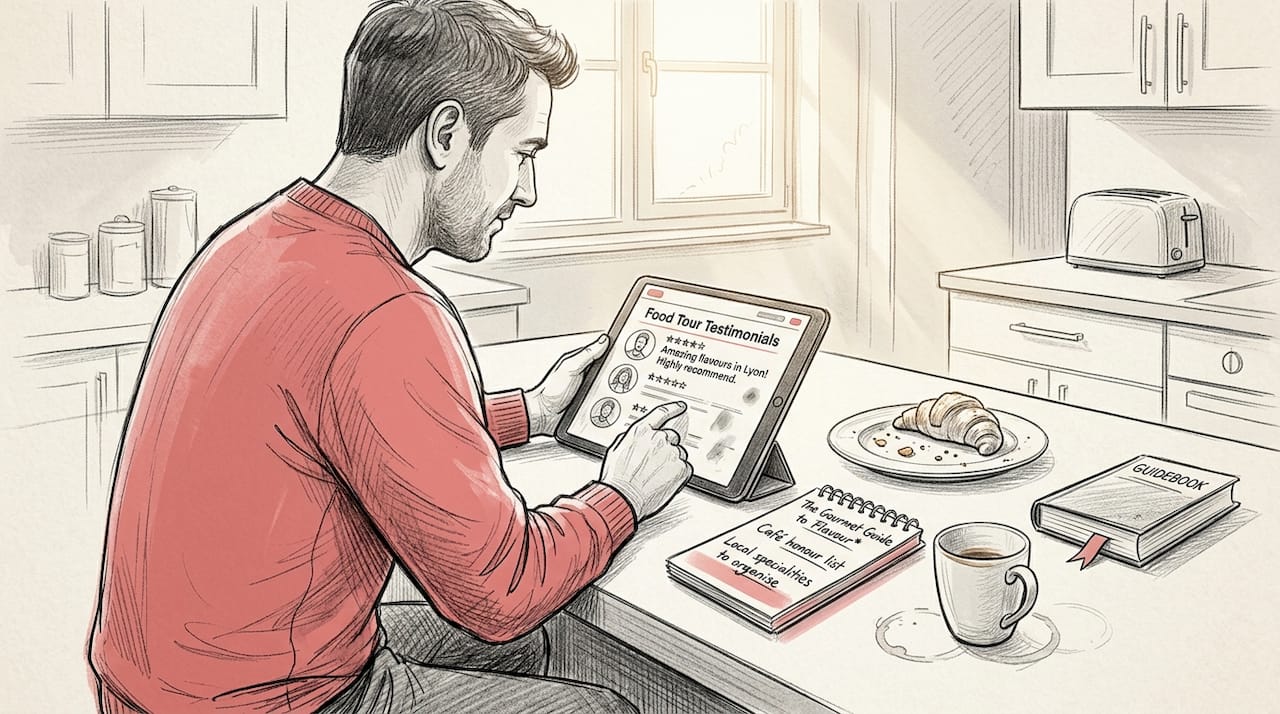
Separately, 77% of travellers reference TripAdvisor when researching restaurants, making it the most-used single source. But the smartest culinary tourists treat it as one data point, not the final verdict. Combining platform reviews with Instagram stories, Google reviews, and direct chef testimonials on operator websites gives you a far richer picture.
Here is a step-by-step approach for vetting a culinary experience using testimonials:
- Start with the most recent reviews. Anything older than 12 months may reflect a different guide, menu, or venue. Recency matters enormously in food travel.
- Search for the guide’s name within reviews. Tours where guests consistently name the chef or guide signal a personal, memorable connection.
- Note recurring details. If five different reviewers mention the same back-alley market stall or the same unexpected tasting, that detail is almost certainly real.
- Ask yourself: does this sound like someone who shares my food values? Self-congruity works in your favour when the reviewer describes the kind of curiosity and depth you are looking for.
- Shortlist two or three tours, then compare testimonial specificity side by side. The one with richer, more specific storytelling is almost always the stronger experience.
- Contact the operator with a question. How they respond tells you something testimonials cannot: how the brand communicates before you have paid.
Pro Tip: Filter testimonials for the phrase “I did not expect” or similar expressions of surprise. These moments of genuine discovery are the hallmark of booking with local chefs who go off-script. They also reveal whether an experience has the depth and flexibility of a truly authentic food culture immersion, rather than a rehearsed route.
A chef’s perspective: The untold value of testimonial stories in culinary travel
Star ratings are almost useless to us as chefs. A four-star review with two paragraphs of specific detail is worth ten times a five-star score with nothing but “amazing!” beneath it. That is not false modesty. It is how we actually learn.
When a guest writes that they will never forget the moment a local wine merchant in Seville poured an unfiltered sherry directly from the barrel, that story tells Chef Crestani exactly what to protect, never to cut that stop, never to rush that moment, no matter how pressed for time the tour is running. Testimonials of that quality are operational intelligence. They are not just marketing copy.
What many travellers do not realise is that testimonials create a two-way dialogue. The guest co-creates the experience by naming what moved them. The chef learns, adjusts, and deepens the tour in response. The next traveller benefits directly from the feedback of those who came before. This is very different from a hotel rating, where the guest is reacting to a fixed product. A well-run food tour is a living thing, and detailed testimonials are how it grows.
Where testimonials mislead us is in the area of expectations. Occasionally, a guest writes an ecstatic review of an experience that was partly shaped by circumstances no tour can reliably reproduce: a chance encounter with a chef at a neighbouring table, a market vendor in unusually generous spirits, weather that made a rooftop feel magical. These stories are real, but they set expectations no operator can guarantee every time.
Our three rules for reading guest stories honestly, as chefs who lead these experiences:
- Believe the specifics. The detail a guest remembers is almost always the truest part of the review.
- Discount the superlatives. Words like “best ever” tell you about the guest’s mood, not always the objective quality.
- Treasure the surprises. The moments guests say they did not expect are the ones worth doubling down on. Chef insights on authenticity grow directly from these unexpected moments.
Testimonials, when read thoughtfully, are the most honest conversation happening in culinary travel right now.
Find your next authentic food adventure
The research is clear and the stories are compelling: testimonials are your most reliable guide to a genuinely authentic culinary experience. But reading reviews is only the beginning. At The Chef’s Tours, every experience we offer has been shaped by exactly the kind of guest feedback this article describes.
Chef PJ’s culinary experiences in Paris, Chef Crestani’s intimate Seville tours, and Chef Karl Wilder’s immersive journeys through Berlin and Mexico City all come backed by detailed, story-driven testimonials from real food lovers. These are chef-led food tours built around the kind of unscripted, deeply local moments that guests write about for years afterwards. If you are ready to plan an authentic culinary holiday, browse our tours and let the guest stories guide you to your perfect experience.
Frequently asked questions
How can I tell if a testimonial about a food tour is genuine?
Genuine testimonials feature specific details, recent dates, emotional storytelling, and often mention tour guides or chefs by name. Prioritise recent, detailed reviews over short, generic praise, which is far easier to fabricate.
Do chef-led tours receive better testimonials than standard tours?
Yes, chef-led tours consistently attract more vivid, story-driven feedback because they deliver genuine cultural immersion. Research confirms that authentic culinary experiences enhance tourist satisfaction in ways that standard packaged tours rarely match.
Why are culinary tourist reviews sometimes more positive than local reviewers?
Tourists are 13.4% more likely to give higher ratings than locals reviewing the same venue, largely due to the novelty and heightened mood that travel brings. This does not make tourist reviews unreliable, but it does mean a four-star tourist review may reflect genuine quality rather than mild disappointment.
What steps do platforms take to combat fake reviews in culinary tourism?
Platforms use AI detection and human moderation to screen for fraudulent submissions. In 2024, TripAdvisor blocked 2.7 million fake reviews, demonstrating both the scale of the problem and the seriousness of the response.
How important are emotional stories in testimonials for culinary travel?
Extremely important. Research confirms that emotional experiences drive positive word-of-mouth in food tourism more than functional satisfaction alone, making emotionally resonant testimonials the most persuasive tool a culinary traveller can use when choosing where to book.