

TL;DR:
- Most food tours are designed around tourist expectations rather than authentic local eating habits, often missing the true culinary soul of a city. Local chef leadership, traditional ingredients, and friction with local spaces signal genuine immersion, offering a deeper cultural experience. Authenticity is best found through long-standing, community-embedded venues, food that reflects regional history, and tours led by deeply connected local chefs.
Food tours are everywhere now. Every major city has dozens of them, all promising an “authentic” taste of local life. But here is the uncomfortable truth: most food tours follow routes designed around what tourists expect to find, not what locals actually eat. The difference between a tour that genuinely immerses you in a city’s culinary soul and one that simply ticks boxes is not always obvious from a booking page. This article breaks down the real signals of authenticity, so you can spend your time and money on experiences that will stay with you long after the meal is over.
Table of Contents
- Why local leadership is the key to authenticity
- Ingredients, menus, and tradition: The building blocks of authenticity
- Experience over comfort: Why friction is a sign of the real thing
- Persistence, not popularity: Hidden signals of the genuine article
- Blending food, history, and culture: The multi-layered authentic tour
- Why most ‘authentic’ food tours fall short (and what actually works)
- Experience a truly authentic food tour with local chefs
- Frequently asked questions
Key Takeaways
| Point | Details |
|---|---|
| Local leadership matters | Tours led by deeply rooted local chefs bring authentic, insider experiences you won’t get from generic guides. |
| Quality is in the details | Menus with seasonal ingredients and traditional preparation are clear signals of genuine authenticity. |
| Friction is a feature, not a flaw | Language barriers, queues, and simplicity often indicate a truly local and memorable food tour. |
| Prioritise substance over comfort | The most worthwhile tours may challenge convenience, but deliver lasting culinary memories. |
| Cultural context deepens taste | Tours weaving in history and local stories offer the richest, most immersive experiences. |
Why local leadership is the key to authenticity
Having introduced the challenge of finding authenticity, the focus turns to why who leads a tour matters most. The single biggest predictor of a genuinely authentic food tour is not the city, the price, or the number of stops. It is the person holding the spoon.
Local guides or chefs with deep community roots bring something no script can replicate: a personal network built over years of cooking, eating, and living in a neighbourhood. When Chef PJ leads a tour through Paris, he is not reading from a laminated card. He is walking you into a fromagerie where he has bought his cheese for a decade. That relationship changes everything.
The contrast with mainstream tours is stark. A guide hired seasonally and given a fixed route will visit the same five stops as every other tour that week. A local chef will take you somewhere because a childhood friend runs the kitchen, or because they discovered a remarkable producer at the market last Tuesday. That spontaneity and connection is what booking with local chefs actually means in practice.
Here are the specific advantages that local chef leadership brings to a food tour:
- Personal vendor relationships built over years, not months
- Access to stops not listed anywhere online, because they are not marketed to tourists
- Honest commentary on what the city actually eats today, not a nostalgic performance
- Flexibility to respond to seasonal availability or a recommendation from a local contact that morning
- Cultural translation that goes beyond language, explaining the social meaning of sharing certain dishes
“A chef-led tour is not a service transaction. It is a guided window into someone’s relationship with their city. That relationship is the product.” It is why chefs shape authentic tours in ways that other guides simply cannot match.
Pro Tip: Before booking any food tour, look up the guide on the city’s local food scene. Do they have a restaurant, a market stall, or a culinary column? Local professional credibility is your best early indicator of genuine insider access.
Ingredients, menus, and tradition: The building blocks of authenticity
Once the benefits of local leadership are clear, the next foundation is what is served and how. The menu of a food tour tells you almost everything you need to know about whether the organisers prioritise locals or tourists.
A tour that includes a burger stop in Paris, or serves an “international” cheese board to avoid confusing guests, is editing out the very thing you came to find. Truly authentic tours feature dishes chosen for authenticity rather than broad appeal. That means seasonal produce, traditional preparation methods, and portions that reflect how locals actually consume food, not how tourists expect to be fed.
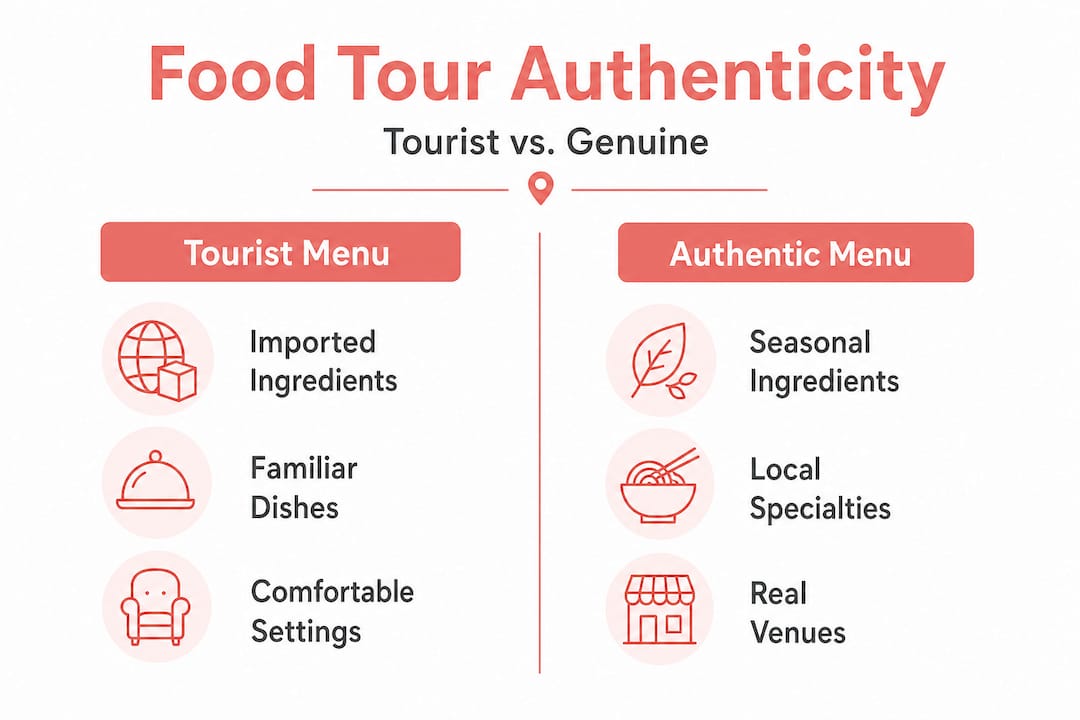
The table below illustrates the clearest differences between tourist menus and authentic ones:
| Feature | Tourist menu | Authentic menu |
|---|---|---|
| Ingredients | Consistent year-round, imported if needed | Seasonal, sourced locally |
| Variety | Wide, designed for all tastes | Narrow, regionally specific |
| International options | Usually included | Absent or minimal |
| Presentation | Polished, photogenic | Simple, functional |
| Preparation method | Standardised | Traditional, often artisanal |
Focus on local, seasonal ingredients from producers and farms, combined with minimalist menus that exclude international options, and traditional preparation methods are hallmarks of the real thing. When Chef Crestani guides a tour through Seville, the tapas you taste reflect what is on every local family’s table that week, not what has been pre-approved for broad palatability.
Here is how to identify truly local ingredients and traditional methods when you are on a tour:
- Ask where each ingredient was sourced. A confident answer naming a specific farm or producer is a strong positive sign.
- Look at the simplicity of the dish. Highly processed or multi-ingredient plates often suggest commercial sourcing.
- Check for seasonal logic. If a dish features tomatoes in December in a northern city, something is off.
- Notice the cooking tools. Artisanal or traditional equipment, like a clay pot or a wood-fired oven, suggests genuine method.
- Observe how the guide speaks about the food. Personal enthusiasm and specific knowledge signal a genuine connection to the tradition.
Pro Tip: Ask your guide to name one ingredient on the tour that is impossible to find outside the region. If they can answer immediately and convincingly, the menu has been built on real culinary knowledge, not marketing.
Experience over comfort: Why friction is a sign of the real thing
After understanding the nuts and bolts of food and leadership, it is time to examine the often-overlooked experiential clues that define authenticity. Many travellers unconsciously equate quality with convenience. Smooth logistics, English-speaking staff, and menus with photographs feel reassuring. But these are frequently signs of a tour designed for tourist comfort rather than local truth.
Language barriers and friction such as no English menus signal authenticity over comfort. When you walk into a bar in Seville with Chef Crestani and the chalkboard is entirely in Andalusian Spanish, that is not a problem. That is the point. The chef becomes your interpreter, not just of language, but of culture, custom, and context.
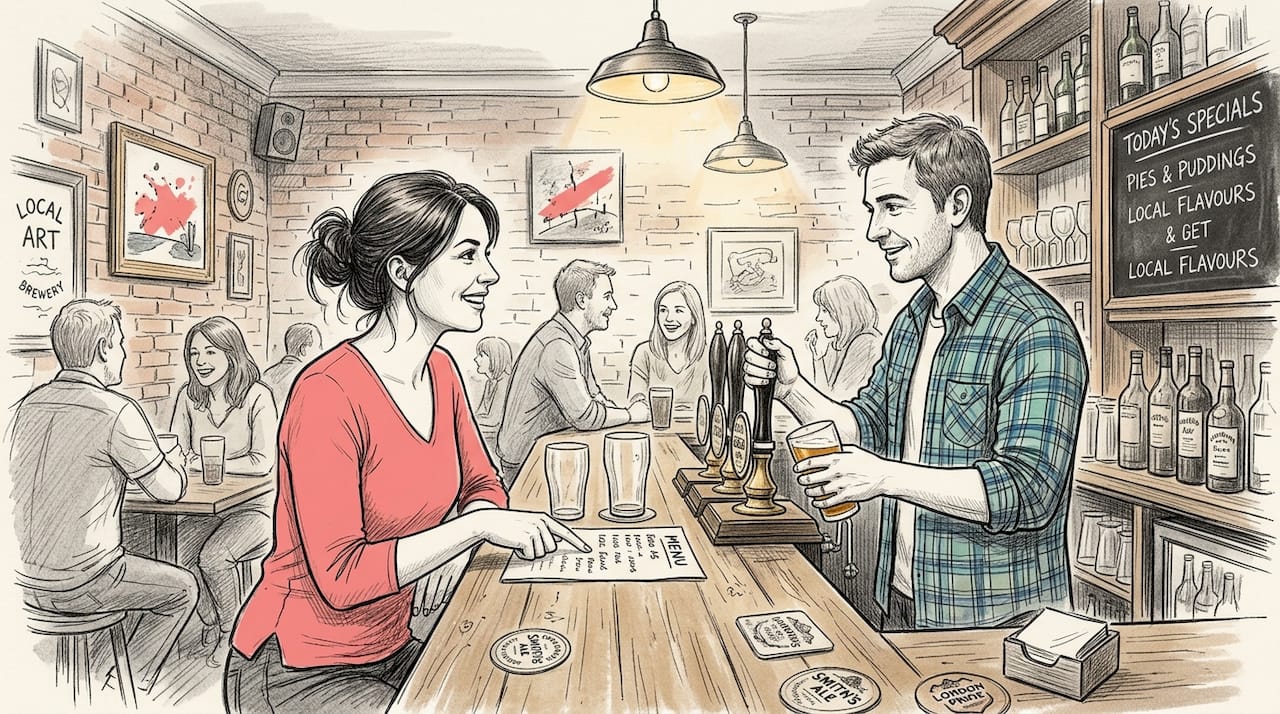
Consider this comparison between comfort-focused and authenticity-focused tour experiences:
| Experience factor | Comfort-focused tour | Authenticity-focused tour |
|---|---|---|
| Language | All stops offer English | Local language throughout |
| Payment | Card accepted everywhere | Cash-only venues common |
| Queuing | Pre-booked, no wait | May queue with locals |
| Décor | Polished, Instagram-ready | Worn, functional, lived-in |
| Menu | Translated, photographed | Handwritten, local language |
| Noise level | Managed, quiet | Busy, local conversation |
The chef expertise in tours becomes most valuable precisely in these friction points. When a cash-only tavern has no seats and you are handed your food standing at a marble counter, your chef-guide can explain why that is the traditional way to eat this particular dish. Friction becomes knowledge.
Here are the friction points that most reliably indicate you are in a genuinely local space:
- No English menu or staff at a particular stop
- Cash-only payment policy
- A queue of locals, not tourists, at the door
- No visible online presence for the venue
- A guide who speaks the local dialect with the owners
- Limited seating or standing-only service, reflecting local habits
“The moments I remember most vividly from any city are never the polished ones. They are the places where I felt like a guest in someone’s real life, not a customer in a tourism product.” This is why you should trust chef-guided tours to navigate these spaces with confidence.
Persistence, not popularity: Hidden signals of the genuine article
With a sense of the experience itself, it is important to know how to separate the genuinely local from the merely popular. Popularity on social media and high ratings on review platforms are not reliable guides to culinary authenticity. In fact, the most authentic spots in any city are often the ones with the least online presence.
Prioritise persistence over popularity; locals wait in line at authentic places. A bakery that has occupied the same corner in Berlin’s Neukölln district for forty years, serving the same rye bread recipe, is a more meaningful stop than a highly rated new opening with clever branding. Chef Karl Wilder understands this instinctively. His Berlin tours visit places that have endured because they are genuinely good, not because they are fashionable.
Look for these persistence-linked clues when assessing a venue’s authenticity:
- Faded or hand-painted signage that has not been redesigned for marketing purposes
- Multi-generational ownership, where the person serving you learned from a parent or grandparent
- Simple, functional décor that has not been updated to attract Instagram attention
- A clientele that is almost entirely local, especially at busy times
- A limited, unchanging menu that has been refined over decades rather than rotated seasonally for novelty
- Long-term relationships between the venue and its suppliers, visible in the guide’s conversation with staff
When experiencing local cuisine through a chef-led tour, you benefit from your guide’s knowledge of which spots have earned their reputation over time rather than manufactured it recently.
Pro Tip: Ask your guide directly why they chose each specific stop on the tour. The best guides will tell you a story about a long-standing relationship or a personal discovery. If the answer sounds like marketing copy, that is useful information too.
Blending food, history, and culture: The multi-layered authentic tour
Beyond individual destinations and taste, authenticity deepens when food is part of the city’s broader story. A plate of cochinita pibil in Mexico City is a dish. But when Chef Karl Wilder explains that the slow-cooking technique dates to pre-Columbian Mayan tradition and that the use of banana leaves reflects the geography of the Yucatán peninsula, that dish becomes a direct connection to a civilisation. Food without context is just eating.
Seeking tours that blend food with history and culture in major cities creates the kind of layered experience that transforms a holiday meal into a lasting memory. The best culinary tours in Paris, Seville, Berlin, and Mexico City treat each stop as a chapter in the city’s ongoing story.
Here is a checklist of what to look for and ask about when searching for a multi-layered authentic tour:
- Does the guide explain the historical origin of each dish, not just its ingredients?
- Are there stops that reflect different eras of the city’s culinary history, showing how influences have changed over time?
- Does the tour include conversation with producers, chefs, or vendors, giving you access to living knowledge?
- Are cultural rituals around eating explained, such as the timing of meals, the social meaning of certain dishes, or regional etiquette?
- Does the guide connect food to neighbourhood history, explaining why particular cuisines established themselves in specific districts?
- Is there a narrative thread running through the tour, rather than a series of disconnected stops?
Finding authentic dining experiences requires more than good restaurants. It requires a guide who thinks like a cultural historian as well as a cook.
“Food is the most democratic archive a city has. Every recipe carries the memory of migration, trade, hardship, and celebration. A great food tour is an act of reading that archive together.”
Why most ‘authentic’ food tours fall short (and what actually works)
Here is an opinion that may surprise you: most food tours that market themselves as authentic are not being dishonest. They genuinely believe they are offering a real experience. The problem is that they have confused familiar local food with genuine local immersion. Serving a croissant in Paris is not a cultural act. Explaining why a particular boulangerie near the Canal Saint-Martin has been making laminated dough the same way since 1974, and then watching the baker shape it, is.
The culinary experts’ role in creating genuinely authentic tours is not simply to know where the good food is. It is to have a relationship with the people who make it, a knowledge of why it matters, and the confidence to take you somewhere uncomfortable because that is where the truth lives.
Most travellers are not aware that they are choosing comfort over connection. They read “hidden gems” in a tour description and assume that means authentic. But hidden gems can be just as commercialised as famous ones if they have been discovered by the tour industry and polished for presentation. Real authenticity often means visiting a place that does not know it is a destination. That only happens when your guide is embedded in the community, not visiting it.
The trade-off is real. You might queue. You might not be able to read the menu. The toilets might be through the kitchen. You might eat something you would never choose from a photograph. And those will be the meals you describe for years afterwards.
Experience a truly authentic food tour with local chefs
Ready to move from reading about authenticity to actually tasting it? At The Chef’s Tours, every experience is built around chefs who live, cook, and eat in the cities they guide you through. Chef PJ in Paris, Chef Crestani in Seville, and Chef Karl Wilder in Berlin and Mexico City are not contractors following a script. They are culinary insiders whose tours reflect years of genuine community knowledge.
Understanding the chef-led tours difference is one thing. Experiencing it on a cobbled street in Seville at noon, glass in hand, is another. Our culinary city tours are designed for food lovers who want to eat the way locals do, not the way travel brochures suggest. If you are serious about unlocking authentic travel through food, browse our tours and find the city that calls to you.
Frequently asked questions
How can I tell if a food tour is truly authentic as a first-time visitor?
Look for tours led by local chefs using seasonal ingredients, with stops favoured by residents rather than tourists. Chef bios with genuine local credentials are a reliable early indicator.
Is a language barrier a good sign of an authentic experience on a food tour?
Yes. Language barriers and no English menus indicate venues that have not been edited or adapted for tourist consumption, which usually means locals still eat there regularly.
Do authentic food tours always visit famous restaurants?
Authentic tours more often visit enduring, lesser-known spots loved by locals. Long-standing local favourites carry more cultural weight than famous or heavily marketed restaurants.
What role does regional culture play in a truly authentic food tour?
The best tours connect each dish to local stories and cultural history. Blending food with history in a major city creates a far richer and more memorable experience than tasting alone.
Are chef-led food tours more reliable for authenticity than other tours?
Yes. Chef-led tours provide insider access to community-rooted venues and are far less likely to follow generic, tourist-facing routes. Local chefs with personal networks bring a depth of access that standard guides cannot replicate.