

TL;DR:
- In 2026, culinary tourists favor chef-led, participatory experiences that immerse them in local food cultures. Planning successful events requires clear goals, authentic sourcing, local chef partnerships, and thoughtful pacing to create lasting impressions. Sustainable, community-focused design enhances guest engagement, ensuring meaningful cultural impact.
There is nothing quite as deflating as attending a food event that promises authentic flavour and local flair, only to be handed a printed menu and a glass of mediocre house wine while someone reads facts from a clipboard. This frustration is driving a significant shift among culinary tourists in 2026, who are actively seeking chef-led, participatory experiences that place them inside the food culture of a city rather than watching from a safe distance. Whether you are planning a private group dinner in Paris, a corporate tasting tour in Seville, or an immersive street food journey through Mexico City, this guide will show you exactly how to build events that guests remember long after the last course is cleared.
Table of Contents
- Essential toolkit: What you need before you start
- Step-by-step: Mapping your culinary event
- Smart budgeting: Costs, formats, and location considerations
- Avoiding pitfalls: Operational risks and guest experience mistakes
- Creating authentic and sustainable impact
- Why immersive culinary events succeed where traditional tastings fail
- Take the next step: Curated culinary experiences await
- Frequently asked questions
Key Takeaways
| Point | Details |
|---|---|
| Authenticity is essential | Chef involvement and local storytelling create truly memorable culinary events. |
| Smart planning prevents issues | Careful budgeting and anticipating operational risks help ensure a seamless guest experience. |
| Immersive formats engage guests | Interactive activities such as live stations and hands-on workshops drive participation and enjoyment. |
| Community impact matters | Events that support local producers and sustainable practices benefit both visitors and host regions. |
Essential toolkit: What you need before you start
Before you begin designing any culinary event, you need to be clear about what success actually looks like. Is your primary goal cultural immersion, guest entertainment, professional networking, or celebrating a milestone? Each answer produces a completely different event structure. Starting without this clarity is the most common reason events feel disjointed.
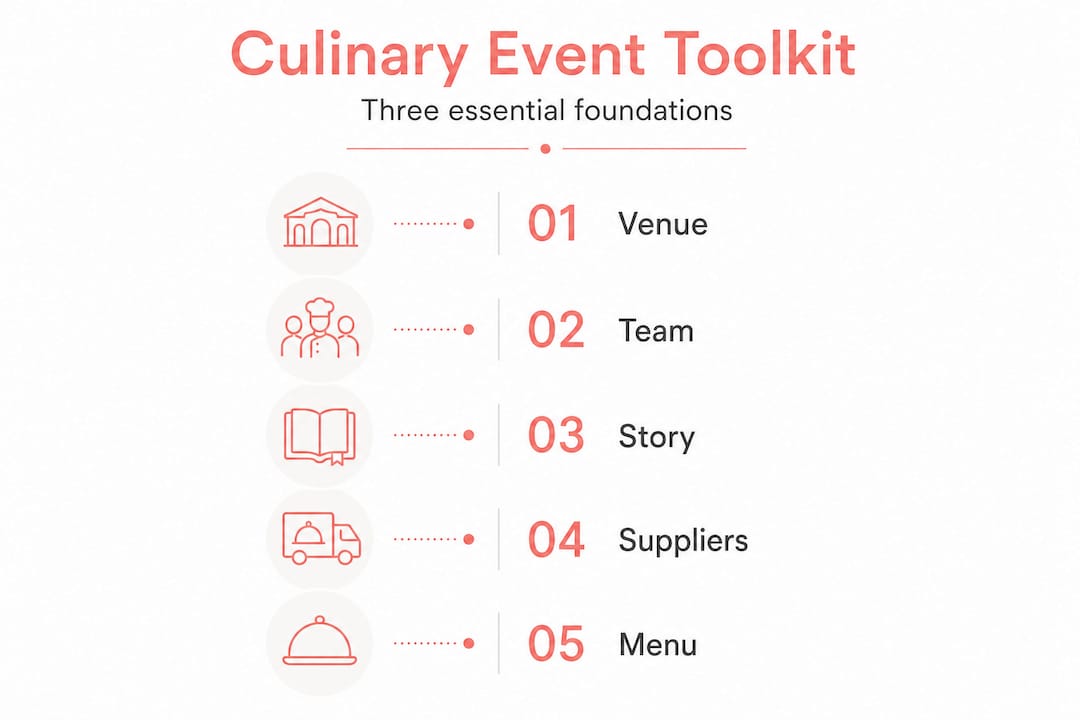
Once your goals are set, you need three core building blocks in place: a venue or series of locations with character and local identity, at least one chef partnership that brings insider knowledge to the table, and a reliable digital RSVP system that captures dietary requirements from the outset. Collecting dietary information at the last minute is a logistical nightmare that derails even beautifully planned menus.
The growing importance of culinary tourism trends in 2026 reflects how travellers now expect experiences that feel genuinely personal. Planners responding to this shift are increasingly investing in authentic local experiences rather than generic programmes. According to interactive event dining design, planners in 2026 are moving toward immersive food stations and technology-assisted personalisation to deepen guest engagement.
Here is a quick checklist of what to have confirmed before planning begins:
- Clear event goal and target audience profile
- Venue with cultural or neighbourhood relevance
- Chef or culinary guide with local expertise
- Digital RSVP capturing all dietary and allergy information
- Plan for authentic sourcing (local markets, independent producers)
- Backup venue or weather contingency for outdoor settings
| Planning element | Why it matters | Common mistake |
|---|---|---|
| Goal definition | Shapes every subsequent decision | Vague aims lead to mixed messages |
| Chef partnership | Delivers credibility and insider access | Booking a generic caterer instead |
| Dietary data collection | Prevents service failures | Collecting requirements on the day |
| Authentic sourcing plan | Ensures cultural integrity | Relying on wholesale suppliers |
| Technology tools | Streamlines communication and booking | Manual RSVPs create data gaps |
Pro Tip: Review planning event tips from experienced organisers before you finalise your brief. Small operational details, such as where guests queue or how dishes are served, can have an outsized effect on perceived quality.
Step-by-step: Mapping your culinary event
Once you have assembled your toolkit and resources, it is time to design the backbone of your culinary event. The most memorable food experiences are built around a clear narrative. Think of your event as a story with a beginning, a middle, and an end, where the food is the protagonist and the city is the setting.
Here is a proven sequence that works for a range of group sizes and formats:
- Arrival and welcome drink tied to a local ingredient or producer story
- Neighbourhood introduction with a short walk or visual presentation connecting guests to the area’s food history
- Live chef demonstration showing a signature technique or regional recipe
- Guided tasting with commentary on flavour, provenance, and cultural context
- Hands-on activity such as making pasta, blending spices, or building a traditional dish
- Communal dining where guests eat together what they have learned about or helped create
- Closing ritual such as a local digestif, a chef Q&A, or a take-home recipe card
This structure works because it builds emotional investment incrementally. By the time guests sit down for the communal meal, they are not strangers eating side by side. They share a small adventure together.
Understanding chef-led tour benefits clarifies why this format outperforms a standard restaurant booking. A chef who has spent years cooking in a city’s markets and kitchens can explain not just what is on the plate, but why it exists at all. That context transforms eating into understanding.
Major curated food destination lists for 2026 are recognising this shift, focusing on distinctive chef-led experiences rather than a checklist approach to restaurant visiting. Meanwhile, large-scale city programmes such as Slow Food’s Terra Madre Salone del Gusto in Turin demonstrate how multi-format culinary events that combine tastings, seminars, producer dinners, and hands-on workshops create extraordinary depth of engagement.
| Event format | Best for | Typical group size | Immersion level |
|---|---|---|---|
| Chef’s table | Intimate dining and personal storytelling | 4 to 12 guests | Very high |
| Live demo and tasting | Education-focused groups or corporate events | 10 to 40 guests | High |
| Street food walking tour | Discovery-led cultural immersion | 6 to 20 guests | High |
| Cooking class with meal | Hands-on skills and participation | 6 to 16 guests | Very high |
| Formal banquet | Celebration with local menu | 20 to 200 guests | Moderate |
Pro Tip: Use a culinary experiences checklist to audit your event itinerary against proven authenticity benchmarks before locking in your final programme.
Smart budgeting: Costs, formats, and location considerations
After mapping your event, the next crucial factor is making financially smart decisions. Culinary event budgets can spiral quickly if you do not understand which elements drive cost most significantly.
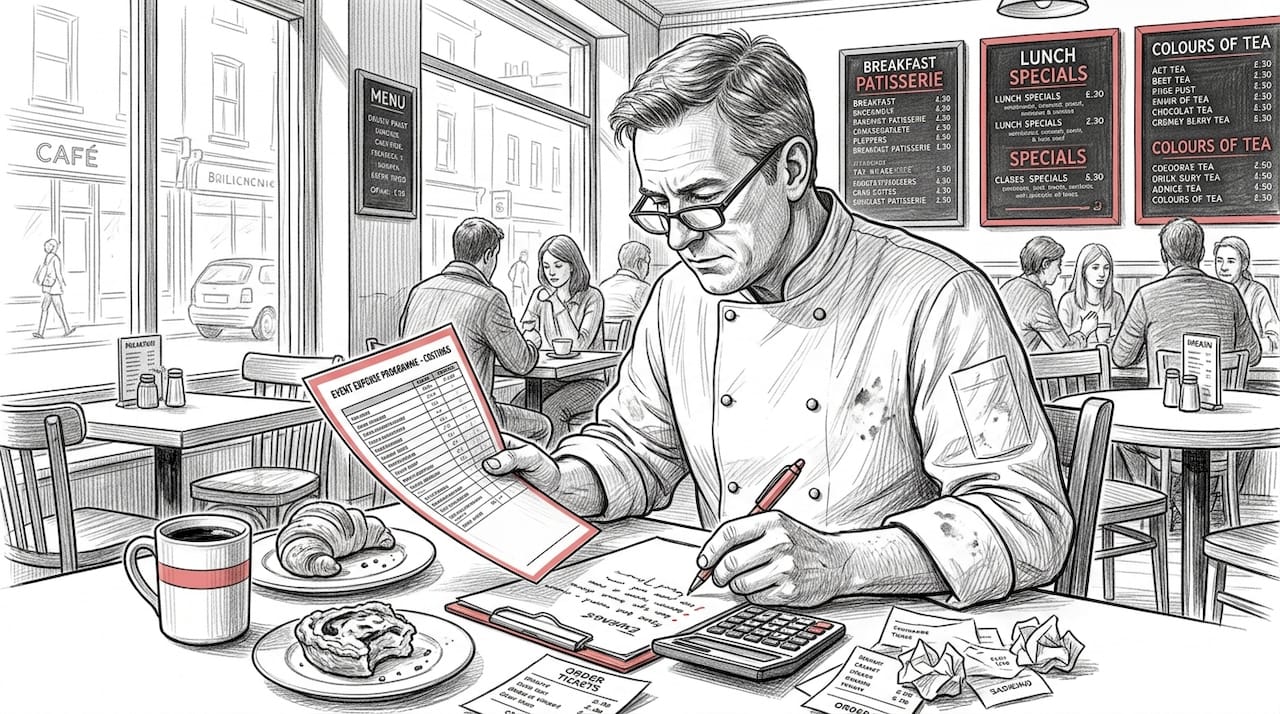
The three biggest cost drivers are service style, location, and group size. A seated, staffed dinner in Paris will cost considerably more per head than a self-guided market tasting in Mexico City, even when ingredient quality is comparable. City matters enormously. Venue hire in central Berlin is typically lower than in central Seville during peak festival season. Group size affects cost non-linearly: smaller groups often cost more per person because chef and venue fees do not scale downward proportionally.
Planning team events with a culinary focus requires early budget forecasting, particularly when corporate clients expect a seamless, premium experience without sticker shock. A practical 2026 benchmark is that catering costs differ materially by service type, with full-service staffed events running $50 to $120 or more per person, while simpler drop-off or market-based formats can deliver excellent value at $15 to $30 per head.
Key areas where planners consistently overspend:
- Premium venues when neighbourhood locations with more character are available at lower cost
- Generic catering instead of local producer sourcing, which often costs less and delivers more
- Printed materials that can be replaced by digital itineraries and recipe cards
- Redundant staffing for small groups where one skilled chef can manage both cooking and hosting
- Alcohol markups at venues when a local wine or spirits partnership can be negotiated separately
Key areas where cutting costs undermines quality:
- Chef expertise: A local expert is the event’s most important asset. Do not scrimp here.
- Ingredient sourcing: Authentic, local produce is what separates a culinary event from a catered dinner.
- Guest communication: Confusion before, during, or after an event erodes satisfaction fast.
Pro Tip: When budgeting across multiple cities, factor in that Paris and Seville have very different labour cost structures, ingredient availability, and seasonal pricing. What works as a budget template in one city often needs significant adjustment in another.
Avoiding pitfalls: Operational risks and guest experience mistakes
Smart budgeting reduces stress, but flawless experiences require anticipating what goes wrong. Even beautifully designed culinary events can unravel due to operational failures that have nothing to do with food quality.
Timing is the single most common culprit. Courses served too close together feel rushed and do not allow guests to savour or discuss what they are eating. Sessions spaced too far apart result in cold food, distracted guests, and the dreaded lull where energy drains from the room. Timing and pacing failures alongside mismatches between menu style and event schedule are among the most frequently cited operational risks for food-focused events.
Understanding why culinary tours matter involves recognising that professional culinary guides manage these pacing challenges instinctively because they have done it many times. First-time planners rarely have that instinct developed.
“The best culinary events feel effortless to guests precisely because enormous operational effort has gone into making them that way. The moment a guest notices the logistics, you have already lost some of the magic.”
Other frequently overlooked mistakes include:
- Unclear dietary tracking: Collecting preferences without a system for communicating them to the kitchen creates errors that can be both embarrassing and dangerous.
- Underestimating cultural differences: Guests from different backgrounds may have varying expectations about portion sizes, communal eating etiquette, or the role of alcohol in the experience.
- Ignoring group dynamics: A cohesive team event has different social needs than a mixed group of strangers who met that morning.
- No contingency for weather: Outdoor tastings in cities like Seville or Mexico City require a robust plan B.
- Assuming translation is unnecessary: Even in English-friendly cities, nuance is lost if a chef cannot communicate warmly and directly with guests.
Pro Tip: Run a dry-run tasting with a small test group before your main event. Serving and timing issues that are invisible on paper become obvious very quickly when real guests are seated at the table.
Creating authentic and sustainable impact
Beyond avoiding risks, there is a real opportunity to create positive, lasting impact in the places you visit. Culinary tourism done well does not just extract culture for visitor entertainment. It actively reinvests in the communities and food traditions that make a place worth visiting.
Food tourism event design that centres sustainability argues convincingly that events should support cultural heritage and identity, inclusive participation, and regenerative practices. This is not idealism. It is increasingly what sophisticated culinary travellers expect and what differentiates excellent programmes from average ones.
Practical ways to create authentic and sustainable impact include:
- Source ingredients from neighbourhood markets and independent producers rather than wholesale distributors. In Paris, Chef PJ knows exactly which stalls at the Marché d’Aligre offer the finest seasonal produce.
- Feature local chefs as genuine experts and storytellers, not as props. Give them creative control over the menu.
- Design menus that reflect the actual food culture of a neighbourhood rather than a tourist-friendly approximation of it.
- Minimise single-use materials: digital menus, reusable serving equipment, and take-home containers made from compostable materials all reduce footprint without reducing experience.
- Create inclusive access: consider pricing tiers, accessible venues, and language support that welcome a broader range of participants.
Exploring chef-led authenticity in practice means understanding that chefs like Chef Crestani in Seville or Chef Karl Wilder in Berlin and Mexico City are not simply guides. They are ambassadors for a living food culture, and events built around their knowledge carry a depth that no themed restaurant can replicate.
Did you know? Events that source at least 70% of ingredients locally and involve resident chefs as co-designers consistently receive higher satisfaction scores and generate more repeat bookings than events that prioritise décor or venue prestige above food provenance.
Why immersive culinary events succeed where traditional tastings fail
Here is an opinion that many event planners might find uncomfortable: most food events are forgettable not because the food is bad, but because nothing actually happens to the guest. They eat, they drink, they leave. There is no transformation. No new understanding. No story to tell at dinner next week.
The checklist model of culinary tourism, where guests tick off famous dishes or restaurants as if collecting passport stamps, has run its course. What top authentic cities are offering their most engaged visitors in 2026 is something altogether different: access to the real conversation happening in a city’s food culture right now.
When a chef takes you to the butcher they have used for fifteen years, introduces you by name, and explains why this specific cut prepared this specific way is the foundation of a dish their grandmother made, something shifts. You are no longer a tourist. You are briefly, meaningfully, a participant. That is what people remember. Not the price of the truffle, but the story behind it.
The modern culinary traveller wants mastery, meaning, and memory. They want to understand why a dish exists, not simply that it does. Immersive, participatory, chef-led events deliver all three in a way that a passive tasting never can. The data supports this. Authenticity metrics and guest satisfaction scores rise sharply when events are locally led, participatory, and narrative-driven rather than performance-based.
Take the next step: Curated culinary experiences await
Ready to move from planning to experiencing? At The Chef’s Tours, we connect curious travellers and event planners with exceptional local chefs across some of the world’s most exciting food cities.
Whether you want to explore culinary experiences in Paris with Chef PJ, discover the soul of Seville with Chef Crestani, or follow Chef Karl Wilder through the vibrant food scenes of Berlin and Mexico City, we have designed every detail to deliver exactly the kind of authentic, immersive events this guide describes. From private dinners to corporate group tours, our chef-led tours offer insider access that no standard itinerary can match. Begin planning your culinary travel with us today and discover what it means to truly taste a city.
Frequently asked questions
What defines an authentic culinary event in 2026?
An authentic culinary event centres on hands-on experiences, chef involvement, and meaningful connections to local culture and producers, rather than a simple checklist of famous dishes or venues.
How much does a typical 2026 culinary event cost per person?
Budgets vary widely depending on service style and city, with full-service formats ranging from $50 to $120 or more per person and simpler formats from $15 to $30, as catering costs differ significantly by format and geography.
Which interactive culinary activities are most popular with guests?
Live chef demonstrations, build-your-own food stations, tastings with producers, and hands-on cooking workshops are the most sought-after formats, reflecting the broader shift toward immersive food station experiences in 2026.
How do I avoid common operational mistakes?
Align your menu style and service format with your event schedule, test timing with a small group in advance, and ensure dietary requirements are clearly tracked and communicated to the kitchen, since pacing and menu mismatches are among the top operational failures at food events.
Why are sustainability and local involvement important in food tourism?
Supporting local communities and sustainable practices ensures that culinary tourism enriches the food culture it celebrates rather than depleting it, with regenerative event design proving increasingly central to both guest satisfaction and community benefit.