

TL;DR:
- Effective chef-led workshops require thorough planning, clear objectives, and careful coordination to create memorable culinary experiences. Understanding different formats, preparing materials in advance, and managing the session flow ensure smooth execution and participant engagement. Proper food safety compliance and personalized follow-up turn these workshops into trusted, immersive food travel highlights.
Imagine arriving at a chef-led workshop in Seville, expecting intimate instruction, fresh local ingredients, and the kind of insider knowledge that only a seasoned culinary guide can offer. Instead, you find a cramped kitchen, no clear agenda, and a chef who seems just as surprised by the group size as you are. It happens more often than it should. A poorly coordinated culinary workshop does not just waste an afternoon; it breaks the spell of immersive food travel entirely. This guide walks you through every stage of planning and running a chef-led workshop that genuinely delivers, from the first booking to the final bite.
Table of Contents
- Understanding the chef-led workshop format
- Essential preparation: requirements, planning, and materials
- Coordinating on the day: smooth execution and participant engagement
- Food safety, compliance, and post-workshop follow-up
- Why real coordination creates extraordinary chef-led memories
- Plan your next chef-led workshop with The Chef Tours
- Frequently asked questions
Key Takeaways
| Point | Details |
|---|---|
| Paced, structured learning | Workshops are most effective when objectives and modular skills are clearly planned. |
| Early planning essential | Book venues and chefs well in advance, confirming menus and materials early on. |
| Always confirm dietary needs | Gather participant restrictions and allergy details to avoid disruption and maximise inclusion. |
| Account for logistics and safety | Plan for permits, equipment backups, and hygiene best practices in public events. |
| Expert coordination creates memories | Meticulous preparation and agile execution are what make chef-led culinary workshops truly unforgettable. |
Understanding the chef-led workshop format
Before you can coordinate anything well, you need to understand what you are actually building. Chef-led workshops for culinary tourists span a wide range of formats, and choosing the right structure shapes everything that follows.
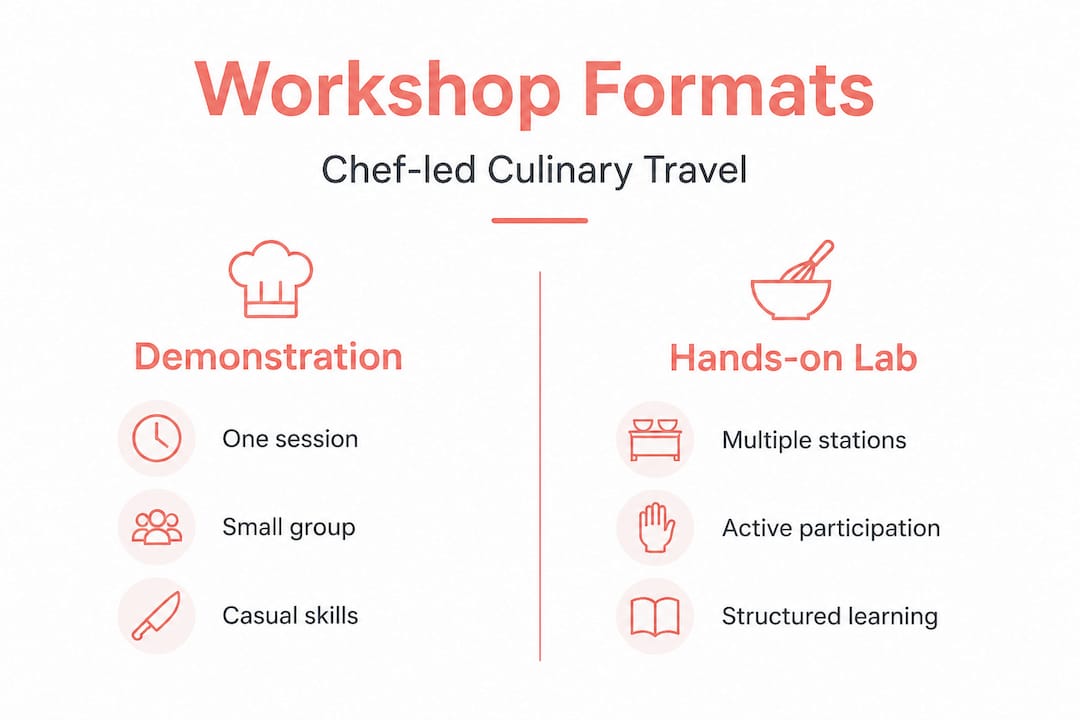
Drop-in demonstrations are the most casual format. A chef prepares dishes in front of a small audience, explaining techniques as they go. Participants watch, taste, and occasionally assist. These work well as introductions to a local cuisine, but they rarely build real skills.
Hands-on labs place participants at their own workstations. Everyone chops, folds, or seasons in real time, guided by the chef through each step. This format is far more engaging and generates the kind of memorable moments that travellers talk about for years.
Progressive multi-session courses go deeper still. Spread across several days or evenings, they allow participants to build on skills from one session to the next. These are especially popular with longer-stay culinary tourists who want more than a taste of a city’s food culture.
Understanding the chefs’ role in food tourism is central to choosing the right format. The chef is not simply a cook; they are a cultural interpreter, a storyteller, and a guide to a city’s culinary identity.
Here is a quick comparison of the three main workshop formats:
| Format | Structure | Skill-building | Group size | Best for |
|---|---|---|---|---|
| Drop-in demonstration | One session, passive observation | Low | Up to 30 | Introduction to local cuisine |
| Hands-on lab | One session, active participation | Medium to high | 8 to 16 | Immersive single-day experience |
| Multi-session course | Several sessions, progressive | High | 6 to 12 | Deep-dive culinary education |
The key insight here is that chef-led workshops work best when you treat them like a paced learning product, with clear objectives, a modular curriculum, and a timed agenda, rather than a one-off demo. A well-structured session gives participants a sense of progress and achievement. It also makes the chef’s expertise shine far more clearly.
Consider a Danish culinary tour as a model: local chefs lead participants through regional dishes using a structured, step-by-step format that builds confidence and contextualises every technique within the broader food culture. That kind of intentional design is what separates a truly satisfying workshop from a chaotic kitchen afternoon.
Think carefully about customising culinary experiences to match the interests and skill levels of your participants. A group of seasoned home cooks needs different pacing and challenge than a group of curious first-timers visiting Paris for the weekend.
Essential preparation: requirements, planning, and materials
Good workshops are built weeks before anyone sets foot in the kitchen. The preparation for chef-led cooking workshops requires a lead-time plan covering the venue, chef or instructor, menu, ingredient ordering, and final participant communications. Without this scaffolding, even the most talented chef will struggle to deliver a smooth experience.
Here is a numbered checklist of the core preparation tasks, along with how far in advance each should be completed:
- 8 weeks out: Confirm the venue and check kitchen capacity, safety equipment, and accessibility.
- 7 weeks out: Finalise your chef partner and agree on the workshop format, duration, and learning objectives.
- 6 weeks out: Plan the menu together with the chef, factoring in seasonal availability and local sourcing.
- 4 weeks out: Order specialist ingredients, utensils, and any printed materials (recipe cards, aprons, and so on).
- 3 weeks out: Send participant confirmations, including what to wear, what to bring, and what to expect.
- 2 weeks out: Collect all dietary requirements and allergies and adapt the menu accordingly.
- 1 week out: Confirm final numbers, recheck ingredient orders, and brief the chef on any special needs.
- Day before: Prepare the kitchen layout, test all equipment, and brief any assistants on their roles.
Here is a data table summarising lead times and responsibilities:
| Task | Lead time | Responsible party |
|---|---|---|
| Venue booking | 8 weeks | Organiser |
| Chef confirmation | 7 weeks | Organiser |
| Menu planning | 6 weeks | Chef and organiser |
| Ingredient ordering | 4 weeks | Chef or supplier |
| Participant communications | 3 weeks | Organiser |
| Dietary restriction collection | 2 weeks | Organiser |
| Equipment check | 1 day before | Chef and organiser |
Planning for a Barcelona-style culinary workshop illustrates how detailed preparation pays off: organisers there work with local chefs months in advance to source hyper-local ingredients, map kitchen workflows, and plan participant groupings by skill level.
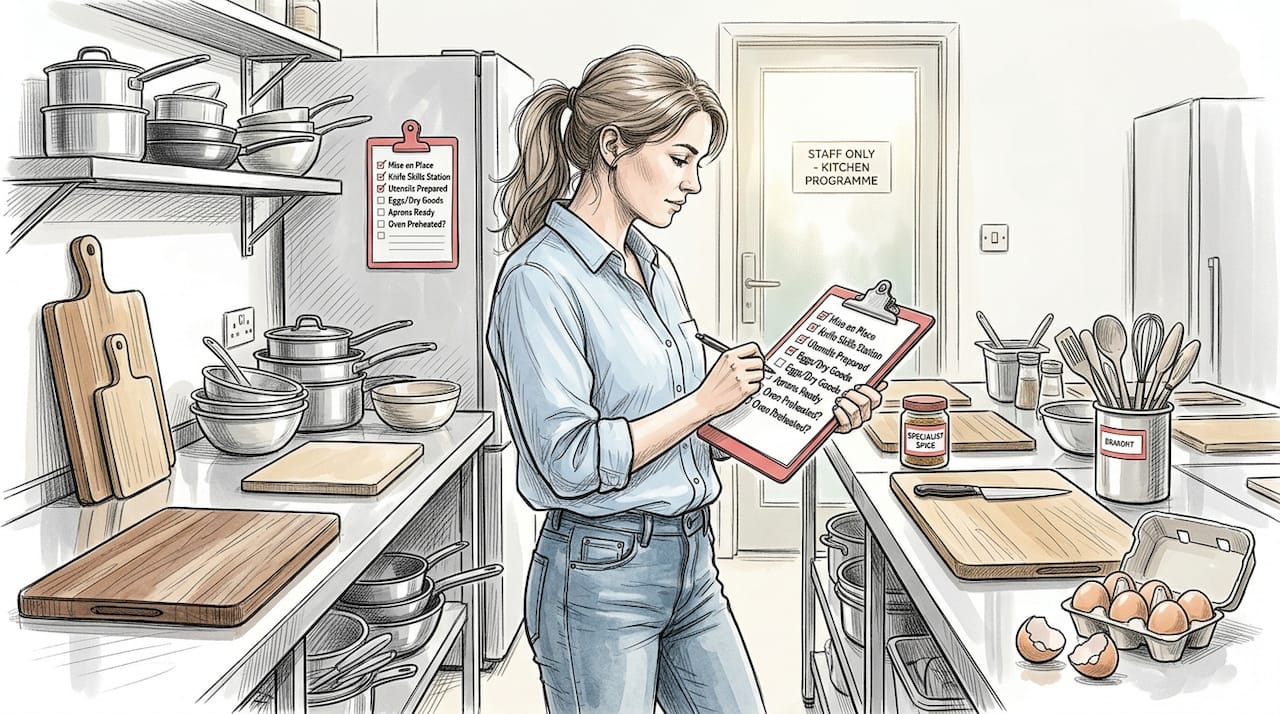
The materials list matters more than most organisers realise. Every workstation needs its own set of tools; sharing slows everything down and frustrates participants. Think about backup equipment too. A blender that breaks mid-session without a replacement on hand can derail an entire module.
Pro Tip: Always confirm who is responsible for timekeeping before the day. Assign a dedicated timekeeper, ideally someone other than the chef, so the chef can focus entirely on teaching and the session stays on schedule.
Visit our guidance on customisation in culinary tours for ideas on tailoring menus and formats to specific groups, from corporate teams to solo travellers.
If you are planning a larger or multi-day event, our article on team culinary event planning covers additional logistics and team coordination strategies in detail.
Coordinating on the day: smooth execution and participant engagement
Preparation sets the stage; execution is where memories are made or lost. Even with the most thorough planning, the day itself requires active management, clear communication, and the ability to adapt without panic.
Here is a step-by-step framework for managing the workshop from arrival to finish:
- Set up early: Arrive at least 90 minutes before participants to arrange workstations, check all equipment, and lay out ingredients in order of use.
- Greet participants warmly: First impressions set the tone. A welcome drink or a brief tasting as guests arrive creates immediate engagement and reduces any nervousness.
- Clarify objectives: Before cooking begins, the chef should outline what participants will learn, what dishes they will make, and how the session is structured. This takes five minutes and pays off enormously.
- Facilitate each skill module: Move through the curriculum in clear stages, with the chef demonstrating first, then participants practising. Encourage questions at natural pauses, not mid-technique.
- Monitor engagement: Watch for participants who are struggling or disengaging. A good chef will adapt pace and attention in response. Organisers should support this by flagging issues discreetly.
- Troubleshoot calmly: Spills, broken equipment, and timing overruns happen. The key is to have backup tools ready and to address problems without broadcasting alarm to the whole group.
“Having backup utensils and a designated timekeeper on the day prevents the kind of small delays that compound into a session running significantly over time. Smooth transitions between modules are as important as the cooking itself.”
The role of local chefs in culinary tourism extends well beyond technique. The best chefs weave stories about ingredient provenance, family recipes, and neighbourhood food culture into every module. This narrative layer is what transforms a cooking class into a genuine travel experience.
Handling last-minute changes requires a clear protocol. If a participant reveals an allergy on the day, the chef should have a pre-agreed list of substitutions to draw on immediately. If an ingredient has not arrived, the backup plan should already be in place.
Pro Tip: Build at least ten minutes of buffer time between each major module. This allows for natural conversation, ingredient transitions, and the unexpected without pushing the session into overtime.
For further insight into how chefs shape the experience from arrival to farewell, explore the concept of chefs as guides and how their dual role as teacher and cultural ambassador elevates every moment of a workshop.
See also our guidance on team workshop execution tips for additional strategies on managing participant groups during hands-on cooking events.
Food safety, compliance, and post-workshop follow-up
This is the section most organisers skip until something goes wrong. Food safety and legal compliance are not bureaucratic nuisances; they are the foundation of a professional, trustworthy workshop.
If your chef-led workshop prepares food for public events, you must plan for food establishment compliance, including food safety training, appropriate facilities and equipment, and permit-specific requirements for temporary or pop-up food events. The specifics vary by city and country, but the principle is consistent: serving food to the public carries legal obligations that must be met before the first knife is lifted.
“Food safety is not a detail to address after everything else is sorted. For public-facing culinary events, compliance is the first thing to plan, not the last.”
Here is a concise checklist of things not to overlook:
- Permits: Check local regulations for temporary food establishment permits at least 6 weeks in advance.
- Food handling: Ensure the chef and any assistants hold current food hygiene certifications.
- Allergen management: Confirm all dietary restrictions in writing before the event and keep a physical record on the day.
- Ingredient sourcing: Use reputable suppliers and keep records of provenance for traceability.
- Storage: Maintain correct temperatures for all perishable ingredients from delivery through service.
- Waste disposal: Plan for safe, compliant disposal of food waste, especially for events in shared or public spaces.
- Follow-up communications: Send a thank-you email within 48 hours, include digital recipe cards, and invite participants to share photos and feedback.
- Feedback collection: Use a short, structured form to gather genuine responses on what worked and what to improve.
Post-workshop follow-up is where many organisers leave value on the table. A well-crafted follow-up email with the recipes from the session, a few photographs, and a personal note from the chef transforms a one-off experience into an ongoing relationship. Participants who feel remembered are far more likely to book again or recommend the experience to others.
If you work in travel or hospitality and want to incorporate culinary workshops into broader itineraries, our culinary travel tips for professionals offer practical frameworks for doing so with confidence.
Why real coordination creates extraordinary chef-led memories
Here is something the food travel industry rarely says plainly: culinary talent is only half the picture. We have seen gifted chefs deliver underwhelming workshops simply because the logistics were a mess, and we have seen mid-level cooks facilitate extraordinary experiences because every detail was thought through in advance.
Participants do not usually articulate this when they write reviews. They say things like “it felt so relaxed” or “everything just flowed.” What they are actually describing is the invisible work of precise coordination. When participants arrive to find their workstations immaculate, their ingredients pre-portioned, and a confident agenda explained clearly in the first five minutes, something shifts. They relax. They trust. They open up to learning.
Most organisers underestimate how much operational detail matters to guest satisfaction. The gap between a routine cooking demo and a truly immersive culinary experience is not the quality of the recipe. It is the foresight to anticipate what participants need before they know they need it.
Personalising menus to reflect genuine local identity, handling last-minute changes with calm professionalism, and building in moments of genuine connection between chef and participant: these are the things that create the stories people tell when they get home. Coordination is not the opposite of creativity. Done well, it is what makes creativity possible.
Plan your next chef-led workshop with The Chef Tours
At The Chef Tours, we build culinary experiences that are as meticulously planned as they are genuinely joyful. Our chefs in Paris, Seville, Berlin, and Mexico City bring deep local knowledge and genuine passion to every workshop and tour they lead.
Whether you are a culinary traveller looking for a hands-on afternoon with Chef PJ in Paris, a private group wanting an exclusive session with Chef Crestani in Seville, or a corporate team ready for an immersive experience with Chef Karl Wilder in Berlin or Mexico City, we handle every detail so you can focus entirely on enjoying the experience. Explore culinary experiences to try across our destination cities, or discover the full range of our chef-led food tours and how we make them different from anything else on the market.
Frequently asked questions
How far in advance should I plan a chef-led workshop?
Start planning at least 6 to 8 weeks before your desired date to secure venues, chefs, and all necessary materials without last-minute pressure.
What should I check with participants before the workshop?
Confirm any dietary restrictions or allergies in advance; collecting these details early ensures the menu can be adapted safely and without disruption on the day.
Are food safety permits needed for chef-led workshops?
For workshops serving the public, temporary food establishment permits and current food safety certifications are required, and requirements vary by location so check local regulations early.
How can I ensure the workshop keeps to schedule?
Appoint a dedicated timekeeper who is separate from the chef, build buffer time between modules, and follow a well-paced agenda where each module has a defined end point and transition plan.
What makes chef-led workshops unique for culinary tourists?
They combine genuine skill-building with insider cultural access and direct connection with local chefs, creating experiences that no restaurant meal or standard guided tour can replicate.
Recommended
- How to Customise Culinary Experiences Like an Expert
- Step-by-Step Guide to Chef-Led Tours for Food Lovers
- How to plan immersive culinary travel in 5 steps
- Plan culinary team events to boost collaboration
- Vietnamese Cooking Classes for Singapore Travellers | VietnamTourPackage.sg
- Morocco Food Tour | 9-Day Culinary Journey