

TL;DR:
- Customised group food tours led by local chefs offer a personalized, authentic culinary experience tailored to participants’ dietary needs and interests. Proper planning includes thorough participant information collection, route optimisation, and strong venue coordination to ensure smooth execution. Flexibility and thoughtful curation are essential, as unpredictable restaurant or market factors shape an unforgettable food journey.
You’ve booked what promises to be an unforgettable food tour, only to find yourself trailing a flag-wielding guide through tourist traps, eating reheated tapas at a restaurant that caters to fifty people simultaneously. Sound familiar? Standard food tours are built for volume, not for the specific preferences, dietary needs, or genuine curiosity your group brings to the table. The good news is that customised group food tours led by local chefs are not only possible but increasingly accessible, and this guide walks you through every step of making it happen.
Table of Contents
- What you need before customising a group food tour
- Step-by-step: How to design a personalised group food tour
- Working with chefs and guides for insider access
- Managing restaurant and venue logistics
- Verifying and refining your customised group food tour
- The truth about customising group food tours: What operators and travellers rarely say
- Ready for your own customised food adventure?
- Frequently asked questions
Key Takeaways
| Point | Details |
|---|---|
| Early preparation is key | Gather group preferences and check feasibility with venues and guides well in advance. |
| Expert guides unlock access | Chef or expert-led tours provide unique flavours, stories, and local connections standard tours can’t match. |
| Expect flexible arrangements | No tour is ever fully predictable; flexibility and backup plans ensure memorable experiences despite changes. |
| Feedback drives improvement | Ask for and act on group feedback as there are no universal metrics for custom tour success. |
What you need before customising a group food tour
Now that you know why customisation matters, let’s cover what to prepare before you dive in.
Before you contact a single restaurant or brief a single chef, you need solid groundwork. Skipping this stage is the most common reason customised tours fall apart or deliver disappointing results. Think of it as the mise en place of tour planning: everything in its right place before the heat comes on.
Start by gathering detailed information from every participant. This means dietary restrictions, allergies, mobility requirements, and what they genuinely hope to experience. Does someone in your group keep kosher? Is there a passionate wine drinker who wants to skip the craft beer stops? Is anyone in a wheelchair? These are not afterthoughts. According to best practices in personalised tour planning, feasibility checks covering restaurant hours, partner availability, allergies, and mobility needs must be addressed early in the process. Leaving them until the last minute almost always creates problems.
Here is the essential information to collect from your group:
- Full names and contact details for emergency communication
- Specific dietary restrictions and allergies (including severity)
- Mobility or accessibility requirements
- Language preferences if working with non-English speaking guides
- Budget per person for food, drinks, and gratuities
- Personal culinary interests (street food, fine dining, market visits, wine, craft spirits)
- Preferred tour length and walking distance tolerance
You will also want to clarify who owns each planning task. If you are working with a tour operator, expert customisation advice suggests that the operator typically handles venue negotiation and guide briefing, while your group organiser confirms participant preferences and manages communications. If you are designing the tour independently, assign someone to each role: venue liaison, logistics coordinator, and group communicator.
Pro Tip: When organising food outings for larger groups, create a shared document where all participants can directly enter their preferences. It saves hours of back-and-forth and reduces the risk of missed details.
| Preparation task | Who is responsible | When to complete |
|---|---|---|
| Collect dietary needs | Group organiser | 4+ weeks before tour |
| Check venue availability | Tour operator or liaison | 3+ weeks before tour |
| Confirm guide or chef brief | Operator or lead organiser | 2+ weeks before tour |
| Share final itinerary with group | Group communicator | 1 week before tour |
Understanding the role of customisation in creating genuinely memorable food experiences means accepting that preparation is not optional. It is the entire foundation.
Step-by-step: How to design a personalised group food tour
With your groundwork in place, you’re ready to design the tour itself. Let’s walk through the essential steps.
Designing a customised group food tour is more intricate than it looks from the outside. Tour orchestration involving route and time optimisation, guide expertise, and coordination with restaurants is a major quality driver, and customisation adds significant complexity to each layer. That complexity is worth it, but only if you follow a clear process.
Confirm group goals and theme. Is this a birthday celebration, a corporate team-building experience, a hen party, or a pure culinary adventure? Your theme shapes every venue and activity choice. A group interested in custom chef-led journeys in Paris will have very different stops from a group focused on natural wine in Berlin.
Compile and prioritise dietary needs. List every restriction and rank venues by how well they can accommodate your group. If three out of eight people are vegetarian, meat-heavy venues become secondary options unless they can genuinely cater to the whole group.
Shortlist venues based on theme and logistics. Aim for three to five stops on a half-day tour. Variety is key: a market, an artisan producer, a sit-down tasting, and perhaps a street food stop create a compelling rhythm. Check opening times, private dining availability, and group size limits.
Map the route for efficiency. Group your stops geographically to reduce unnecessary walking or transit time. A well-planned route keeps energy levels high and maximises time at each venue rather than in transit between them.
Coordinate timing with guides and partners. Confirm exact arrival windows with every venue. Restaurants often have kitchen turnover times, and arriving even fifteen minutes late can cascade into a rushed experience everywhere else.
Address language and cultural context. If your group is visiting Seville, Paris, or Mexico City, a local chef who speaks the language and understands cultural nuances adds immense value. They can translate menus, explain traditions, and navigate situations that would baffle even a well-prepared tourist.
Build in flexibility. Leave buffer time between stops and identify at least one backup venue for each stage of the tour.
Pro Tip: The in-demand customisation trends show that groups who brief their guides on specific interests, such as a love of natural wine or a fascination with local bread-making, consistently report richer experiences than groups who leave guidance entirely open.
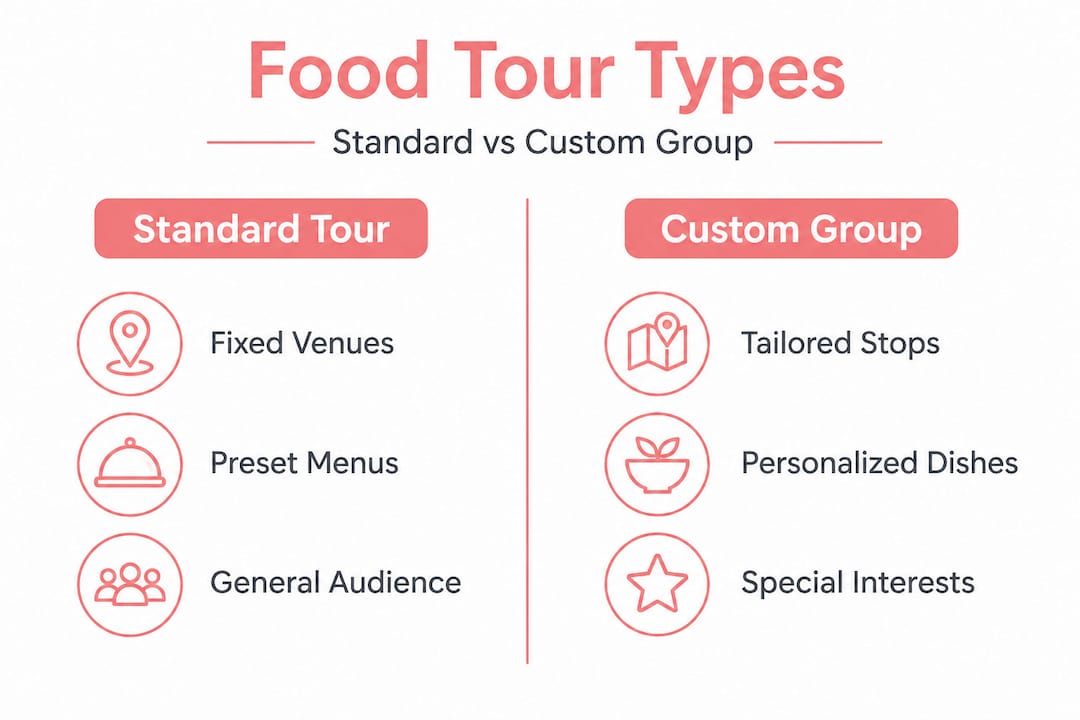
| Feature | Standard food tour | Custom group tour |
|---|---|---|
| Venue selection | Fixed, pre-set | Tailored to group interests |
| Dietary accommodation | Limited | Fully considered |
| Guide expertise | Variable | Specialist or chef-led |
| Timing flexibility | Rigid schedule | Built-in buffer time |
| Cultural storytelling | Generic | Personal and contextual |
The preference for custom tours among experienced food travellers is rooted in exactly these differences. Once you have experienced a tour designed around your group’s real interests, a standardised route feels remarkably flat.
Working with chefs and guides for insider access
Having mapped your route, let’s explore how guides or chefs transform your custom group food experience.
A great route is nothing without a great guide. This is where chef-led tours separate themselves decisively from everything else on the market. Guide expertise and the ability to manage partner variability are recognised as major drivers of quality in customised tours. A chef who knows the city’s food producers personally does not just show you what to eat. They explain why it matters, who made it, and what makes it exceptional.
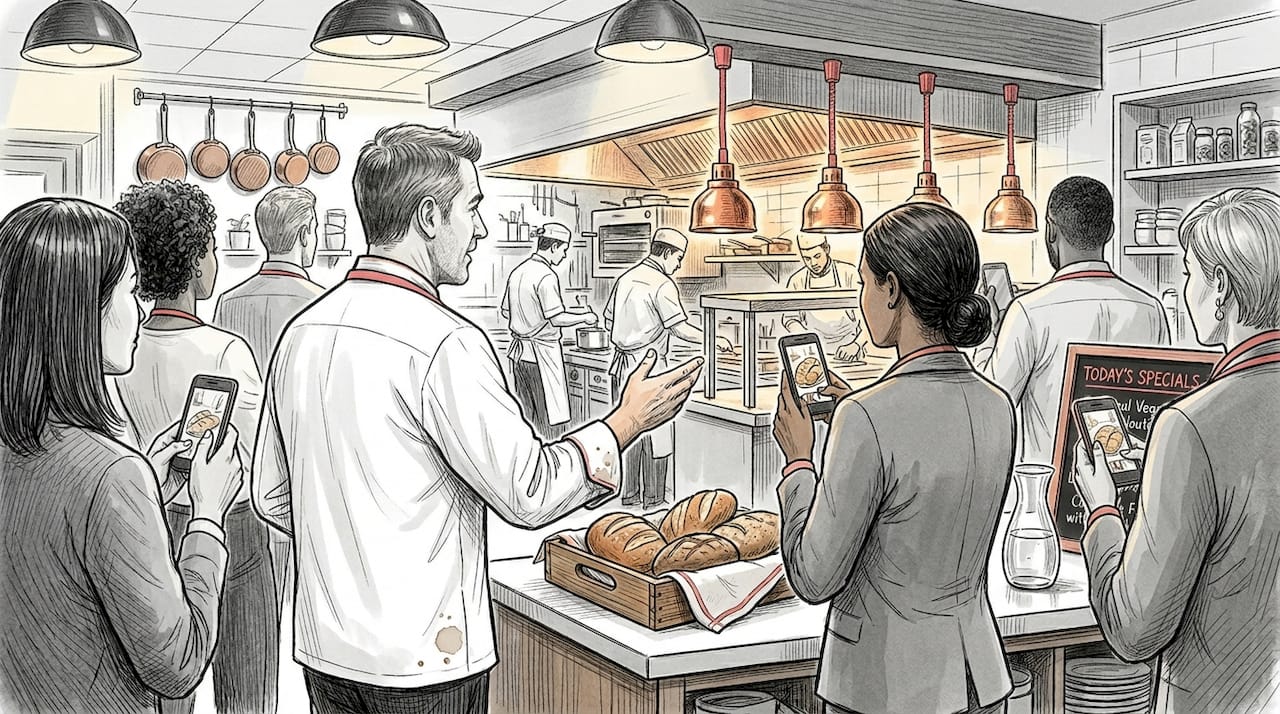
When briefing a chef or guide, be specific. Share your group’s theme, dietary needs, any known interests (such as a passion for fermented foods or aged cheeses), and the atmosphere you want to create. A good chef guide will incorporate this into their storytelling and venue choices naturally.
Here are the qualities worth prioritising when selecting a guide or partner chef:
- Deep local knowledge, ideally with personal relationships at venues
- Experience managing groups of varying sizes and needs
- Ability to adapt on the fly when a venue changes last minute
- Genuine passion for food history and regional culinary culture
- Clear communication and strong interpersonal skills
- Familiarity with dietary restrictions and how kitchens handle them
The chef expertise that powers authenticity on a food tour is not simply about cooking skill. It is about access. Chef PJ in Paris knows which boulangeries are worth queuing for and which are trading on past reputations. Chef Crestani in Seville can walk your group through a tapas bar kitchen and introduce you to the owner. Chef Karl Wilder in Berlin and Mexico City brings a cross-cultural perspective that illuminates both cities in remarkable ways.
| Tour type | Insider access | Customisation depth | Cultural storytelling |
|---|---|---|---|
| Chef-led tour | High | Very high | Rich, personal |
| Standard guide tour | Medium | Moderate | General |
| Self-guided tour | Low | Total but unaided | None |
Understanding chef expertise benefits means appreciating that chefs as guides bring layers of knowledge that no amount of guidebook research can replicate. Their relationships, their instincts, and their enthusiasm for sharing their city’s food culture are the true premium of a chef-led experience. Learn more about how chefs serve as guides to understand how this dynamic works in practice.
Managing restaurant and venue logistics
With your guides and purpose set, now master the restaurant and venue relationship for a seamless, enjoyable experience.
Even the most carefully designed tour can unravel if the underlying venue logistics are shaky. Route planning, guide expertise, and dependence on restaurant availability are central to both the success and the complexity of custom food tours. Managing this layer well is what separates a polished experience from a stressful one.
When approaching restaurants, be transparent about your group size, dietary needs, and the nature of the visit. Many small, independent restaurants genuinely enjoy hosting food tour groups, but they need proper notice and clear parameters. Arrive without warning with a group of twelve and expect a cold reception.
Key practices for managing venue relationships effectively:
- Confirm all bookings in writing and follow up 48 hours before the tour
- Share a clear time window for arrival and departure at each venue
- Communicate all dietary restrictions to kitchens directly, not just to front-of-house staff
- Agree in advance on what will be served and what it will cost
- Discuss tipping culture and make it clear to your group
No single approach will work across every venue and every group. Expect some partners to be unable to accommodate every request, and build your tour around this reality rather than against it.
Pro Tip: For group logistics and events, always have a backup option for each stage of your tour. A neighbourhood wine bar that can seat your group at short notice, a market stall that works as an impromptu stop, or a flexible chef who can extend a tasting are all worth identifying in advance.
Dietary complexity deserves particular attention. A gluten intolerance is not the same as a severe coeliac diagnosis. A nut allergy can be life-threatening in ways a simple preference for avoiding shellfish is not. Communicate the severity of every restriction to every venue, every time.
Verifying and refining your customised group food tour
With all logistics sorted, thorough verification ensures your group’s experience matches expectations. Here is how to approach the final checks.
- Conduct a pre-tour walkthrough. If possible, visit each venue in advance or send your chef guide to confirm arrangements, check accessibility, and taste key dishes.
- Send a detailed briefing to all participants. This should include meeting point, dress code if relevant, approximate walking distance, what to eat beforehand, and payment expectations.
- Confirm all bookings 24 to 48 hours before the tour. A quick call or message to each venue prevents surprises on the day.
- Prepare your guide with a final group update. If anything has changed, from a last-minute dietary restriction to a participant dropping out, your guide needs to know.
- Collect feedback immediately after the tour. Ask participants while the experience is fresh, through a simple form, group chat message, or brief verbal debrief.
- Review and refine for future tours. Note what worked, what did not, and which venues delivered on their promises.
It is worth acknowledging that no widely accepted public KPIs exist yet for measuring the quality of custom group food tours. This means qualitative feedback and honest post-tour conversations remain the most reliable tools for improvement. Ask specific questions: Which stop was most memorable? What would you change? Was the pacing right? These answers shape better tours over time.
The truth about customising group food tours: What operators and travellers rarely say
There is something the glossy tour brochures tend to omit. Full customisation is not always possible, and chasing it can actually diminish the experience. The best custom tours are not fully custom at all. They are thoughtfully curated, which means a skilled chef or operator has made considered choices within the limits of what is genuinely available and excellent.
Group compromise is real and unavoidable. Your group of ten will never agree perfectly on every stop, every dish, or every pace. The mistake is designing a tour that tries to satisfy everyone completely rather than one that creates shared moments of genuine delight. Partial customisation, such as tailoring one or two stops specifically to a group interest while keeping a strong core itinerary, often exceeds expectations precisely because it manages them honestly.
The misconception that a custom tour can remove all friction is equally damaging. Restaurants change their hours. A market stallholder calls in sick. A venue double-books. These are not failures of planning. They are the texture of real food culture, which is alive and unpredictable. The unseen work of coordination, the early-morning phone calls, the last-minute rerouting, the calm negotiation when a kitchen runs behind, is the real premium of a great chef guide. It happens invisibly, and that invisibility is the craft.
We recommend treating flexibility not as a consolation prize but as part of the experience’s genuine appeal. The unexpected detour into a neighbourhood you had not planned to visit, the impromptu conversation with a cheese monger, the dish that was not on the original list but turns out to be the highlight of the day: these are the moments that define great food travel. Build your tour with structure but hold it lightly.
Ready for your own customised food adventure?
If you’re ready to make your next group food tour truly memorable, here’s where to begin.
At The Chef’s Tours, we have spent years connecting curious food travellers with chefs who know their cities intimately. Chef PJ in Paris, Chef Crestani in Seville, and Chef Karl Wilder across Berlin and Mexico City do not simply lead tours. They share their culinary worlds with you, opening doors that standard tours never reach. Whether you are planning a private group experience, a corporate event, or a special celebration, we handle the complexity so you can focus on enjoying every bite.
Browse our full range of culinary experiences to try across our cities, or explore our selection of gourmet chef-led city tours to find the right fit for your group. For something truly exclusive, our private chef tastings offer a level of access and intimacy that simply cannot be replicated on a standard tour. Your next great food memory is closer than you think.
Frequently asked questions
How far in advance should I plan a customised group food tour?
Plan at least two to four weeks ahead to secure your preferred restaurants and guides. Early planning allows time for feasibility checks and logistics, including dietary accommodation and venue availability.
Can all dietary restrictions be accommodated on a customised tour?
Most venues will do their best if notified well in advance, but some providers explicitly warn that not every partner can meet every restriction. Build flexibility into your venue selection.
What’s the difference between a chef-led and a standard group food tour?
Chef-led tours offer richer insider access, tailored menus, and genuine cultural storytelling. Standard tours follow fixed routes, and as research into tour quality confirms, guide expertise and management of partner relationships are what truly distinguish the two.
How do I handle last-minute changes or cancellations?
Keep backup venue and guide options ready at all stages. Because custom tours depend on partner availability, having contingency plans built in from the start is not excessive caution but standard good practice.