

TL;DR:
- Planning a culinary retreat can significantly enhance team cohesion and morale through immersive experiences in renowned food cities.
- Clear objectives, destination choice, logistical planning, and post-event follow-up are essential for measurable success and engagement.
Planning a corporate retreat that people actually want to attend is harder than it sounds. Generic conference rooms, trust falls, and forgettable hotel buffets have left many HR professionals searching for something that genuinely moves the needle on team cohesion and morale. Culinary retreats in world-class food cities offer a compelling alternative, and the business case is strong: the global corporate retreat market stood at $31.8 billion in 2024 and is projected to reach $73.7 billion by 2034. This guide gives you a practical, step-by-step blueprint for planning a culinary retreat that delivers measurable results.
Table of Contents
- Setting your objectives and aligning your team
- Choosing the right destination and culinary experience
- Logistics checklist: budgeting, booking, and essentials
- Facilitating engagement and follow-through during and after the retreat
- Why meaningful culinary retreats are more than a trend
- Explore curated culinary journeys for your team
- Frequently asked questions
Key Takeaways
| Point | Details |
|---|---|
| Clear objectives matter | Define your goals upfront to maximise engagement and ROI from your culinary retreat. |
| City and activity choice | Choose destinations and experiences that fit your team’s needs and company culture. |
| Organisation is key | Meticulous logistics planning prevents last-minute issues and enhances the experience for all. |
| Sustaining the impact | Follow-up activities post-retreat help cement benefits and improve long-term team performance. |
Setting your objectives and aligning your team
Before you book a single flight or reserve a restaurant, you need to be crystal clear about why you are doing this. Without defined objectives, even the most beautifully curated experience can feel like an expensive day out with no lasting impact.
Start by asking what you actually need from this retreat. Are you trying to rebuild trust after a difficult restructure? Spark cross-departmental creativity? Develop emerging leaders? Or simply reward a high-performing team? Each goal points to a different kind of culinary experience. Leadership development calls for structured challenges. Creative ideation benefits from open-ended exploration. Team bonding thrives on shared, hands-on activity.
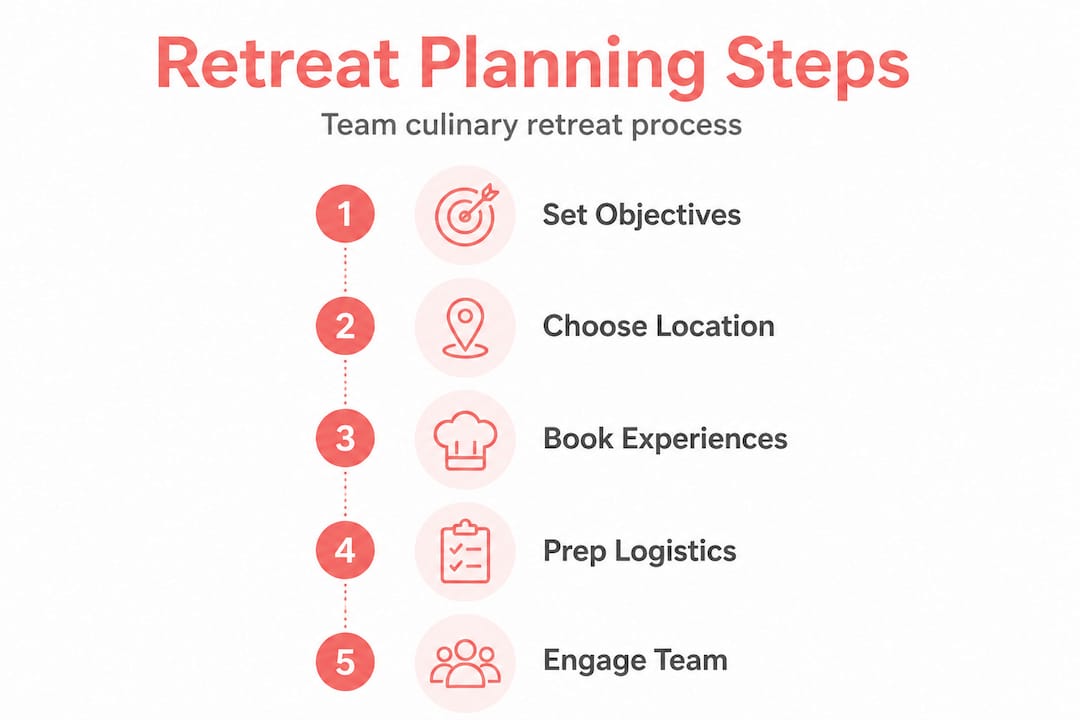
Once you have your primary objective, align it with what your people actually want. This is where many planners stumble. They design the retreat around organisational goals without consulting the team, and participation suffers as a result. The culinary experience benefits for team building are well documented, but they only materialise when people feel genuinely involved from the start.
Key areas to clarify before planning begins:
- Primary goal: bonding, innovation, leadership, reward, or a combination
- Team size and composition: senior leadership, mixed departments, or a single function
- Dietary requirements: allergies, religious restrictions, lifestyle choices (vegan, halal, kosher)
- Travel comfort: international versus domestic, passport holders, time zone tolerance
- Budget envelope: per-person ceiling and what flexibility exists
Pro Tip: Send a short pre-retreat survey two to three months before the event. Ask about food preferences, travel concerns, and what they most want from the experience. This single step dramatically improves buy-in and surfaces potential problems early.
Research consistently confirms that engaged employees deliver 21% higher profitability. A culinary retreat designed around your team’s real interests is one of the most effective ways to build that engagement, especially when you tie it explicitly to organisational goals and communicate those goals clearly before anyone boards a plane. Understanding the impact on team cohesion early in the planning process helps you set realistic expectations for both leadership and participants.
Choosing the right destination and culinary experience
With your objectives in place, the next decision is where and how to bring your culinary retreat vision to life. Destination choice shapes everything: the food culture, the activities available, the logistics complexity, and the overall atmosphere.
When evaluating destinations, consider the following factors:
- Accessibility: direct flights, visa requirements, transfer times from the airport
- Food culture: depth and diversity of the local culinary scene
- Safety and infrastructure: reliable transport, medical facilities, English-language support
- Group size suitability: some cities handle large groups more gracefully than others
- Seasonal considerations: local festivals, weather, peak pricing periods
Cities like Paris, Seville, Berlin, and Mexico City each offer a distinct culinary identity that lends itself to immersive team experiences. Paris is unmatched for classical technique and market culture. Seville brings vibrant tapas traditions and a deeply social food culture. Berlin’s street food scene and multicultural influences make it ideal for adventurous groups. Mexico City, one of the world’s great food capitals, rewards curious teams with extraordinary depth.
| City | Best experience type | Ideal group profile | Standout feature |
|---|---|---|---|
| Paris | Chef-led market tours, patisserie workshops | Culture-focused, mixed seniority | Classical French technique |
| Seville | Tapas trail, sherry tastings | Social, mid-size groups | Authentic Andalusian tradition |
| Berlin | Street food tours, brewery visits | Adventurous, younger teams | Multicultural food diversity |
| Mexico City | Market immersion, mole workshops | Exploratory, internationally minded | UNESCO-listed food heritage |
Types of experiences worth considering for team events focused on collaboration include chef-led walking tours, private tasting menus, hands-on cooking classes, market visits with local producers, and wine or spirits pairing sessions. Each format creates different kinds of engagement. Walking tours build organic conversation. Cooking classes demand cooperation and communication. Tasting events encourage sensory focus and shared reflection.
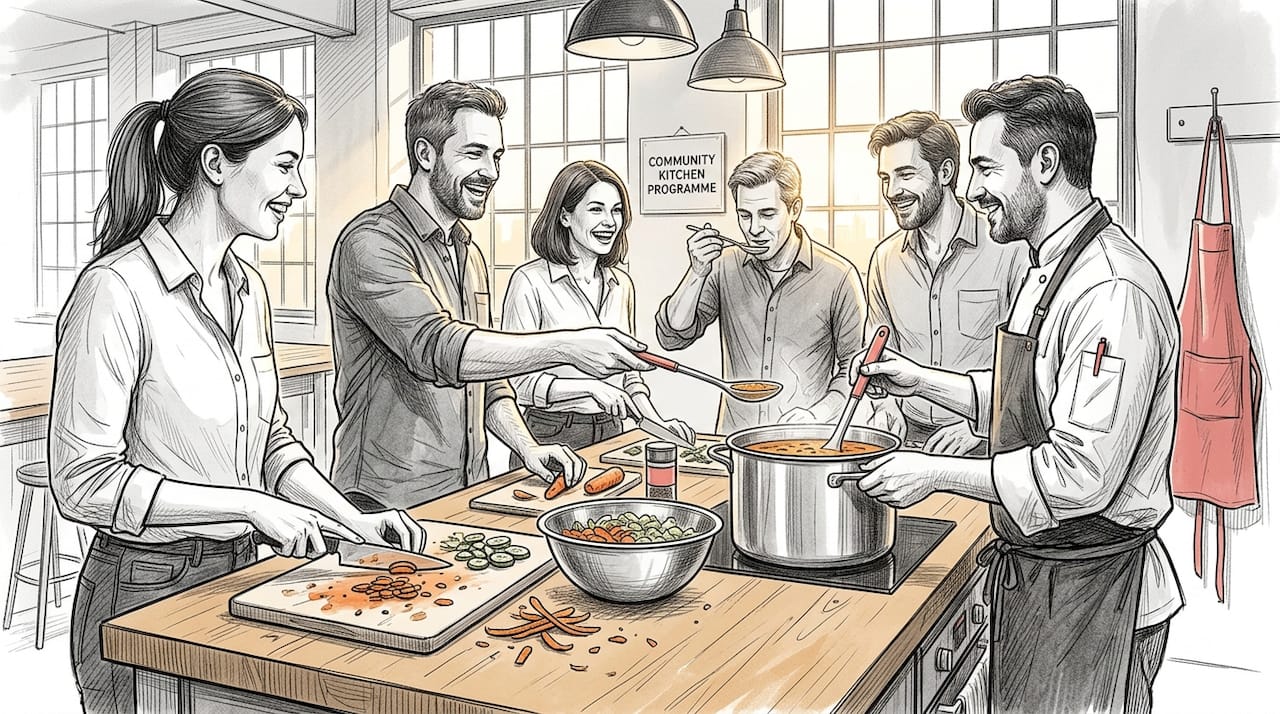
Pro Tip: Partnering with a local chef rather than a generic tour operator gives your team genuine insider access. A chef who knows the city intimately can open doors to private suppliers, family-run establishments, and hidden neighbourhood spots that no itinerary-driven tour could offer. This is exactly what makes team building food tours fundamentally different from standard sightseeing.
It is also worth noting that interest in immersive culinary travel has surged, with retreat bookings rising 21% between 2023 and 2024. For teams with a taste for something truly distinctive, Mediterranean hospitality options such as yacht-based dining events offer a memorable alternative for groups visiting coastal cities.
Logistics checklist: budgeting, booking, and essentials
Once you have selected the destination and experience type, it is time to map out logistics and ensure nothing is overlooked. This is where meticulous planning separates a smooth retreat from a stressful one.
Follow this sequence to keep everything on track:
- Confirm your travel dates and check for local public holidays or major events that could affect availability and pricing.
- Secure accommodation close to your planned activities to reduce transit time and fatigue.
- Book your culinary experiences first, as chef availability and private venues fill up quickly, particularly in peak season.
- Arrange group travel insurance covering cancellations, medical emergencies, and activity-related incidents.
- Collect dietary information from all attendees and brief your culinary hosts at least four weeks in advance.
- Prepare cultural briefings so your team arrives informed and respectful of local customs.
- Sort visas and documentation well ahead of the deadline, particularly for international travel involving non-EU passport holders.
- Build a contingency fund of at least 10 to 15 per cent of total budget to absorb unexpected costs.
A transparent budget breakdown helps leadership approve spend confidently. Here is a typical structure for a group of 20 travelling internationally:
| Budget category | Estimated share of total |
|---|---|
| Flights and transfers | 35% |
| Accommodation | 25% |
| Culinary experiences and facilitators | 20% |
| Meals and incidentals | 10% |
| Contingency | 10% |
“Well-designed retreats do not just boost morale. They reduce costly turnover. Replacing an employee costs between 0.5 and 2 times their annual salary, making investment in engagement a clear financial priority.”
That figure is not abstract. Organisations that invest in meaningful retreats report a 20% increase in employee satisfaction and 22% faster project delivery in the months that follow, outcomes that directly offset the cost of the retreat itself.
Pro Tip: Always negotiate group rates with hotels and culinary experience providers. Most will offer a discount for guaranteed numbers, and some will include add-ons such as a welcome drink, a dedicated host, or a printed recipe booklet at no additional cost.
Activities designed to boost team bonding often deliver compounding returns when paired with thoughtful accommodation choices, such as shared villa stays or boutique hotels with communal spaces. These environments extend the bonding beyond scheduled activities. When food experiences for team building are woven into the fabric of where your team sleeps, eats breakfast, and unwinds in the evening, the impact multiplies significantly.
Facilitating engagement and follow-through during and after the retreat
With the practicalities sorted, focus now turns to making the retreat impactful and ensuring those results last when your team returns to the office.
Pre-retreat engagement sets the tone. Do not wait until day one to get people excited. Consider these steps in the weeks before departure:
- Share a short video introduction from your local chef host.
- Send a “culinary passport” document with fun facts about the destination’s food culture.
- Host a 30-minute virtual kick-off call to build anticipation and answer logistical questions.
- Pair people from different departments who may not usually interact, setting the intention for new connections.
During the retreat itself, facilitation quality makes or breaks the experience. Rotating group compositions for different activities prevents cliques from forming and ensures people build relationships outside their usual circles. Gamification, such as a friendly tasting competition or a market challenge where teams prepare a dish from a mystery basket of local ingredients, adds energy and friendly competition without feeling forced.
Bullet points for strong in-retreat facilitation:
- Assign a retreat champion from HR to oversee the day’s flow and handle any issues discreetly
- Build in unstructured time so organic conversations can happen naturally
- Document moments with a designated photographer, not just for social media, but for internal reporting
- Create a shared digital album or recipe booklet that teams can keep as a physical memory
Post-retreat follow-through is where most organisations fall short. The experience ends, everyone returns to their desks, and the energy dissipates within a week. Avoid this by building a structured follow-up plan.
Chef-led experiences create natural anchor points for post-retreat conversation. Encourage teams to recreate a dish from the retreat at their next internal gathering, or invite the chef to do a virtual follow-up session three months later. Measuring outcomes matters too. Survey participants within two weeks using the same questions from your pre-retreat survey to track changes in satisfaction, connection, and motivation.
Research shows that curated local chef experiences build a kind of shared cultural memory within teams. One documented case study recorded a 20% increase in employee satisfaction and 22% faster project delivery following a well-structured retreat, results that are measurable and reportable to senior leadership.
For HR professionals exploring alternative team building approaches that share the same philosophy of shared challenge and authentic experience, there are several formats worth considering alongside culinary retreats.
Why meaningful culinary retreats are more than a trend
We have seen a lot of corporate team-building formats come and go over the years. Ropes courses. Escape rooms. Axe throwing. Some of them are enjoyable enough in the moment, but few leave a lasting impression on how a team actually works together. That is the honest truth that most retreat planning guides gloss over.
What makes culinary experiences genuinely different is not the food itself. It is the combination of challenge, sensory immersion, and cultural vulnerability that happens when people step outside their professional identities and try something unfamiliar together. When a senior director is struggling to debone a fish alongside a junior analyst, hierarchy dissolves in a way that no workshop exercise can manufacture.
Cuisine is also one of the most effective cultural bridges available to globally dispersed teams. Food carries stories about place, family, and identity. When a local chef shares the history behind a dish, something shifts in the room. People stop seeing their colleagues as job titles and start seeing them as curious human beings. That shift, however small it might seem in the moment, has a measurable effect on how people collaborate when they return to work.
The companies we work with through The Chef’s Tours who get the most value from these retreats are the ones who treat them as strategic investments rather than annual perks. They set clear objectives, they communicate those objectives to participants, and they follow up with intention. They use the unique experience benefits not as a one-off event but as a catalyst for longer-term cultural change. The retreat becomes a reference point: a shared memory that teams return to in conversation for months and sometimes years afterward.
‘Forced fun’ retreats fail because they ask people to perform enthusiasm. Culinary retreats succeed because genuine curiosity and appetite are universal. Nobody has to pretend to be interested in eating well.
Explore curated culinary journeys for your team
If you are ready to move beyond generic retreat formats and invest in something your team will genuinely remember, we are here to make it happen.
At The Chef’s Tours, we design exclusive, chef-led culinary experiences in Paris with Chef PJ, Seville with Chef Crestani, and Berlin and Mexico City with Chef Karl Wilder. Each experience is tailored to your team’s goals, dietary needs, and group size, giving you culinary experiences abroad that feel personal rather than packaged. Whether you are planning an intimate leadership retreat for 12 or a company-wide celebration for 50, explore the full range of culinary experiences to try and discover why leading organisations trust us with their most important team moments. Learn more about the corporate culinary benefits and take the first step towards a retreat your team will thank you for.
Frequently asked questions
What is the ideal group size for a corporate culinary retreat?
Most culinary experiences work best with groups of 10 to 30 people, allowing for meaningful interaction and genuine hands-on participation without losing the intimacy that makes these experiences special.
How far in advance should we begin planning a culinary retreat?
Start planning at least three to six months ahead to secure chef availability, private venues, group flights, and accommodation, particularly if you are travelling to a popular food destination during peak season.
Can culinary retreats really improve employee retention?
Yes. Engaged employees generate 21% higher profitability and reducing turnover matters financially since replacing a single employee costs between 0.5 and 2 times their annual salary.
What are common mistakes when planning culinary retreats?
Overlooking dietary needs, failing to set clear objectives before the retreat, and underestimating the complexity of international logistics are the three errors most likely to undermine an otherwise well-intentioned experience.
Are there innovative culinary venues for corporate retreats?
Absolutely. Options range from chef-led neighbourhood tours and private market experiences in cities like Paris and Mexico City to exclusive onboard corporate hospitality for yacht-based culinary events in the Mediterranean.