

TL;DR:
- Food tours foster authentic cultural understanding by connecting food with history and community.
- Small, locally-led tours with personal vendor interactions provide deeper, more meaningful experiences.
- Avoid large, scripted, and commodified tours to ensure genuine engagement and cultural insight.
More than 62% of travellers factor food into their destination choices, which means what you eat on holiday is rarely an afterthought. It shapes the entire journey. Yet most visitors still wander into tourist-trap restaurants, miss the neighbourhood markets entirely, and return home with little more than a vague impression of a city’s cuisine. Food tours change that equation completely. They bridge the gap between merely tasting something and genuinely understanding it. This article explores why food tours matter for cultural insight, what separates the genuinely immersive from the disappointingly generic, and how to choose an experience that will stay with you long after the meal ends.
Table of Contents
- Why food tours matter for cultural understanding
- How food tours create authentic cultural experiences
- Pitfalls and challenges: When food tours miss the mark
- Choosing the right food tour for deep cultural engagement
- Food tours: True portals to culture or packaged experiences?
- Embark on your next cultural food journey
- Frequently asked questions
Key Takeaways
| Point | Details |
|---|---|
| Food drives travel | Most culinary tourists choose their destination based on authentic food experiences. |
| Tours unlock culture | Guided food tours provide hands-on learning and meaningful cultural engagement. |
| Authenticity matters | Tours with small groups, local guides, and community links deliver richer insight. |
| Beware commodification | Corporate tours can lack depth, so select curated experiences for real cultural value. |
| Smart selection counts | Ask the right questions to ensure your food tour delivers genuine cultural understanding. |
Why food tours matter for cultural understanding
Food has always been one of the most honest expressions of a culture. Every dish carries history, migration patterns, religious influence, and agricultural tradition. When you eat with context, the entire experience transforms from pleasant to profound.
The numbers tell a compelling story. The global food tourism market was valued at $865.9 billion in 2022 and is projected to reach $1,824.7 billion by 2032, growing at a compound annual rate of 7.7%. That is not simply a boom in restaurant spending. It reflects a fundamental shift in how people want to travel. They want meaning alongside flavour.
Food tourism is now recognised as one of the fastest-growing sectors in the travel industry, and its growth is not accidental. Travellers increasingly feel that standard sightseeing fails to bring them close to real local life. Standing in front of a famous monument gives you a photo opportunity. Sitting beside a market vendor learning why a particular spice defines a regional dish gives you a story you will actually tell.
Understanding culinary tourism trends reveals something interesting: food-centred travel correlates strongly with higher satisfaction ratings and repeat visits. People who engage in food tours tend to feel they genuinely understood the place they visited, rather than simply passed through it. That is a significant distinction.
The history of food tourism traces back centuries, from pilgrims seeking local provisions along trade routes to wealthy Grand Tour travellers exploring European cuisine in the 18th century. Today’s food tours are the modern, democratised version of that tradition. They make cultural access available to any curious traveller, not just those with insider connections.
| Metric | 2022 value | 2032 projection |
|---|---|---|
| Global food tourism market | $865.9 billion | $1,824.7 billion |
| Annual growth rate (CAGR) | 7.7% | Sustained |
| Travellers prioritising food | 62% | Rising |
| Satisfaction uplift from food tours | Significant | Documented |
“Food creates one of the most powerful emotional bridges between strangers. When a local shares what they eat daily, they are sharing who they are. That moment of genuine connection is what most travellers are actually searching for, even when they do not realise it.”
Food tours do not just feed you. They contextualise the flavours, the faces behind the food, and the centuries of culture embedded in every bite. That is why they matter, not as a novelty, but as a legitimate pathway to cultural understanding.
How food tours create authentic cultural experiences
Knowing that food tours can be powerful is one thing. Understanding precisely how they work their magic is another. The mechanics matter enormously.
On a well-designed food tour, three things happen simultaneously: you eat, you listen, and you engage. A knowledgeable guide, ideally a local chef or food specialist, walks you through a neighbourhood explaining not just what you are tasting but why it exists. You hear about the Moorish influence on Sevillian cuisine, or discover how Berlin’s street food scene was shaped by post-war immigration waves. The food becomes a lens, not a centrepiece.
Food tours enhance perceived authenticity, emotional connection, and memorable experiences, leading to measurably higher satisfaction among participants. That research backs up what many travellers already intuit: the tours that leave the deepest impressions are the ones that weave story into every tasting.
Understanding what a gastronomic tour actually involves helps set the right expectations. It is not simply a progressive dinner across multiple restaurants. It is an educational and sensory experience designed to reveal a culture through its food system, from production and trade to preparation and sharing.
Here are the hallmark elements of a genuinely meaningful food tour:
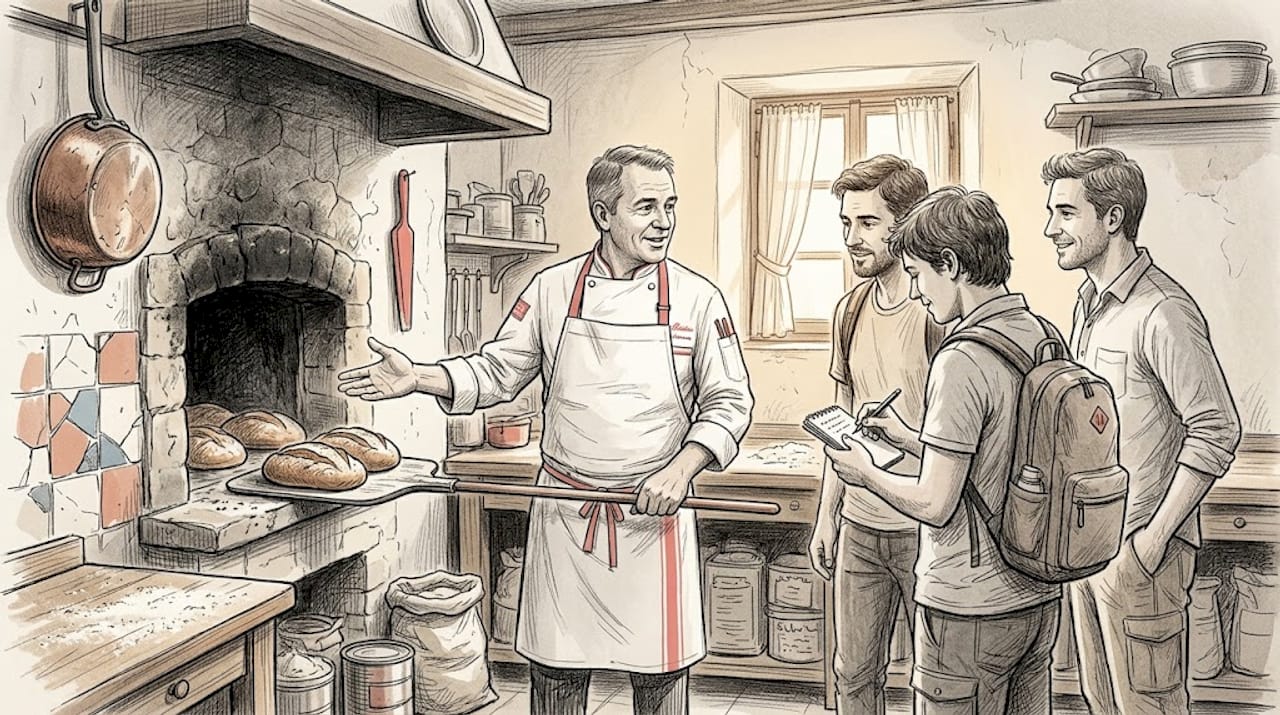
- Local vendor introductions: Meeting the person who makes the cheese or bakes the bread adds a human layer that menus simply cannot provide.
- Historical context woven into tastings: Each stop should illuminate something beyond the flavour, connecting the dish to its cultural or geographic origins.
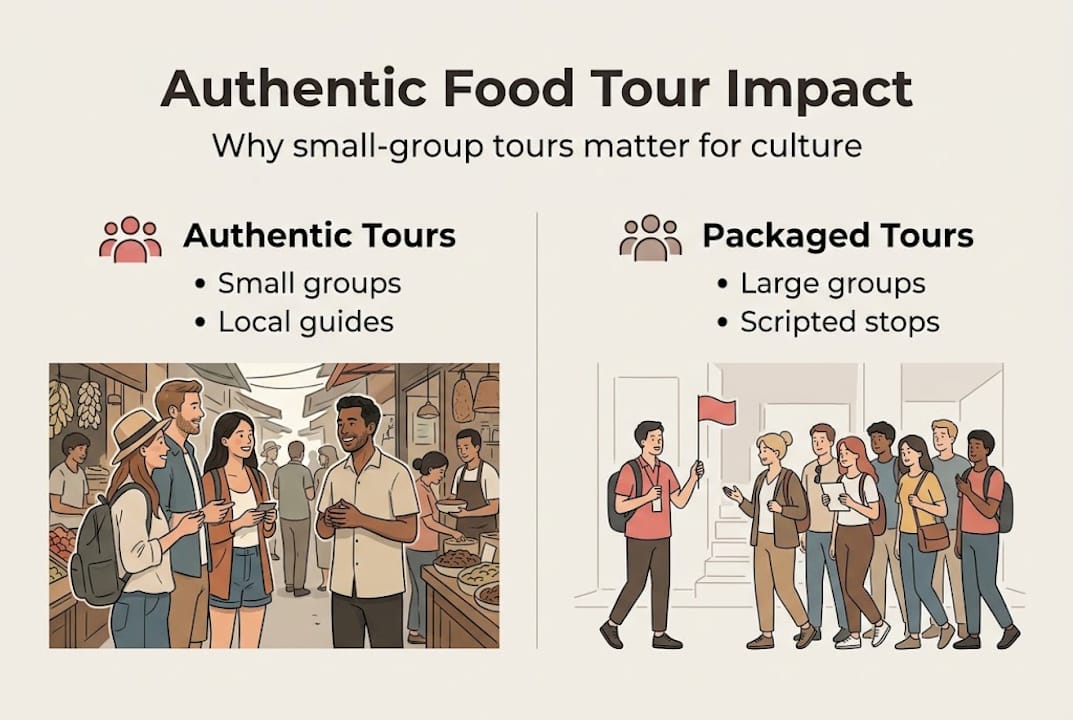
- Small group dynamics: Intimate groups allow for real conversation, spontaneous detours, and personalised attention that large coach-based tours cannot offer.
- Cooking demonstrations or preparation insights: Watching how a dish is made gives you a vocabulary for understanding it, and often a recipe to try at home.
- Neighbourhood immersion: The best tours move through areas where locals actually live and shop, not just the curated tourist zones.
Exploring food culture with local chefs amplifies all of these elements. A chef does not just know the food. They know the suppliers, the seasonal rhythms, and the unwritten rules of a kitchen culture. That insider knowledge is irreplaceable.
Pro Tip: Before booking any food tour, search for reviews that specifically mention whether the guide shared historical or cultural context alongside the tastings. If reviewers only mention the food itself and not the stories, that tour is likely more restaurant crawl than cultural experience.
Authenticity, when genuinely delivered, creates memories that outlast any souvenir. You remember the woman in the Paris market who explained why she sells only four varieties of radish. You remember the Mexico City chef who described how mole recipes pass through families like inheritance. These moments stick precisely because they connect you to real lives.
Pitfalls and challenges: When food tours miss the mark
Food tours can be extraordinary. They can also be deeply disappointing. Not all operators approach the experience with the same commitment to cultural depth, and some actively undermine the very authenticity they promise.
The most common problem is commodification. When large tour operators scale up their food tour offerings to accommodate hundreds of visitors per day, the experience inevitably becomes standardised. Stops are chosen for logistical convenience, not cultural richness. Guides read from scripts. Vendors are paid for footfall, not for genuine engagement. The result feels more like a tasting menu at a trade fair than a window into local life.
Large operators commodify culture, prioritising volume over depth and frequently disrupting the very local ecosystems they claim to celebrate. Restaurants that partner with major tour companies can find their space dominated by visitors at peak times, alienating regular local customers and gradually shifting their offering toward crowd-pleasing mediocrity.
There is also a sharp tension at the heart of food tourism that deserves honest acknowledgement. These tours are simultaneously promoted as immersive education and critiqued as packaged commodification by global firms that essentially monetise a neighbourhood’s identity without returning meaningful benefit to its community.
Here are the most common pitfalls to look out for when evaluating food tours:
- No genuine local involvement: If the operator is a large corporate brand with no roots in the city, the experience is unlikely to feel authentic regardless of the marketing language used.
- Oversized groups: Groups of twenty or more make meaningful vendor interaction nearly impossible, and reduce the experience to a parade rather than a conversation.
- Dietary needs ignored: Quality tours accommodate dietary restrictions with genuine alternatives, not apologies. A tour that cannot adapt is not truly designed around its guests.
- Imbalanced food selection: Tours that lean heavily on one food type, say sweets or drinks only, miss the opportunity to present a rounded picture of local culinary culture.
- Over-tourism impact: Tours that repeatedly bring large groups to the same small family businesses at peak hours can harm those businesses rather than support them.
Understanding customisation in culinary tours helps reveal why smaller, adaptable operators consistently outperform their larger competitors on satisfaction metrics. The ability to tailor a route, adjust for a guest’s dietary needs, or pivot based on what is seasonally available is the hallmark of a tour built around people, not profit margins.
The good news is that these pitfalls are avoidable once you know what to look for. Breaking cultural barriers through food tourism is entirely possible, but it requires choosing operators who are genuinely committed to that goal, not simply using it as a marketing phrase.
Choosing the right food tour for deep cultural engagement
Armed with an understanding of both the potential and the pitfalls, you are now in a position to make a genuinely informed choice. The difference between a memorable food tour and a forgettable one usually comes down to a handful of clearly identifiable factors.
Small group food tours consistently outperform larger alternatives on cultural engagement, authenticity perception, and overall satisfaction. When a group is small, the guide can genuinely respond to questions, adapt the route, and facilitate real conversation with vendors. The experience feels personal because it is.
Expert perspectives on tour design emphasise hyper-local routes, small group sizes, sustainability awareness, and a preference for operator-owned businesses over franchised or outsourced models. These are not just nice-to-haves. They are the structural conditions that make genuine cultural exchange possible.
Research also confirms that authenticity drives loyalty: tours that prioritise historical narratives, direct vendor interaction, and a sustainability focus generate significantly higher rates of recommendation and repeat booking. In other words, doing it right is also good business.
| Feature | Authentic tour | Commodified tour |
|---|---|---|
| Group size | 6 to 12 people | 20 or more |
| Operator type | Locally owned, chef-led | Corporate franchise |
| Route design | Hyper-local, evolving seasonally | Fixed, logistically driven |
| Community benefit | Revenue stays local | Primarily external profit |
| Dietary accommodation | Flexible and personalised | Rigid or unavailable |
| Cultural narrative | Deep historical and social context | Surface-level description |
Use this comparison as a filter, not just a wishlist. Ask operators directly whether their routes change seasonally, whether the guides have professional culinary backgrounds, and what percentage of the spend benefits local businesses.
Pro Tip: Ask any potential tour operator this single question before booking: “Can you tell me about one vendor on your route and why you chose them specifically?” A strong answer, personal, detailed, and clearly rooted in real relationship, tells you everything about the quality of the experience ahead.
A checklist for choosing a meaningful food tour should include: strong historical and cultural storytelling, genuine interaction with producers and vendors, small group structure, clear sustainability commitments, and evidence of flexibility for dietary needs. Tick most of these boxes, and you are very likely to leave the tour having genuinely learned something.
Food tours: True portals to culture or packaged experiences?
Here is the uncomfortable truth that most food tour articles skip over entirely: the act of joining a food tour does not, on its own, guarantee any cultural insight whatsoever. The format is neutral. The operator determines everything.
We have seen this clearly in the cities we work in. Two food tours in the same neighbourhood, covering some of the same streets, can produce radically different outcomes depending on who is leading them and why. A chef who has worked those markets for twenty years brings irreplaceable depth. A guide following a laminated card brings very little beyond the food itself.
The rapid growth of food tourism has attracted operators whose primary interest is capturing a slice of an expanding market rather than fostering genuine cultural exchange. They use the language of authenticity fluently while systematically delivering something far more superficial.
Hyper-local, community-led, and chef-guided tours consistently outperform corporate alternatives precisely because the guide’s knowledge and passion are real, not rehearsed. Food neophilia, the genuine desire to encounter unfamiliar flavours and traditions, is best served by someone who lives and breathes that culinary world daily. Mindful selection is therefore the real skill here. Not simply participating in a food tour, but choosing one with the criteria and questions outlined above. The cultural value is there to be unlocked. The right operator simply makes it inevitable.
Embark on your next cultural food journey
If this guide has sharpened your appetite for something more meaningful than a restaurant reservation, we are ready to help you take the next step.
At The Chef’s Tours, every experience is led by a professional chef with deep roots in their city. Chef PJ brings unrivalled knowledge of Parisian cuisine, from the finest boulangeries to the hidden fromageries of the Marais. Chef Crestani guides guests through the soul of Seville with warmth and extraordinary local access. Chef Karl Wilder brings both Berlin and Mexico City to life through their vibrant, complex food cultures. These are small group, chef-led experiences designed for genuine cultural immersion. Browse our culinary experiences to try or read our detailed guide on how to choose a food tour to find the right fit for your next journey.
Frequently asked questions
Do food tours really help you understand a city’s culture?
Yes, research confirms that food tours enhance perceived authenticity and deepen emotional and cultural connections in ways that standard sightseeing rarely achieves.
What makes a food tour ‘authentic’?
Small group size, locally owned operations, rich historical context, and genuine vendor relationships are the clearest signals of authenticity, according to expert tour designers.
Are guided tours better than self-guided for cultural learning?
Guided tours deliver far richer cultural context and depth than self-guided alternatives, though they typically come at a higher cost, as comparative analyses of both formats confirm.
How can I avoid mass-market or ‘packaged’ food tours?
Choose operator-owned, hyper-local tours with small group sizes, a clear sustainability commitment, and guides who can speak personally and in depth about each stop on the route.