

TL;DR:
- Small group food tours offer intimate, immersive experiences led by professional chefs. They prioritize access to hidden venues, spontaneous moments, and genuine interactions over large crowds. These tours foster authentic storytelling, cultural insights, and lasting connections among participants.
There is a persistent belief in travel circles that the bigger the group, the richer the experience. More people, more energy, more fun. But when it comes to food tourism, this logic falls apart quickly. A crowd of thirty people shuffling past a famous boulangerie is not a culinary experience; it is a queue with commentary. Small group food tours, by contrast, operate on a completely different philosophy. They are built around access, conversation, and the kind of spontaneous moments that only happen when a local chef decides to pull you into a kitchen that never appears on any map.
Table of Contents
- What defines a small group food tour?
- Why small size transforms the culinary experience
- Navigating trade-offs: cost, flexibility, and group dynamics
- Choosing the right chef-led tour in your destination city
- Our perspective: why small group food tours reshape culinary travel
- Ready to discover your next food adventure?
- Frequently asked questions
Key Takeaways
| Point | Details |
|---|---|
| Authenticity boost | Small group sizes allow for more genuine interactions with chefs and exclusive access to hidden culinary spots. |
| Personal attention | Chef-led tours in small groups mean tailored guidance, expert storytelling, and more memorable learning moments. |
| Trade-offs | The higher cost and group dynamics are outbalanced by unique access and stronger social connections. |
| Choosing wisely | Selecting the right tour and guide ensures an experience matched to your culinary curiosity and travel needs. |
What defines a small group food tour?
The term “small group food tour” is not just marketing language. It refers to a specific format with a typical cap of two to eight participants, led by a professional chef rather than a scripted tour operator. That distinction matters enormously. A chef guide brings real culinary knowledge, personal relationships with producers and restaurateurs, and the ability to read the group and adjust the experience in real time.
Structurally, these tours are built around walking routes through neighbourhoods that reward curiosity. Expect market visits, stops at family-run counters, and tastings of 10+ items across a session that typically runs between two and a half to six hours. The pace is deliberately unhurried. There is time to ask questions mid-bite, to linger at a stall, or to double back because the cheese was extraordinary.
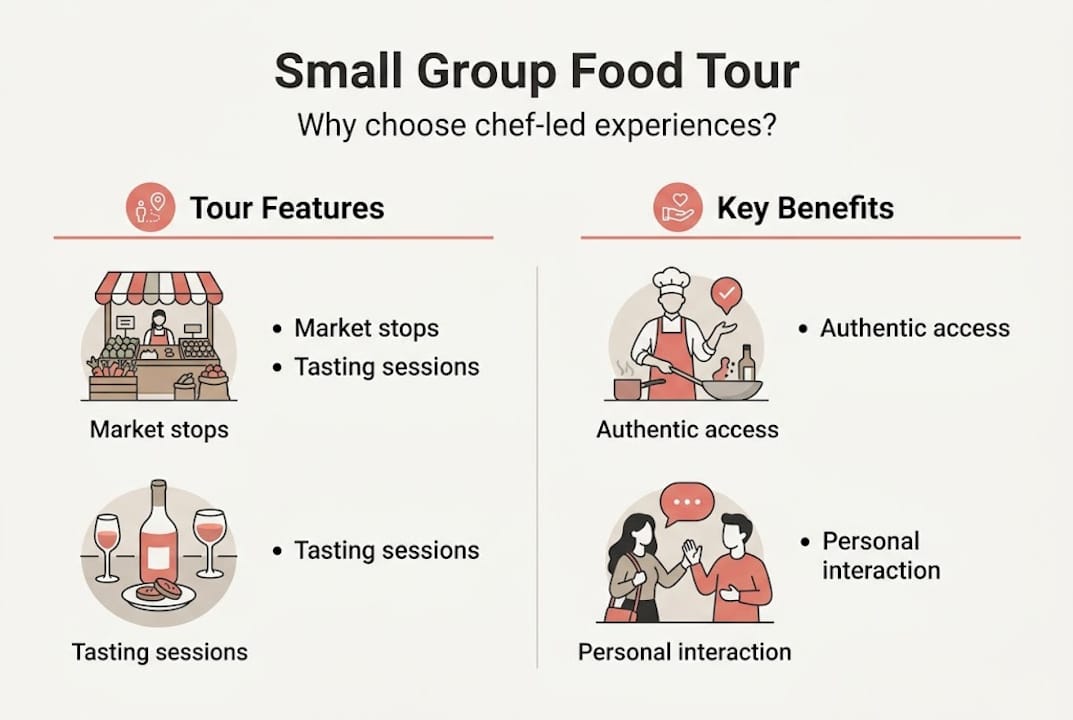
What separates this format from a larger group tour is not simply the headcount. It is the quality of interaction. Small group food tours of two to eight participants enable personalised attention, access to hidden spots, and immersive storytelling by local chef guides in ways that simply cannot scale upward.
Here is how the formats compare at a glance:
| Feature | Small group tour | Large group tour |
|---|---|---|
| Group size | 2 to 8 | 15 to 30+ |
| Guide type | Local chef | Scripted operator |
| Venue access | Hidden, exclusive | Popular, accessible |
| Experience style | Immersive, flexible | Structured, fixed |
| Guest interaction | High | Limited |
A few things that consistently define a well-run small group food tour:
- Spontaneous detours based on what is fresh or in season that day
- Direct chef dialogue rather than pre-recorded or scripted narration
- Access to venues too small to accommodate larger groups
- Flexibility on pacing so no one feels rushed through a tasting
The chef-led food tour model is, fundamentally, a rejection of the conveyor-belt approach to culinary tourism. It treats food as a living conversation rather than a scheduled performance. The benefits of chef-led food tours extend well beyond the meal itself, touching on cultural understanding, neighbourhood history, and the kind of personal connection that stays with you long after the last bite.
Why small size transforms the culinary experience
Once you understand how these tours work, the deeper question is why the small size makes such a tangible difference. The answer is access, and not just physical access to smaller venues.
When you are one of six people rather than one of twenty-five, the chef guide can take you to a counter where only eight stools exist, or arrange a tasting in a family kitchen that has never once appeared on a review site. These are not theatrical extras. They are genuinely exclusive moments rooted in the chef’s personal relationships with the people who feed a city.
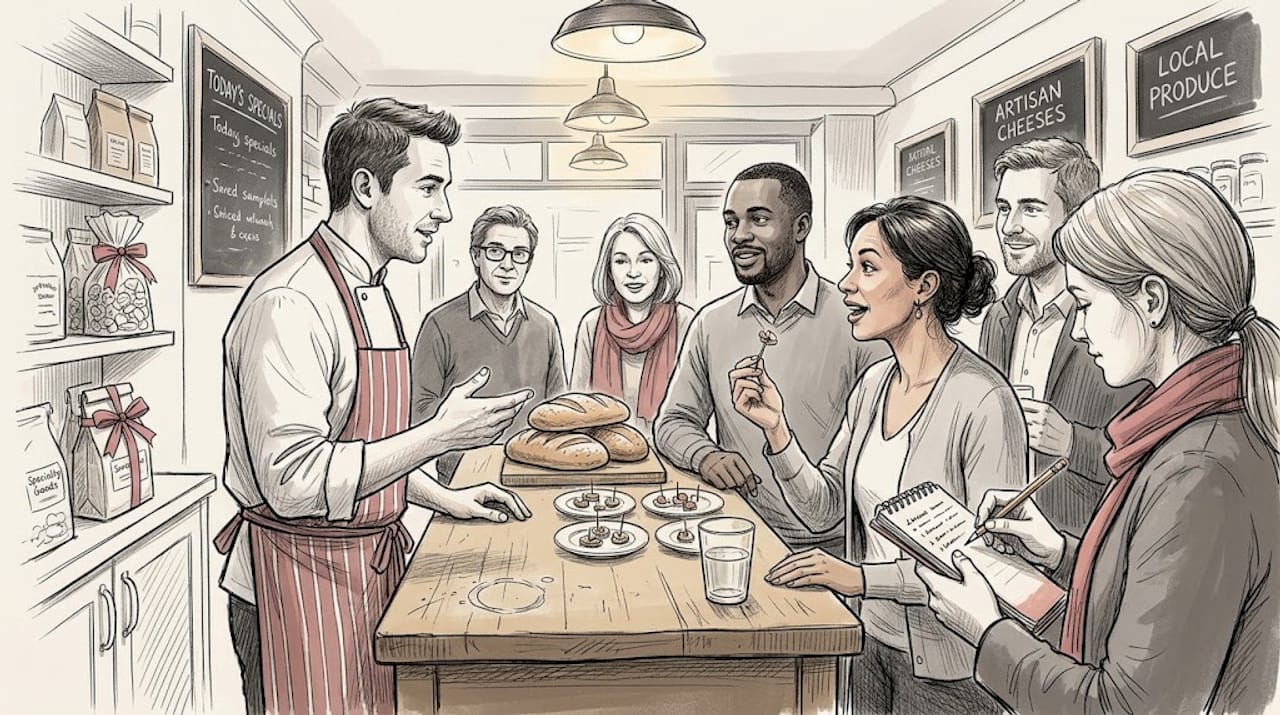
Small groups offer more personal questions, less crowding, and higher authenticity versus scripted, rushed experiences. That shift in quality is felt immediately. You are not waiting your turn to ask something; the conversation flows naturally across the whole group.
There is also an emotional dimension that most articles skip over entirely. Sharing a meal with four strangers and a chef who genuinely loves what they do creates a kind of instant camaraderie that larger groups rarely achieve. Research shows that groups of two to seven in Paris consistently yield satisfaction ratings between 4.5 and 5 stars, with authenticity directly boosting both satisfaction and the intent to return.
For real insider access, the small group format is simply without equal. And when your guide brings local chef expertise built over years of living and cooking in a city, every stop carries context that no guidebook can replicate.
Pro Tip: Ask your chef guide early in the tour where they eat on their day off. That single question often unlocks the most honest and memorable recommendation of the entire experience.
The social learning that happens in these groups is also surprisingly powerful. Hearing another guest ask a question you would never have thought of, or watching someone react to a flavour profile you have always taken for granted, reshapes your own palate in subtle ways.
Navigating trade-offs: cost, flexibility, and group dynamics
Small group food tours are not without their complications, and it is worth being honest about them before you book.
Cost is the most obvious consideration. Higher cost at £140 to £180+ per person reflects the intimacy, exclusive access, and quality of a professional chef guide rather than a hired narrator. That price point is a genuine barrier for some travellers. But it also filters the group. People who invest at that level are typically serious about the experience, which tends to lift the energy in the room.
Dietary accommodation is the second area to address carefully. Many chef-led small group tours can work around vegetarian requirements, but specific allergies, vegan diets, or highly restricted eating plans are harder to accommodate without compromising the core experience. Always communicate your needs before confirming your spot, not on the day.
Group chemistry is the variable that no one fully controls. With eight people maximum, one difficult personality has more impact than they would in a crowd of thirty. That said, a skilled chef guide is also an experienced host, and managing group energy is part of the craft. Most tours go beautifully, precisely because food is a universal language that softens most social edges.
Here is what to keep in mind when weighing the trade-offs:
- Check the finding local food tours page to compare formats before committing
- Communicate dietary needs in writing, at least 48 hours before the tour
- Read reviews specifically for mentions of group size and guide flexibility
- Accept that the chef’s role as guide includes managing the group, not just the food
Pro Tip: If you are travelling solo, book early. Solo spots on small group tours fill quickly, and early booking often allows you to connect with the organiser in advance and set expectations about the group makeup.
Choosing the right chef-led tour in your destination city
With benefits and trade-offs in mind, the practical task is finding the right tour for your specific trip. The process is more nuanced than simply typing a city name into a search engine.
- Define your priorities first. Are you chasing authenticity above all else, or do you also want to cover well-known landmarks? Are dietary needs a central concern? Answering these questions narrows your options significantly.
- Research the guide’s background thoroughly. Chef expertise is not a marketing phrase. Look for real culinary credentials, evidence of local specialisation, and reviews that specifically praise the guide’s knowledge rather than just the food.
- Confirm the group size cap before booking. A tour that advertises “small group” but accepts up to fifteen people is not the same thing. Eight should be the absolute maximum for the intimacy to hold.
- Ask about flexibility on tastings. The best tours build in some latitude for spontaneous additions or swaps based on what the market offers that day.
- Check what the tour actually covers. A great tour in Paris with Chef PJ, Seville with Chef Crestani, or Berlin and Mexico City with Chef Karl Wilder will reflect the chef’s personal story as much as the city’s food scene.
Chef-led tours differentiate from scripted guides precisely because they enhance social learning and emotional bonds that remain long after the trip ends. Meanwhile, small groups outperform large groups consistently in access, learning depth, and overall transformation, even accounting for higher cost and occasional vibe risk.
Pro Tip: Before confirming, ask the organiser how they handle it if a guest needs to leave mid-tour. The answer tells you a great deal about how they manage the group experience overall. Explore how to discover local food culture through a chef’s eyes before you decide.
Our perspective: why small group food tours reshape culinary travel
Most travel articles frame food tours as a pleasant add-on to a city trip. We think that fundamentally undersells what is happening on a well-run small group experience. These tours do not supplement travel. For genuinely curious food lovers, they often become the most significant memory of the entire trip.
The tick-box tourism mindset, the one that treats a city as a checklist of famous dishes to photograph, dissolves quickly when you are standing in a market at 9am with a chef who has been buying from the same vendor for a decade. That is not a performance. It is a relationship you are briefly allowed to witness, and it changes how you see every meal that follows.
The risk of group chemistry or higher cost is real. We would never pretend otherwise. But for travellers who are genuinely passionate about food, those risks are dramatically outweighed by what you gain: insider access, authentic storytelling, and the rare pleasure of eating something extraordinary in good company. Following culinary tourism trends makes it clear that the appetite for exactly this kind of experience is only growing.
Ready to discover your next food adventure?
If this has shifted how you think about culinary travel, the natural next step is finding a tour that matches your curiosity. We connect food lovers with the finest chef-led small group experiences in Paris, Seville, Berlin, and Mexico City, each one shaped by a local chef who knows their city from the inside out.
Whether you want to explore hidden bistros in Paris with Chef PJ, discover the soul of Seville with Chef Crestani, or uncover the culinary contrasts of Berlin and Mexico City with Chef Karl Wilder, we have an experience built for you. Browse our best chef-led food tours or explore the full range of culinary experiences to try. Not sure which format suits you? Learn more about the chef-led tour difference and let us help you choose.
Frequently asked questions
Are chef-led small group food tours suitable for solo travellers?
Absolutely. Solo bookings are welcomed on most small group tours, and shared culinary experiences regularly foster lasting connections among guests who arrive as strangers.
Can dietary restrictions be accommodated on small group food tours?
Some needs can be met, particularly vegetarian requirements, but dietary substitutions are limited by the tour structure. Always contact the organiser at least 48 hours in advance.
How do small group food tours compare in price to large group tours?
Small group tours typically cost more, with prices averaging £140 to £180+ per person, reflecting the quality of chef guides and exclusive venue access.
What if my group’s personalities do not mix well?
Group dynamics generally stay positive because shared culinary interest creates natural common ground, and experienced chef guides actively manage group energy throughout the tour.