

Nothing compares to your first taste of authentic Mexico City street food served with a side of lively atmosphere and local tradition. For food lovers who crave both adventure and peace of mind, every quiet queue by a taco stand offers the promise of discovery and the reassurance of shared local wisdom. This guide uncovers the cultural significance of traditional street food and practical tips for safely experiencing Mexico City’s celebrated flavours.
Table of Contents
- The Essence of Street Food Culture in Mexico City
- Types of Street Food and What Sets Them Apart
- Safety Signals: Identifying Clean and Safe Vendors
- Smart Choices: Water, Produce, and Cooking Methods
- Common Pitfalls and How to Avoid Illness
Key Takeaways
| Point | Details |
|---|---|
| Culinary Heritage | Street food in Mexico City is a vital expression of cultural heritage, sustaining community connections through shared gastronomic traditions. |
| Diversity and Accessibility | The street food ecosystem is characterised by diverse offerings, making traditional cuisine accessible to all socioeconomic classes. |
| Vendor Safety Signals | Observing hygiene practices among vendors, such as clean preparation areas and the use of gloves, is crucial for ensuring food safety. |
| Smart Choices for Consumers | Choosing vendors who use clean water sources and fresh ingredients significantly enhances the safety and enjoyment of street food experiences. |
The Essence of Street Food Culture in Mexico City
Street food in Mexico City represents far more than simple sustenance – it’s a vibrant culinary language, a living narrative of cultural heritage passed through generations. Urban food environments reveal street vending as a profound social practice that connects communities through shared gastronomic traditions.
Mexico City’s street food ecosystem emerges as a dynamic urban landscape where vendors become cultural ambassadors. These mobile kitchens serve traditional dishes that reflect generations of regional cooking techniques, transforming ordinary public spaces into communal dining rooms. Each street cart and market stall tells a story of migration, family recipes, and local pride.
The street food culture encompasses several key characteristics:
- Accessibility for all economic classes
- Preservation of traditional cooking methods
- Spontaneous social interactions
- Representation of regional culinary diversity
- Economic opportunities for local entrepreneurs
Traditional dishes like tacos al pastor, tlacoyos, and elotes are not merely food items but cultural symbols representing Mexico City’s complex social fabric. These portable meals connect urban dwellers through shared culinary experiences, transcending social boundaries.
Pro tip: Always observe the local crowd and choose street food vendors with high customer turnover to ensure freshness and authenticity.
Types of Street Food and What Sets Them Apart
Mexico City’s street food landscape is a vibrant tapestry of culinary diversity, with each dish telling a unique story of cultural heritage. Street food varieties reveal complex nutritional patterns that reflect the city’s socioeconomic diversity and regional traditions.
Traditional street foods represent more than just quick meals – they are living expressions of Mexican culinary identity. The most prominent categories include antojitos (small street snacks), tacos, tlacoyos, gorditas, and quesadillas. Each category demonstrates remarkable regional variation, with ingredients and preparation methods differing dramatically between neighborhoods and vendor traditions.
Street food types can be categorised based on several distinguishing characteristics:
- Base ingredients (maize, wheat, corn)
- Cooking techniques (grilling, steaming, frying)
- Regional origin (central Mexican, coastal, indigenous)
- Preparation complexity
- Nutritional profile
Maize-based dishes remain the cornerstone of Mexico City’s street food culture. Traditional Mexican street foods like tlacoyos and esquites represent nutritious, sustainable food choices that connect urban dwellers to agricultural heritage. These dishes often incorporate beans, vegetables, and locally sourced ingredients, offering both cultural significance and nutritional value.

Here’s a concise comparison of common street food categories and their defining traits:
| Street Food Type | Typical Base Ingredient | Regional Influence | Common Preparation Method |
|---|---|---|---|
| Tacos | Maize tortillas | Central Mexican | Grilling or sautéing |
| Tlacoyos | Maize dough | Indigenous origins | Pan-cooking or baking |
| Gorditas | Wheat or maize dough | North & Central | Frying |
| Quesadillas | Maize or wheat tortillas | Urban adaptations | Grilling or searing |
| Antojitos | Varied (maize, wheat) | Broad regions | Frying or steaming |
Pro tip: Sample street foods from multiple vendors to experience the nuanced regional variations and discover your favourite local specialties.
Safety Signals: Identifying Clean and Safe Vendors
Street food vendor safety remains a critical concern for culinary adventurers exploring Mexico City’s vibrant street food scene. Understanding the key indicators of hygiene can transform your street food experience from risky to reliable, ensuring both delicious and safe culinary exploration.
Expert observations reveal several crucial visual and operational signals that distinguish safe street food vendors. These indicators go beyond surface-level cleanliness and delve into comprehensive food handling practices. Professional food safety assessments recommend watching for specific elements that suggest a vendor’s commitment to health standards:
- Clean and organised food preparation area
- Vendors wearing disposable gloves
- Hot foods maintained at proper temperature
- Separate utensils for raw and cooked ingredients
- Regular handwashing and personal hygiene
- Covered food storage containers
- No visible signs of pest activity
Vendor behaviour plays a significant role in determining food safety. Street food handling practices demonstrate that intentional, careful food preparation reflects a vendor’s professionalism and commitment to customer health. Watching how vendors interact with ingredients, manage cross-contamination risks, and maintain their cooking environment provides critical insights into their overall hygiene standards.
To help travellers make informed choices, this table summarises key hygiene signals and their impact:
| Hygiene Signal | What to Look For | Why It Matters |
|---|---|---|
| Clean prep area | Wiped surfaces, no clutter | Minimises contamination risk |
| Disposable gloves worn | Change gloves between tasks | Reduces direct contact |
| Proper food temperature | Steaming or hot when served | Kills harmful bacteria |
| Separate utensils for foods | Tools for raw vs cooked food | Prevents cross-contamination |
| Regular handwashing observed | Vendor uses soap/sanitiser | Maintains food safety |
Pro tip: Trust your instincts and observe vendor practices closely before committing to a meal – a few moments of careful observation can prevent potential health risks.
Smart Choices: Water, Produce, and Cooking Methods
Street food safety strategies require careful consideration of water sources, produce quality, and cooking techniques when exploring Mexico City’s culinary landscape. Understanding these critical elements can transform your street food experience from potentially risky to confidently delicious.
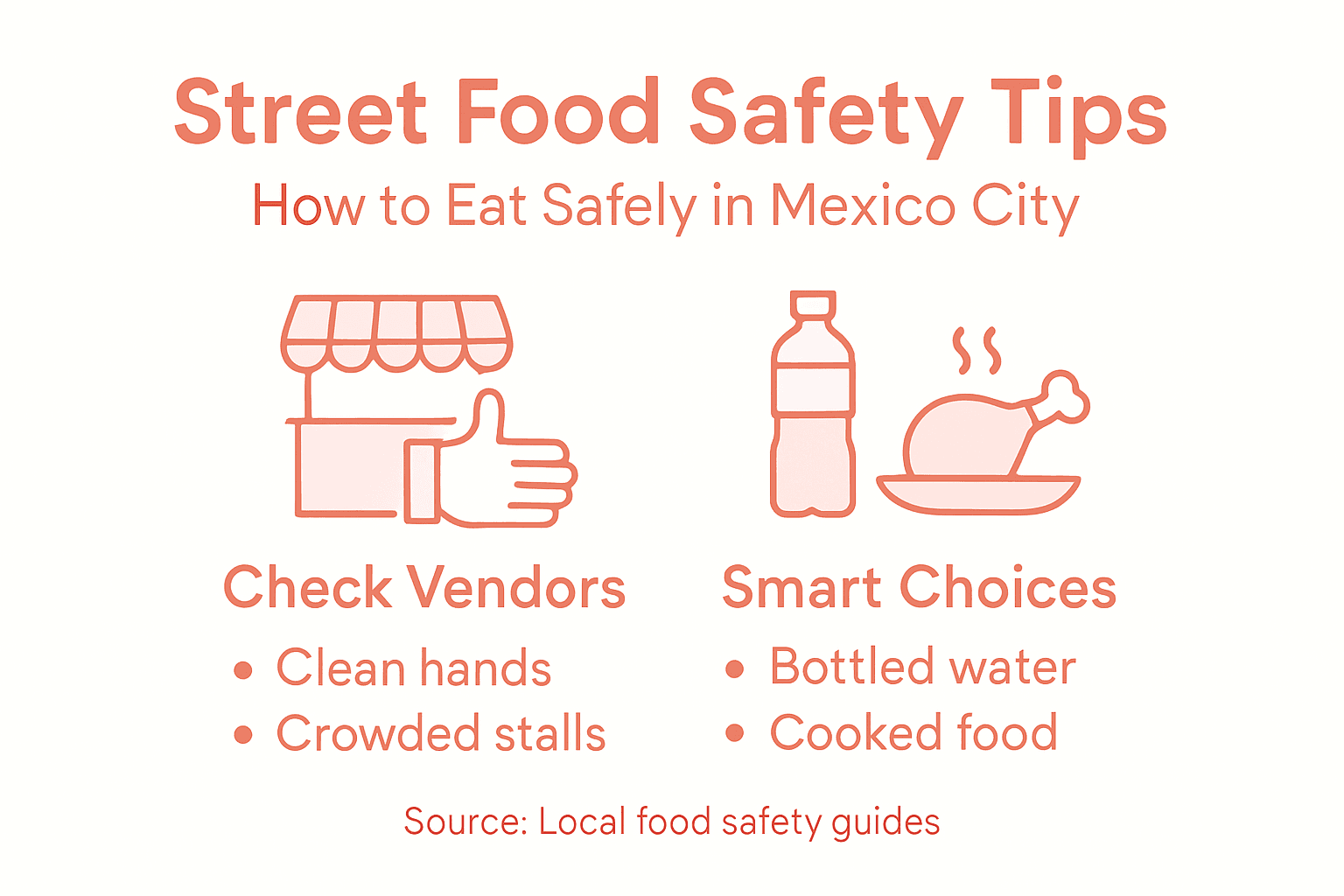
Water represents the most fundamental safety concern for street food enthusiasts. Discerning travellers should prioritise vendors who:
- Use bottled or professionally filtered water
- Prepare beverages in sealed containers
- Avoid tap water in drink preparations
- Clean utensils with treated water
- Maintain visibly clean water storage methods
Cooking methods play a pivotal role in food safety. Street food vendor practices demonstrate that thorough heat treatment dramatically reduces pathogen risks. Prioritise street foods that are:
- Cooked at high temperatures
- Served immediately after preparation
- Visibly steaming or freshly grilled
- Prepared using clean cooking equipment
- Handled with proper utensils
Produce selection requires equally meticulous attention. Travellers should inspect fruits and vegetables for freshness, choosing vendors who demonstrate careful washing and storage practices. Look for crisp, vibrant produce that appears recently prepared and handled with obvious care.
Pro tip: Carry a small bottle of hand sanitiser and use it before eating to provide an additional layer of personal food safety protection.
Common Pitfalls and How to Avoid Illness
Street food consumption risks require strategic awareness to ensure a safe and enjoyable culinary adventure in Mexico City. Understanding potential health hazards transforms street food from a potential health threat to an exciting gastronomic exploration.
Foodborne illness prevention demands vigilant attention to several critical factors. Travellers should be especially cautious of the following high-risk scenarios:
- Raw or undercooked meat and seafood
- Unrefrigerated dairy products
- Unwashed fruits and vegetables
- Room temperature foods left exposed
- Ice made from untreated water
- Unpasteurised beverages
- Foods handled without proper hygiene
Contamination risks extend beyond visible indicators. Public health street food guidance emphasises the importance of understanding how seemingly innocuous choices can lead to potential illness. Strategic travellers should:
- Choose vendors with high customer turnover
- Observe food preparation techniques
- Prioritise hot, freshly cooked meals
- Avoid complex dishes with multiple ingredients
- Select vendors with transparent preparation areas
Consistent hand hygiene remains paramount. Always carry alcohol-based hand sanitiser, wash hands before eating, and be prepared to decline food that appears questionable. Your health and enjoyment depend on making informed, cautious decisions.
Pro tip: Pack a small travel medical kit with oral rehydration salts and basic stomach illness medication as a preventative measure.
Discover Mexico City’s Street Food Safely with Expert Guidance
Navigating the vibrant and diverse street food of Mexico City can be as challenging as it is rewarding. With concerns about food safety, vendor hygiene, and authentic cultural experiences all at play, it is easy to feel uncertain about where to eat. This article highlights key safety signals and culinary treasures from tacos al pastor to tlacoyos that travellers crave, yet it requires insider knowledge to savour them with confidence.
Experience the richness of Mexico City’s food scene on a personalised journey led by local chefs who understand these unique challenges intimately. Join The Chef Tour Cities – Explore Culinary Destinations to immerse yourself in authentic flavours while feeling completely safe. Our expert guides like Chef Karl Wilder combine cultural storytelling with careful vendor selection and insider access to hidden gems, ensuring your trip is both delicious and worry-free.
Ready to explore Mexico City’s street food culture confidently with professional insights and exclusive tastings? Visit The Chef Tours now to book your curated culinary adventure and discover why food enthusiasts trust us for authentic, safe, and unforgettable experiences. Don’t miss out on a true taste of Mexico City delivered by passionate local chefs.
Frequently Asked Questions
What types of street food can I expect to find in Mexico City?
You can find a variety of street food types including antojitos (small snacks), tacos, tlacoyos, gorditas, and quesadillas. Each type showcases distinct regional variations in ingredients and preparation methods.
How can I ensure the street food I buy is safe to eat?
Look for clean and organised food preparation areas, vendors wearing disposable gloves, proper food temperatures, and separate utensils for raw and cooked foods. Observing the vendor’s hygiene practices can also provide insight into their commitment to food safety.
What are some common pitfalls to avoid when consuming street food?
Be cautious of raw or undercooked meats, unrefrigerated dairy products, and unwashed fruits and vegetables. Avoid foods that have been left at room temperature for too long or ice made from untreated water to minimise health risks.
How important is water safety when it comes to street food?
Water quality is crucial for street food safety. Opt for vendors who use bottled or filtered water and avoid drinks prepared with tap water. Ensure that utensils are cleaned with treated water to further reduce contamination risks.