

Most culinary tourists now crave more than what a typical restaurant menu can offer, and studies show over 60 percent prioritise food experiences involving local chefs. Exploring Paris, Seville, or Berlin, a british traveller quickly realises that authentic gastronomic adventures are key to understanding each city’s unique spirit. This guide highlights how immersive, chef-led journeys transform your palate and cultural awareness, making every meal a new story waiting to be discovered.
Table of Contents
- Defining a Gastronomic Experience Today
- Types of Gastronomic Experiences Worldwide
- Key Elements of Immersive Culinary Tours
- Risks, Costs and Common Pitfalls
- Chef-Led Food Tours Versus Generic Options
Key Takeaways
| Point | Details |
|---|---|
| Gastronomic Experiences Are Multifaceted | These experiences combine sensory perception, cultural context, and emotional engagement, turning meals into deep cultural narratives. |
| Modern Diners Seek Stories As Well As Flavours | Diners want to know about the origins and cultural significance of their food, making storytelling integral to dining experiences. |
| Chef-Led Tours Offer Unique Insights | Professional chefs provide personalised narratives, transforming meals into comprehensive culinary explorations, unlike generic tours. |
| Navigating Challenges is Essential | Culinary experiences face risks like sustainability and cultural dilution; engaging authentically with local traditions is critical for success. |
Defining a Gastronomic Experience Today
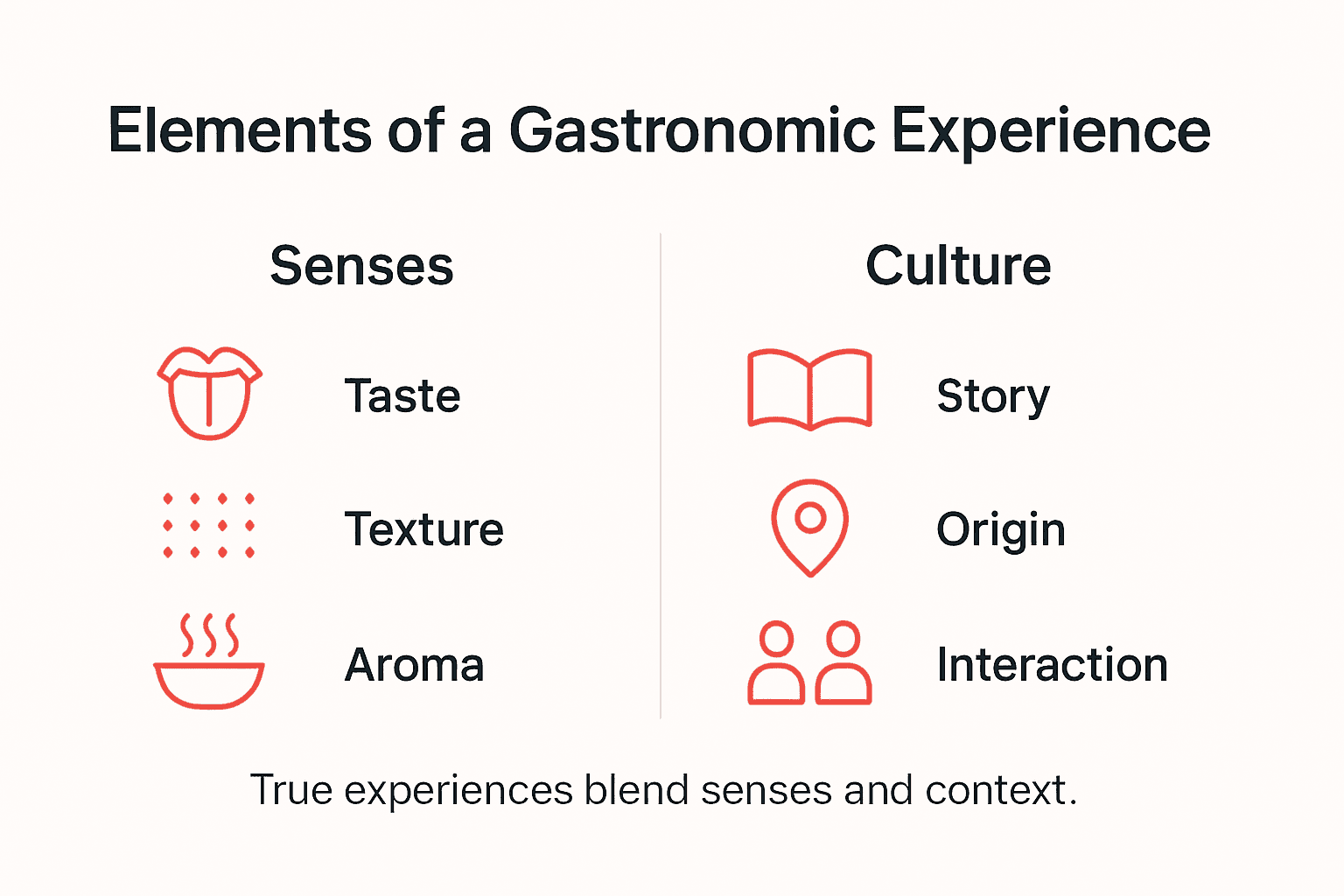
A gastronomic experience extends far beyond simply consuming food. Researchers have revealed that these encounters represent complex interactions between sensory perception, cultural context, and emotional engagement. These multifaceted experiences transcend basic nutrition, transforming meals into profound cultural narratives that connect individuals with their environment, history, and social networks.
Gastronomic experiences integrate multiple dimensions simultaneously. They involve not just taste and texture, but also the psychological and social contexts surrounding food consumption. A meal becomes an immersive journey where ingredients, preparation techniques, presentation, and dining atmosphere collectively contribute to a memorable encounter. Chefs and culinary experts understand that creating such experiences requires carefully orchestrating sensory stimulation, storytelling, and cultural authenticity.
Modern gastronomic experiences prioritise storytelling and provenance. Diners seek understanding about food origins, production methods, and cultural significance. This means restaurants and culinary tours now focus on providing comprehensive narratives alongside their dishes – explaining regional traditions, highlighting local ingredients, and connecting contemporary cuisine with historical culinary practices.
Pro Tip: When exploring a new culinary destination, engage with local chefs and ask about the stories behind their signature dishes to transform a simple meal into a rich gastronomic experience.
Types of Gastronomic Experiences Worldwide
Gastronomic experiences globally have evolved into sophisticated encounters that transcend traditional dining. Researchers have categorised these experiences through three distinct evolutionary phases, reflecting profound transformations in how tourists engage with culinary cultures.
The first phase, Experience 1.0, centres on producer-orientated themed experiences where tourists primarily observe and consume. In contrast, Experience 2.0 introduces co-creation, enabling travellers to actively participate in culinary processes. This might include hands-on cooking workshops, market tours with local chefs, or interactive food preparation sessions that invite deeper cultural immersion.
Worldwide gastronomic experiences now encompass diverse sensory and intellectual dimensions, ranging from observational encounters like food festivals to deeply participatory opportunities such as traditional cooking classes. These experiences are increasingly defined by cultural authenticity, innovative presentation, and sustainability considerations. Modern culinary tourists seek more than just taste – they want comprehensive narratives that connect them with local traditions, ingredient sourcing, and community heritage.
Pro Tip: When exploring culinary experiences abroad, prioritise opportunities that offer direct interaction with local chefs and producers to transform a simple meal into an immersive cultural journey.
Key Elements of Immersive Culinary Tours
Immersive culinary tours represent a sophisticated approach to gastronomic exploration that goes beyond traditional sightseeing. These experiences are carefully designed using advanced sustainable food experience principles, integrating cutting-edge technology with profound cultural understanding to create transformative encounters.
The core elements of these tours centre on multisensory engagement. Unlike standard dining experiences, immersive culinary journeys stimulate all senses simultaneously – sight, smell, taste, touch, and even sound. Participants are not merely passive consumers but active participants who explore local food traditions through interactive experiences such as market visits, cooking workshops, and direct conversations with local producers and chefs.

Technological innovations now play a crucial role in enhancing these experiences. Augmented and virtual reality tools can provide deeper contextual understanding, allowing tourists to trace ingredient origins, understand traditional cooking methods, and connect with the cultural narratives embedded in local cuisines. These technological interventions transform gastronomic tours from simple tastings into comprehensive cultural explorations that foster genuine connections between travellers and local communities.
Pro Tip: When selecting a culinary tour, prioritise experiences that offer hands-on interaction and storytelling rather than passive consumption to truly understand a destination’s gastronomic heritage.
Risks, Costs and Common Pitfalls
Gastronomic experiences come with complex challenges that travellers and culinary professionals must carefully navigate. Key risks in culinary tourism encompass environmental sustainability, cultural representation, and managing diverse consumer expectations, creating a nuanced landscape of potential complications.
Costs associated with authentic gastronomic experiences can escalate quickly due to premium pricing for locally sourced, organic ingredients and specialised culinary encounters. Chefs and tour operators must balance maintaining cultural authenticity with economic viability, a delicate process that involves sourcing high-quality ingredients while keeping experiences financially accessible. Potential pitfalls include over-commercialisation, which can dilute the genuine cultural essence of traditional cuisines, and failing to accommodate diverse dietary requirements and preferences.
Technological and social media pressures add another layer of complexity to gastronomic experiences. The constant public scrutiny and expectation of Instagram-worthy moments can transform genuine culinary encounters into performative experiences. Chefs and tour operators must carefully manage these dynamics, ensuring that the core cultural and sensory experience remains paramount while navigating the digital landscape’s demanding visual expectations.
Here is a concise overview of the main risks and challenges associated with modern gastronomic experiences:
| Challenge | Impact on Experience | Suggested Strategy |
|---|---|---|
| Sustainability | Limits ingredient choices | Prioritise eco-friendly options |
| Cost Management | Can exclude participants | Offer tiered prices |
| Cultural Authenticity | Risk of dilution | Involve local experts |
| Social Media Pressure | Shifts focus from taste | Promote genuine storytelling |
Pro Tip: Research tour operators who prioritise authentic cultural experiences over social media aesthetics, and don’t be afraid to ask detailed questions about ingredient sourcing and preparation methods before booking.
Chef-Led Food Tours Versus Generic Options
Chef-led food tours represent a sophisticated approach to culinary exploration that fundamentally differs from traditional generic food tours. Professional chefs transform ordinary dining experiences into immersive journeys, offering profound insights that extend far beyond simple restaurant hopping or superficial taste sampling.
Unlike generic tours that often follow standardised routes, chef-led experiences provide personalised guidance and intimate access to local culinary traditions. These tours typically feature smaller group sizes, enabling more interactive and tailored encounters. Chefs share not just ingredients and techniques, but the rich cultural narratives embedded in each dish, transforming a meal into a comprehensive cultural exploration. Generic tours might offer a cursory overview, but chef-led experiences dive deep into the nuanced world of local gastronomy.
The key differentiator lies in the depth of engagement and expertise. While generic food tours often rely on scripted narratives and predetermined routes, chef-led tours leverage professional culinary knowledge to create dynamic, spontaneous experiences. Chefs can improvise, share insider stories, and provide context that goes beyond guidebook information. They understand the subtleties of ingredient sourcing, cooking techniques, and regional variations in a way that transforms a simple tasting into an educational journey.
The following table summarises the key differences between chef-led and generic food tours for prospective culinary travellers:
| Aspect | Chef-Led Food Tours | Generic Food Tours |
|---|---|---|
| Group Size | Small, intimate groups | Larger, less personal |
| Depth of Learning | Extensive culinary insight | Basic tasting overview |
| Local Interaction | Direct chef engagement | Standard guide approach |
| Flexibility | Adaptable experiences | Fixed itineraries |
Pro Tip: When booking a culinary tour, ask about the chef’s background and local connections to ensure you’re getting an authentic, insider experience rather than a generic tourist route.
Discover Authentic Gastronomic Experiences with Expert Local Chefs
The article highlights the complexity of gastronomic experiences and the desire for immersive, authentic culinary journeys that connect flavour with culture, story and local tradition. If you want to move beyond simply tasting food to experiencing the full narrative behind each dish and ingredient, personalised chef-led tours offer the perfect solution. These tours address the common challenges of superficiality and generic experiences by providing small-group, hands-on culinary encounters guided by passionate professionals deeply rooted in their cities.
Whether you are curious about the secret flavours of Paris, the historic tastes of Seville, or the vibrant cuisines of Berlin and Mexico City, The Chef’s Tours platform connects you directly with exceptional local chefs. Explore The Chef Tour Cities – Explore Culinary Destinations to start your journey.
Elevate your next meal to a true cultural immersion. Visit The Chef Tours now to select your ideal tour, read authentic traveller stories on The Chef Tour Reviews | What Travelers Say and book the authentic gastronomic experience you deserve. Act today and taste the difference expert chefs make in connecting you to the heart of their culinary heritage.
Frequently Asked Questions
What defines a gastronomic experience?
A gastronomic experience is defined by the intricate interactions between sensory perception, cultural context, and emotional engagement that go beyond mere food consumption. It transforms meals into rich cultural narratives that connect individuals with their history and environment.
How do immersive culinary tours differ from traditional dining experiences?
Immersive culinary tours engage all senses through interactive experiences like market visits and cooking workshops, making participants active explorers of local food traditions, unlike traditional dining, which typically involves passive consumption.
What are the key elements to look for in a chef-led food tour?
When choosing a chef-led food tour, look for small group sizes for intimate interaction, extensive culinary insights, and opportunities for direct engagement with the chef, which enhance the overall experience beyond generic food tours.
What are the risks associated with gastronomic experiences?
Key risks include sustainability challenges from high-quality ingredient sourcing, potential cultural dilution due to over-commercialisation, and social media pressures that may shift focus from authentic culinary experiences to performative moments.
Recommended
- Gastronomic Tour Defined: Why It Enriches Travel Culture
- Gourmet Food Tours: Culinary Adventure With Local Chefs
- Complete Guide to What Makes Food Experiences Unique
- –
- Complete Guide to Guest Experience Enhancement – Winelands Function – For Every Occasion, Your Celebration
- 7 Top Tips to Enhance Your Lisbon Cooking Classes Experience