

Over 80 million people join culinary tours each year, proving just how universal the hunger for authentic food experiences has become. Whether you are exploring street food in Thailand or sampling british classics like fish and chips, each food tour tells a unique story. Understanding the themes behind these tours helps travellers uncover the deep cultural roots that shape every delicious bite, making every meal a richer and more meaningful adventure.
Table of Contents
- Food Tour Themes Defined And Explained
- Types Of Food Tour Themes Worldwide
- Key Elements Shaping Culinary Themes
- How Themes Influence Food Experiences
- Selecting The Best Theme For Your Trip
- Common Mistakes In Theme Selection
Key Takeaways
| Point | Details |
|---|---|
| Culinary Exploration | Engaging in culinary tourism transforms dining into immersive cultural encounters that connect travellers with local traditions. |
| Food Tour Themes | Distinctive themes such as Historical Culinary Routes and Urban Street Food Adventures offer deep cultural insights and enhance the travel experience. |
| Thematic Learning | Culinary experiences framed by themes encourage participants to delve into the narratives of taste, tradition, and identity, fostering a richer understanding. |
| Considerations for Selection | Thoughtfully choosing food tour themes based on personal interests and cultural significance can lead to more meaningful travel experiences. |
Food Tour Themes Defined And Explained
Culinary exploration represents more than simple dining experiences. It is a profound journey through cultural landscapes, connecting travellers with authentic local traditions and gastronomic heritage. Culinary tourism involves intentionally participating in the foodways of other cultures, transforming meal experiences into immersive cultural encounters.
At its core, food tours explore foodways – the intricate cultural, social, and economic practices surrounding food production and consumption. These experiences go beyond mere tastings, delving into historical narratives, traditional preparation methods, and the deep-rooted connections between cuisine and community identity. Foodways encompass the intersection of food in culture, traditions, and history, offering travellers a nuanced understanding of regional identities.
Food tour themes can be categorised into several distinctive experiences:
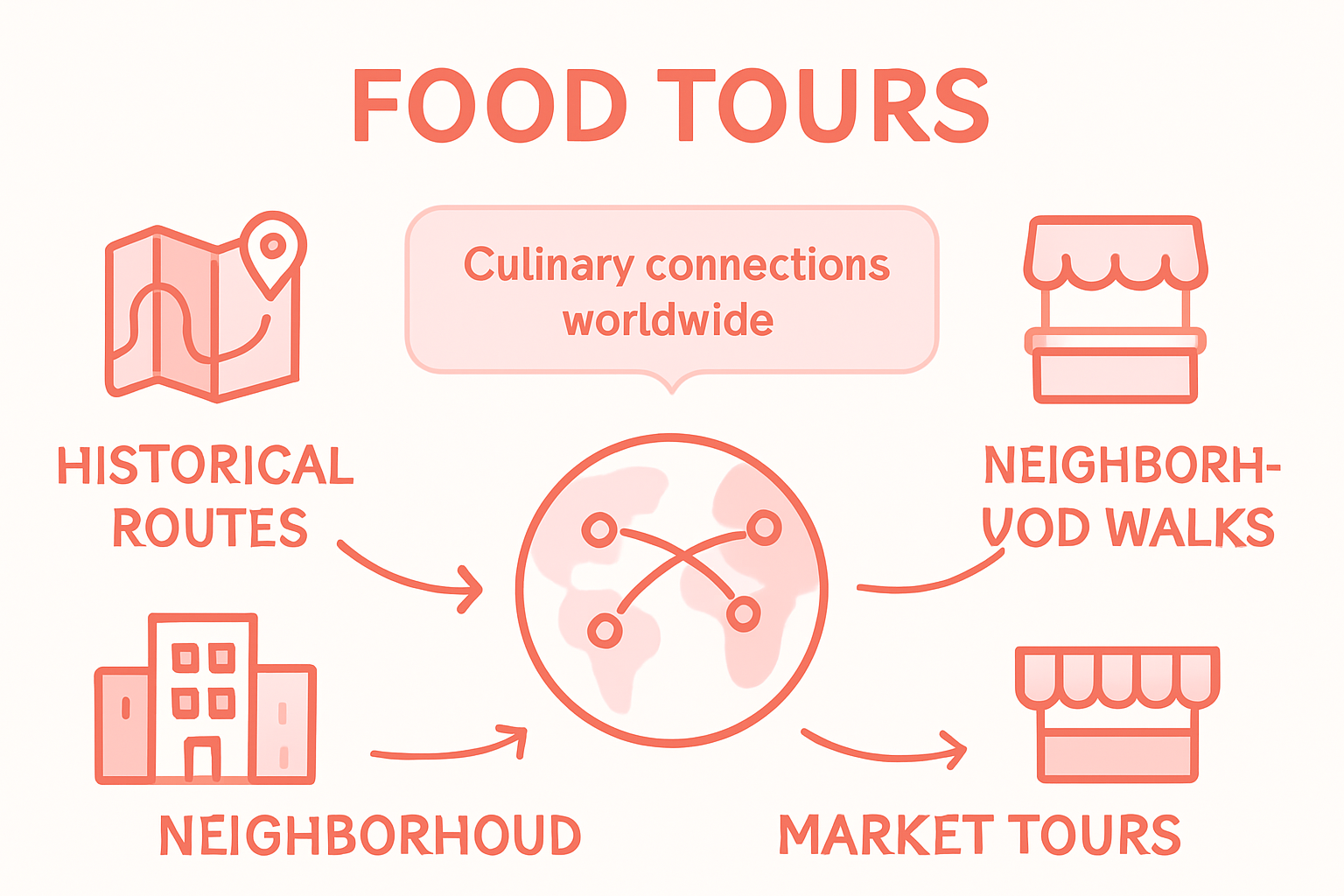
- Historical Culinary Routes: Exploring food traditions linked to specific historical periods
- Neighbourhood Food Walks: Discovering local specialities through community-based experiences
- Market and Producer Tours: Understanding ingredient sourcing and local agricultural practices
- Fusion and Innovation Experiences: Investigating how traditional cuisines evolve and integrate modern techniques
These thematic approaches transform food tours from simple eating experiences into rich, educational journeys that celebrate cultural diversity and culinary storytelling. By connecting travellers directly with local food producers, chefs, and community members, food tours create meaningful cross-cultural dialogues that extend far beyond the plate.
Types Of Food Tour Themes Worldwide
Culinary tourism encompasses a rich tapestry of global experiences that extend far beyond simple dining. Food festivals represent a vibrant celebration of cultural heritage and community traditions, reflecting the diverse ways communities connect through gastronomic experiences. These themes offer travellers immersive journeys that explore local cuisines through multiple lenses.
Global food tour themes can be categorised into distinctive experiential types that provide deep cultural insights:
- Regional Heritage Tours: Exploring traditional cooking methods and generational recipes
- Urban Street Food Adventures: Discovering authentic local flavours through neighbourhood culinary traditions
- Agricultural and Farm-to-Table Experiences: Understanding local ingredient sourcing and production
- Ethnic and Immigrant Cuisine Tours: Tracing culinary migrations and cultural fusion
- Contemporary Gastronomy Explorations: Investigating modern culinary innovations and experimental techniques
These thematic approaches transform food tours from simple tastings into profound cultural narratives. Contemporary food tours capture the evolution of culinary traditions, offering travellers an immersive understanding of regional identities through their most fundamental expression: food. By connecting participants with local chefs, producers, and community members, these experiences create meaningful cross-cultural dialogues that transcend traditional tourism models.
Key Elements Shaping Culinary Themes
Culinary themes are fundamentally shaped by complex global interactions, reflecting intricate dynamics of food production, cultural identity, and social transformation. These themes emerge from nuanced intersections between tradition and innovation, exploring how communities construct and communicate their cultural narratives through gastronomy.
The key elements driving culinary exploration include:
- Cultural Identity: Food as a profound expression of heritage and social memory
- Globalisation Dynamics: Understanding how cuisines evolve through cultural exchanges
- Sustainability Principles: Eco-gastronomy approaches that connect food production with environmental consciousness
- Authenticity Considerations: Preserving traditional cooking methods while allowing creative interpretation
- Economic Influences: How local food systems respond to global market pressures
These multifaceted elements transform culinary experiences from simple consumption into rich, meaningful cultural dialogues. Contemporary food experiences reveal intricate connections between nutrition, tradition, and social practice, inviting participants to explore deeper understanding of global culinary landscapes. By embracing complexity and nuance, food tours become powerful vehicles for cultural learning and mutual understanding.
How Themes Influence Food Experiences
Culinary tourism encourages travellers to ‘eat out of curiosity’, transforming food experiences from mere consumption to profound cultural exploration. Themes act as interpretative lenses that guide participants through intricate narratives of taste, tradition, and social connection, enabling deeper understanding beyond superficial encounters.
Thematic learning in culinary experiences operates through several key mechanisms:
- Narrative Framing: Contextualising dishes within historical and cultural landscapes
- Sensory Mapping: Connecting flavour profiles to geographical and social origins
- Cultural Interpretation: Understanding knowledge across interdisciplinary perspectives, revealing complex interactions between food, society, and identity
- Experiential Engagement: Creating immersive journeys that transcend traditional dining
- Personal Transformation: Facilitating meaningful connections through shared gastronomic experiences
These thematic approaches fundamentally reimagine food as a dynamic storytelling medium. Culinary experiences become powerful vehicles for cultural understanding, inviting participants to explore complex social narratives through the universal language of cuisine. By embracing themed explorations, travellers move beyond passive consumption towards active cultural dialogue, discovering profound connections between food, identity, and human experience.
Selecting The Best Theme For Your Trip
Choosing the perfect food tour theme requires thoughtful consideration of personal interests, travel goals, and cultural curiosity. Food festivals represent an exceptional opportunity to experience local culinary traditions, offering travellers an immersive gateway into community celebrations and gastronomic heritage.
Key considerations for selecting your ideal culinary theme include:
- Personal Passion: Align the theme with your specific food interests
- Cultural Depth: Explore themes that offer genuine insights into local traditions
- Learning Objectives: Determine what culinary knowledge you want to gain
- Travel Style: Match the theme to your preferred pace and exploration method
- Dietary Preferences: Consider themes accommodating your nutritional requirements
Practical selection strategies involve:
- Research regional specialities and unique culinary landscapes
- Consider your comfort level with experimental dining experiences
- Assess the accessibility and authenticity of proposed themes
Contemporary food tours provide nuanced pathways for cultural exploration, transforming travel from simple sightseeing into profound sensory journeys. By selecting a theme that resonates with your personal curiosity, you create opportunities for meaningful connections that extend far beyond traditional tourist experiences.
Common Mistakes In Theme Selection
Selecting culinary tour themes requires careful consideration of authenticity and cultural sustainability, as travellers often unknowingly make critical errors that diminish the depth of their gastronomic experiences. Understanding these potential pitfalls can transform superficial encounters into meaningful cultural exchanges.
Common mistakes in theme selection include:
- Superficial Exploration: Choosing themes based solely on trendy aesthetics
- Cultural Appropriation: Failing to respect local culinary traditions and contexts
- Overlooking Sustainability: Neglecting eco-gastronomic principles that connect food practices with environmental consciousness
- Inflexible Expectations: Rigidly adhering to preconceived notions about cuisine
- Ignoring Local Expertise: Prioritising tourist-friendly experiences over authentic encounters
Thoughtful food tour experiences transcend typical tourist encounters, requiring travellers to approach culinary exploration with genuine curiosity and respect. By recognising and avoiding these common selection mistakes, participants can craft journeys that offer profound insights into cultural identity, sustainable practices, and the rich tapestry of global culinary traditions.
Discover Authentic Culinary Themes with Expert-Led Food Tours
Exploring food tour themes unlocks richer cultural connections and deeper understanding beyond ordinary dining. Many travellers seek immersive, authentic experiences that reveal the true stories behind regional cuisines, yet struggle to find curated tours that align with their passion for local traditions and sustainability. By embracing themes such as neighbourhood food walks, agricultural insights, or historical culinary routes, you gain meaningful engagement with place and people through food.
At The Chef Tours, we specialise in connecting food enthusiasts with local chefs who lead exclusive, personalised tours in iconic cities like Paris, Seville, Berlin, and Mexico City. Our chef-led experiences go beyond tastings to deliver immersive journeys that truly embody culinary exploration as described in The Chef Tour Cities – Explore Culinary Destinations. Discover hidden gems, traditional recipes, and authentic foodways that transform your travel into a sensory adventure. Don’t just eat out of curiosity – engage with the rich cultural narratives behind every bite.
Ready to transform your next trip with a food tour designed around compelling culinary themes? Visit The Chef Tours now to browse expert-led tours and read glowing feedback from fellow travellers on The Chef Tour Reviews | What Travelers Say. Book your spot today to secure an unforgettable insider experience and deepen your connection to global food culture.
Frequently Asked Questions
What is culinary tourism?
Culinary tourism involves intentionally engaging in the foodways of other cultures, transforming dining experiences into immersive cultural encounters that celebrate local traditions and gastronomy.
How do themes influence food tours?
Themes help guide participants through intricate narratives of taste, tradition, and social connection, facilitating a deeper understanding of the cultural significance behind local cuisines.
What are some common types of food tour themes?
Common food tour themes include historical culinary routes, neighbourhood food walks, market and producer tours, fusion experiences, regional heritage tours, and urban street food adventures.
What factors should I consider when selecting a food tour theme?
When selecting a food tour theme, consider your personal interests, the cultural depth the theme offers, your learning objectives, travel style, and dietary preferences.