

Over 80 percent of travellers say that discovering authentic local cuisine enhances their trips, but few realise how a british gastronomic tour redefines this experience. Culinary adventures connect you with a region’s history, people, and traditions in ways that ordinary sightseeing cannot match. Whether you crave artisan cheeses or secret street food spots, exploring the world through food reveals stories and flavours that transform every journey into a cultural celebration.
Table of Contents
- What A Gastronomic Tour Means
- Variations Of Gastronomic Tours
- How Gastronomic Tours Operate
- Cultural And Experiential Value
- Safety And Operational Responsibilities
Key Takeaways
| Point | Details |
|---|---|
| Gastronomic Tours Emphasise Culinary Exploration | These tours focus on immersing travellers in local cuisines, enhancing cultural understanding through food. |
| Diverse Experiences Available | Gastronomic tours include market visits, cooking classes, and wine tours, catering to various culinary interests. |
| Interactive Learning Enhances Engagement | Hands-on activities and local interactions deepen the experiential learning of participants. |
| Safety and Ethical Considerations are Essential | Operators must ensure food safety, respect cultural practices, and maintain responsible tourism standards. |
What A Gastronomic Tour Means
A gastronomic tour represents an immersive culinary journey where food becomes the primary motivation for travel. Unlike traditional tourism, this experience focuses on exploring destinations through their distinctive cuisine, cultural recipes, and local dining traditions. Culinary tourism involves traveling with the primary motivation to experience specific foods, encompassing adventurous eating and exploring other cultures through their culinary traditions.
These specialised tours go far beyond simple restaurant visits. Participants engage directly with local food producers, chefs, and artisan creators, gaining profound insights into regional cooking techniques, ingredient sourcing, and historical food preparation methods. Whether sampling street food in Mexico City or exploring wine cellars in Paris, gastronomic tours transform eating from a basic necessity into a rich cultural exploration.
Key characteristics of gastronomic tours include deep cultural immersion, hands-on learning experiences, and authentic interactions with local culinary experts. Trips are specifically made to destinations where local food and beverages represent the main motivating factors for travel, emphasising the exploration of unique culinary experiences. By prioritising food as a central travel theme, these tours offer travellers an unparalleled opportunity to understand a region’s heritage, social dynamics, and cultural identity through its most fundamental expression: what people eat and how they prepare it.
Variations Of Gastronomic Tours
Gastronomic tours offer an incredible diversity of experiences, ranging from structured culinary explorations to spontaneous food adventures. Gastronomic tourism encompasses a wide array of activities, including cooking classes, food festivals, market visits, and farm tours, providing experiences that span from street food to haute cuisine.
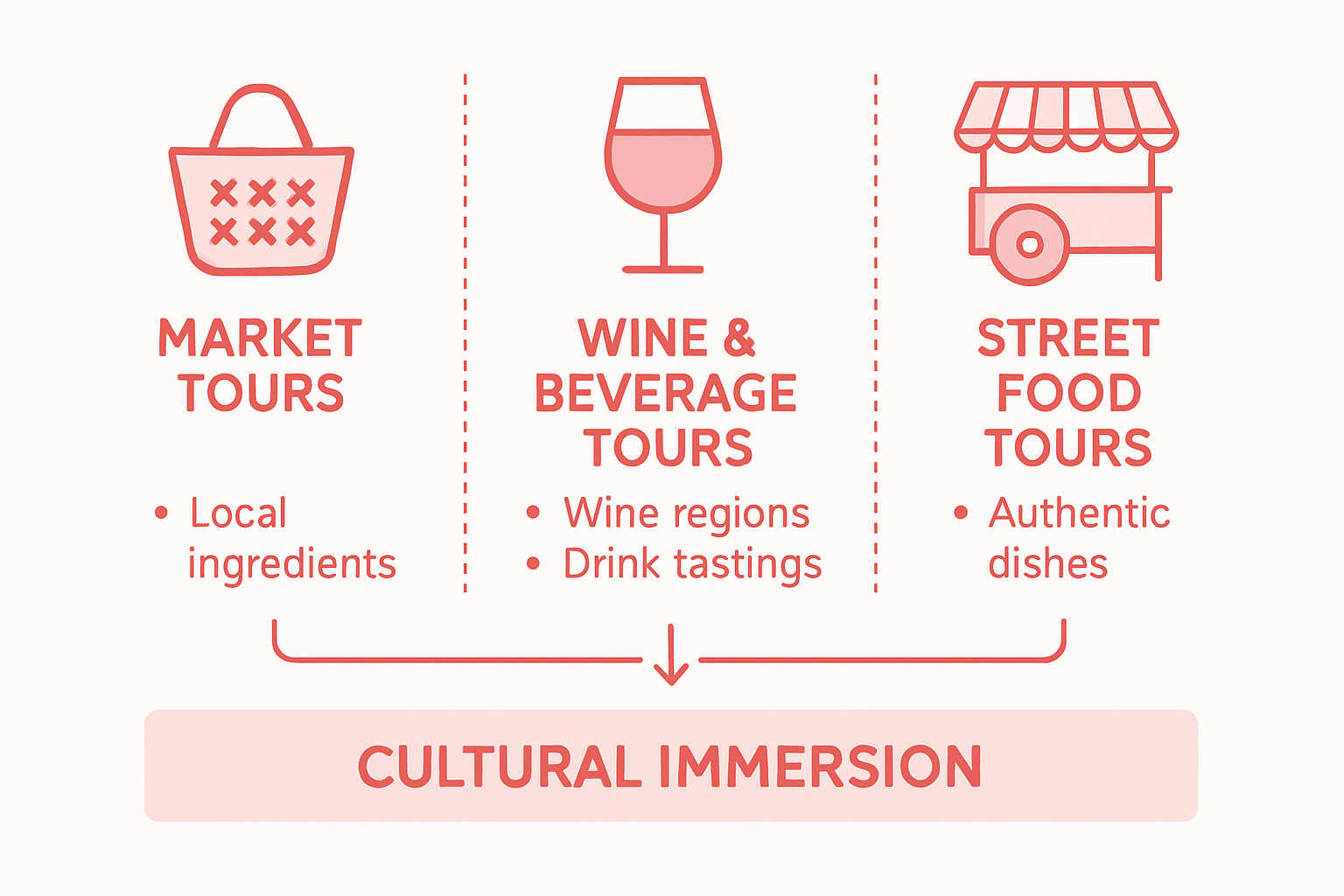
These varied experiences can be categorised into several distinct types. Market Tours involve guided walks through local markets, where participants learn about regional produce, sample fresh ingredients, and understand the cultural significance of specific foods. Cooking Classes provide hands-on experiences where travellers learn traditional recipes directly from local chefs, gaining insights into preparation techniques and cultural cooking methods.
Another fascinating variation includes Wine and Beverage Tours, which focus on exploring regional drink traditions. These tours might involve visiting vineyards, breweries, or distilleries, understanding fermentation processes, and tasting local specialities. Farm-to-Table Tours offer immersive experiences where participants visit local farms, meet producers, and learn about sustainable agriculture and food production.
Specialised tours also cater to specific culinary interests. Street Food Tours explore urban gastronomic landscapes, revealing hidden culinary gems and local eating traditions. Michelin-Starred Restaurant Tours target fine dining experiences, offering curated journeys through high-end culinary establishments. Each variation provides a unique lens through which travellers can understand a destination’s culture, history, and social dynamics through its most fundamental expression: food.
How Gastronomic Tours Operate
Gastronomic tours are meticulously crafted experiences that transform food exploration into an art form. These tours typically involve guided visits to local food establishments, providing immersive experiences in regional cuisines through carefully planned itineraries. Professional tour guides, often local chefs or culinary experts, lead participants through a carefully curated journey of taste, culture, and tradition.

The operational structure of these tours involves several strategic components. Itinerary Planning is crucial, with tours designed to balance variety, authenticity, and educational value. Guides select establishments that represent the genuine culinary landscape of a region, avoiding tourist traps and focusing on locations with deep cultural significance. This might include family-run restaurants, historic markets, artisan food producers, and hidden culinary gems that typical tourists would never discover.
Logistical arrangements are equally important in gastronomic tour operations. Groups are typically kept small to ensure personalised experiences, usually ranging from 6 to 12 participants. Tour operators like the Chef’s Tours carefully manage transportation, scheduling, and dietary considerations. Each tour segment is timed precisely, allowing participants to sample multiple dishes, interact with local chefs, and understand the cultural context behind each culinary creation.
Interactive elements distinguish these tours from standard food experiences. Participants often engage in hands-on activities such as ingredient selection at local markets, brief cooking demonstrations, or discussions with local food producers. These interactions transform the tour from a mere tasting experience into a comprehensive cultural immersion, allowing travellers to understand not just the flavours, but the stories, traditions, and social dynamics embedded in a region’s culinary heritage.
Cultural And Experiential Value
Culinary tourism offers a profound mechanism for travellers to explore other cultures through food, addressing complex issues of authenticity, cultural sustainability, and traditional representation. Beyond mere consumption, gastronomic tours transform dining into an immersive cultural dialogue, where every bite tells a story of historical migration, agricultural practices, and social evolution.
These experiences go far deeper than simple taste exploration. Cultural Interpretation becomes central, with tour participants learning how specific dishes reflect social structures, economic histories, and familial traditions. A single recipe might reveal centuries of trade routes, colonisation impacts, or indigenous preservation techniques. Local chefs and food producers become storytellers, translating culinary practices into living narratives that connect travellers directly with generations of cultural knowledge.
Gastronomic tourism enriches travel experiences by fostering a deeper understanding and appreciation of regional cultural heritage through its distinctive culinary practices. Participants do not merely observe culture but actively engage with it, breaking down barriers between tourists and local communities. Through shared meals, cooking demonstrations, and market explorations, travellers gain insights that transcend traditional touristic interactions, creating meaningful cross-cultural connections.
The experiential value extends beyond immediate sensory pleasures. Transformative Learning occurs when travellers understand food as a dynamic cultural expression. Each tasting becomes an opportunity to challenge preconceptions, develop empathy, and recognise the profound ways culinary traditions reflect human adaptation, creativity, and resilience. These tours ultimately offer more than a meal they provide a nuanced, immersive education in human diversity and shared global experiences.
Safety And Operational Responsibilities
Gastronomic tour operators bear critical responsibilities for ensuring food safety standards, providing accurate cultural information, and facilitating respectful interactions between tourists and local communities. Safety Protocols become paramount in these immersive culinary experiences, requiring meticulous attention to multiple interconnected aspects of participant well-being and cultural engagement.
Operational responsibilities encompass comprehensive health and dietary considerations. Tour guides must carefully assess participants’ dietary restrictions, potential food allergies, and individual health requirements. This involves advance screening, transparent communication with local food providers, and maintaining detailed medical information records. Professional operators develop contingency plans for potential health emergencies, ensuring immediate medical support and clear communication pathways during tours.
Beyond physical safety, Ethical Engagement represents a crucial operational responsibility. Guides must navigate complex cultural interactions, ensuring that food experiences respect local traditions and community boundaries. This includes negotiating fair compensation for local producers, maintaining culturally sensitive communication, and preventing exploitative tourism practices. Responsible tour operators create experiences that benefit local communities economically and culturally, transforming food tours from mere consumption events into meaningful cultural exchanges.
Risk management extends to comprehensive insurance coverage, detailed safety briefings, and ongoing staff training. Guides must be thoroughly versed in local food safety standards, understand potential health risks associated with different culinary environments, and maintain transparent communication with participants about potential challenges. These multifaceted responsibilities ensure that gastronomic tours remain not just exciting and educational experiences, but also safe, respectful, and professionally managed cultural journeys.
Discover Authentic Culinary Stories on Your Next Gastronomic Tour
The article highlights how gastronomic tours offer more than just meals they create deep cultural connections by exploring authentic regional cuisines and local traditions. If you seek to fully immerse yourself in the rich food heritage of celebrated cities like Paris, Seville, Berlin, or Mexico City this is your chance to experience culinary journeys led by expert chefs who reveal hidden gems and tell the stories behind every dish. This is the solution for travellers wanting personalised, small-group tours that truly enrich travel culture through exclusive food and wine tastings.
Explore the full range of carefully curated destinations on The Chef Tour Cities – Explore Culinary Destinations page to find your perfect culinary escape. See why food lovers trust us by visiting The Chef Tour Reviews | What Travelers Say. Begin your own gastronomic tour now by booking directly at https://thecheftours.com. Unlock authentic culinary experiences today and taste the heart of local culture before spaces fill up.
Frequently Asked Questions
What is a gastronomic tour?
A gastronomic tour is an immersive culinary journey focused on exploring different cuisines and local dining traditions as the main motivations for travel, going beyond simple restaurant visits.
How do gastronomic tours operate?
Gastronomic tours involve guided visits to local food establishments led by culinary experts, with carefully planned itineraries that balance variety, authenticity, and educational value, ensuring a deep cultural immersion.
What variations of gastronomic tours are available?
Variations of gastronomic tours include market tours, cooking classes, wine and beverage tours, farm-to-table experiences, street food tours, and Michelin-starred restaurant tours, each offering unique insights into a region’s culinary heritage.
What cultural value do gastronomic tours provide?
Gastronomic tours promote a deeper understanding and appreciation of regional cultural heritage through food, allowing participants to actively engage with local communities and learn about the historical and social contexts behind culinary traditions.