

Travelling with your dog opens a world of culinary exploration, but it demands careful planning to ensure both you and your pet enjoy the journey. Many dog owners dream of sharing food adventures with their furry companions, yet face anxiety about pet policies, travel stress, and dining etiquette. This guide provides practical, expert-backed steps to prepare your dog for travel, navigate dog-friendly culinary experiences, and avoid common pitfalls that could derail your gastronomic adventures together.
Table of Contents
- Understanding The Challenges Of Travelling With Your Dog
- Preparing Your Dog And Yourself For Travel
- Navigating Dog-Friendly Culinary Experiences On The Road
- Common Mistakes And Tips For Stress-Free Travel With Dogs
- Discover Culinary Experiences With Your Dog
- How To Travel With A Dog: Frequently Asked Questions
Key takeaways
| Point | Details |
|---|---|
| Early preparation reduces stress | Starting desensitisation four weeks before travel prevents most anxiety issues for dogs |
| Research pet policies thoroughly | Understanding venue rules and local regulations ensures smooth access to culinary experiences |
| Practice trips build confidence | Short rehearsal journeys familiarise your dog with travel conditions and reduce fear |
| Pack strategically for comfort | Bringing familiar items, food, and water maintains your dog’s routine during adventures |
| Respect dining etiquette always | Good behaviour preserves access to dog-friendly establishments for all pet owners |
Understanding the challenges of travelling with your dog
Travelling with dogs presents unique obstacles, particularly when culinary tourism forms the centrepiece of your itinerary. Dogs experience heightened anxiety in unfamiliar environments, especially bustling restaurants, outdoor markets, and food tours where crowds, novel scents, and unpredictable noise levels overwhelm sensitive canine senses. This anxiety manifests through excessive barking, trembling, or attempts to escape, creating stress for both owner and pet.
Many dining establishments across Europe and beyond welcome dogs, but this access depends entirely on responsible pet ownership. Poor etiquette, such as allowing dogs to beg at tables, bark continuously, or behave aggressively towards other diners, jeopardises policies that permit pets. Dog-friendly dining surged with pet boom, but poor etiquette risks policies. One negative incident can prompt venues to reverse pet-friendly stances, affecting all dog owners who follow proper protocols.
Without adequate preparation, 4-week desensitisation mitigates 80% of anxiety per studies. This statistic underscores the importance of advance planning rather than reactive problem-solving during travel. Owners who rush into trips without conditioning their dogs to travel stimuli face preventable complications that diminish the culinary experience for everyone involved.
Understanding these challenges allows you to approach travel strategically. By recognising anxiety triggers, respecting venue policies, and committing to thorough preparation, you transform potential obstacles into manageable elements of your culinary travel checklist. This proactive mindset sets the foundation for successful dog-inclusive food adventures.
“The difference between a stressful journey and an enjoyable adventure lies in the weeks of preparation before departure, not the days spent travelling.”
Key challenges include:
- Anxiety triggered by unfamiliar transport modes, crowds, and sensory overload in food venues
- Navigating inconsistent pet policies across restaurants, markets, and culinary tour operators
- Maintaining proper etiquette to preserve access for all dog owners
- Balancing your culinary interests with your dog’s comfort and behavioural needs
- Managing health requirements, vaccinations, and documentation across different regions
Preparing your dog and yourself for travel
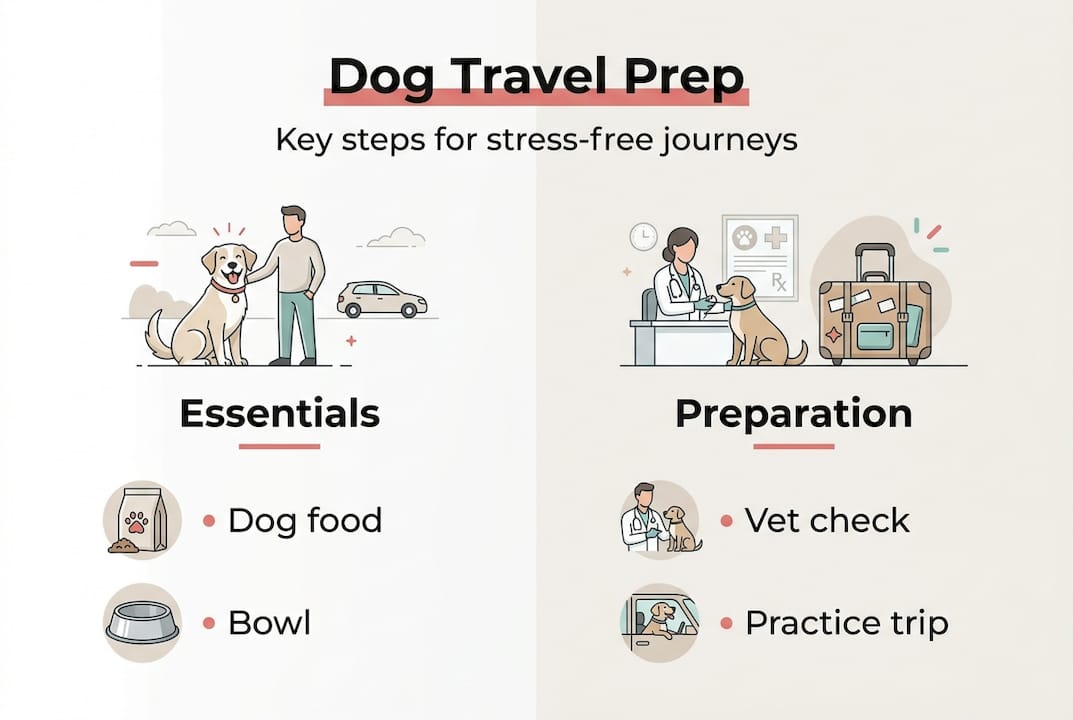
Successful culinary travel with your dog begins at least four weeks before departure. This timeline allows systematic desensitisation to travel stimuli, building your dog’s confidence gradually rather than overwhelming them with sudden changes. Start by introducing your dog to carriers, car journeys, or public transport in short, positive sessions, rewarding calm behaviour with treats and praise.
Consult your veterinarian well before travel to ensure vaccinations meet destination requirements, particularly for rabies, which many European countries mandate. Your vet can prescribe anti-anxiety medication if your dog shows severe travel stress, though behavioural conditioning should remain the primary approach. Discuss microchipping requirements, as many regions require permanent identification for pets entering their borders. Request a health certificate dated within ten days of travel, as customs officials often demand recent veterinary documentation.
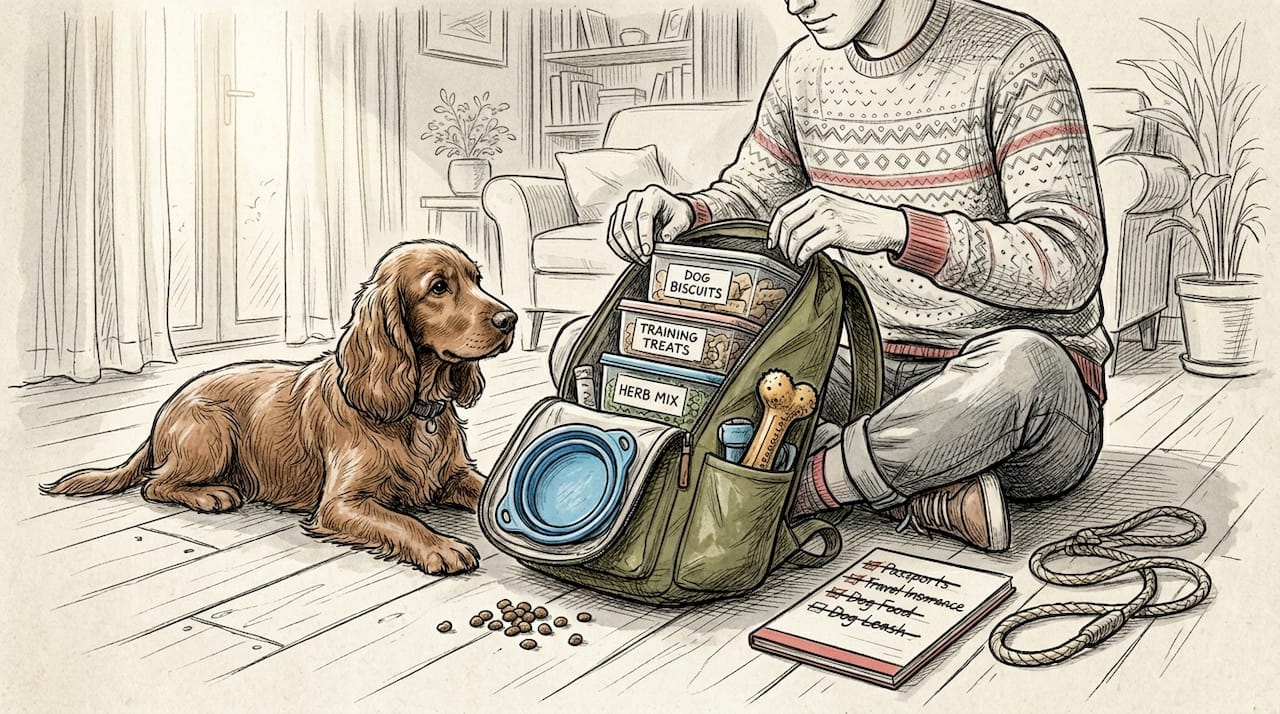
Packing strategically prevents disruptions to your dog’s routine during culinary adventures. Bring sufficient quantities of your dog’s regular food to avoid digestive issues from sudden diet changes. Collapsible bowls, a portable water bottle, waste bags, and a familiar blanket or toy provide comfort and practical solutions on the road. Include a basic first aid kit with bandages, antiseptic wipes, and any prescribed medications your dog requires.
Practice trips serve as invaluable rehearsals for longer journeys. Take your dog on short excursions to dog-friendly cafes or outdoor dining areas, gradually increasing duration and complexity. These rehearsals reveal how your dog responds to restaurant environments, allowing you to address behavioural issues before embarking on extended culinary tours. Monitor your dog’s body language for signs of stress, such as excessive panting, yawning, or reluctance to settle, and adjust your preparation accordingly.
Pro Tip: Create a travel folder containing your dog’s vaccination records, microchip details, vet contact information, and emergency veterinary clinics at your destination. Digital copies stored on your phone provide backup access if physical documents go missing.
Essential preparation steps
- Begin desensitisation training four weeks before departure, introducing travel carriers and transport gradually
- Schedule a veterinary consultation to verify vaccinations, obtain health certificates, and discuss anxiety management
- Research pet entry requirements for your destination, including quarantine rules and documentation needs
- Pack familiar food, collapsible bowls, comfort items, waste bags, and a first aid kit for your dog
- Conduct practice trips to dog-friendly venues, increasing duration and environmental complexity progressively
- Prepare a comprehensive travel folder with all veterinary records, emergency contacts, and microchip information
| Item | Purpose | Quantity |
|---|---|---|
| Regular dog food | Maintains diet consistency | 7-day supply plus extra |
| Collapsible bowls | Portable feeding solution | 2 (food and water) |
| Waste bags | Hygiene compliance | 50-100 bags |
| Familiar blanket | Comfort and anxiety reduction | 1-2 items |
| First aid supplies | Emergency care | Basic kit |
| Vaccination records | Border compliance | Original plus copies |
By following this structured preparation approach, you significantly reduce travel anxiety and ensure your dog adapts smoothly to new culinary environments. The investment in advance planning pays dividends through stress-free dining experiences and confident, well-behaved canine travel companions. This groundwork aligns perfectly with your culinary travel safety tips, creating a comprehensive travel strategy.
Navigating dog-friendly culinary experiences on the road
Finding dog-friendly dining options requires research beyond standard restaurant reviews. Specialised apps and websites catalogue pet-welcoming establishments, but contacting venues directly confirms current policies, as rules change without online updates. Many European cities, particularly Paris, Berlin, and Seville, embrace outdoor dining culture where dogs commonly accompany owners, though indoor access varies significantly by establishment and local health regulations.
When you arrive at dog-friendly venues, etiquette determines whether you and other pet owners maintain future access. Keep your dog on a short lead, positioned away from foot traffic to prevent tripping hazards. Never allow your dog to approach other diners or their pets without explicit permission, as not all dogs socialise well in stimulating environments. Bring a portable mat or blanket for your dog to settle on, creating a defined space that signals calm behaviour expectations.
Culinary tours present unique considerations for dog owners. Some operators explicitly welcome pets on walking food tours, particularly those exploring outdoor markets and street food scenes. Others prohibit animals due to venue restrictions or group dynamics concerns. Contact tour operators well before booking, explaining your dog’s size, temperament, and training level. Many choosing food tours decisions hinge on pet policies, so clarify these details during initial enquiries.
Timing significantly impacts your dog’s comfort during culinary outings. Schedule restaurant visits during off-peak hours when crowds and noise levels remain manageable. Early lunches or late afternoon dining slots typically offer quieter environments where your dog can relax without constant stimulation. Plan walking routes between venues that include green spaces or quiet streets where your dog can decompress between food stops.
Pro Tip: Carry a small towel to wipe your dog’s paws before entering establishments, demonstrating respect for venue cleanliness standards and improving your reception at dog-friendly locations.
Dog-friendly venue types comparison
| Venue type | Pet access | Considerations |
|---|---|---|
| Outdoor terraces | Usually permitted | Weather-dependent, may have lead requirements |
| Street food markets | Often welcomed | Crowded, requires excellent lead control |
| Traditional restaurants | Varies by region | Indoor access restricted in many areas |
| Wine bars | Frequently allowed | Quiet behaviour essential in intimate settings |
| Food tours | Operator-dependent | Confirm policy before booking, group dynamics matter |
Understanding local regulations prevents unpleasant surprises during your culinary adventures. Some regions prohibit dogs in any food preparation or service areas, whilst others permit pets in designated sections. France generally welcomes well-behaved dogs in most dining establishments, whilst Germany shows regional variation, and Spain increasingly embraces pet-friendly policies in tourist areas. Research specific municipal rules for your destination, as violations can result in fines or ejection from premises.
Your travel companion dog tips experience improves dramatically when you balance your culinary interests with your dog’s needs. If a particular restaurant or food tour seems incompatible with your pet’s temperament, consider alternative arrangements rather than forcing situations that stress your dog and diminish your enjoyment. Some days might require splitting activities, with one person exploring pet-restricted venues whilst another enjoys dog-friendly alternatives, then reuniting for accommodating experiences.
- Research dog-friendly restaurants using specialised apps and direct venue contact before arrival
- Maintain impeccable etiquette with short leads, defined spaces, and no approach to other diners
- Confirm culinary tour pet policies explicitly before booking, explaining your dog’s characteristics
- Schedule dining during off-peak hours to reduce crowds and noise affecting your dog
- Understand local regulations regarding pets in food establishments to avoid violations
Common mistakes and tips for stress-free travel with dogs
Rushing preparation ranks as the most prevalent mistake dog owners make before culinary travel. Attempting to condition a dog to travel in one or two weeks rarely succeeds, leading to anxiety that manifests during the trip. This hasty approach often results from underestimating the time required for effective desensitisation. 4-week desensitisation and practice trips mitigate 80% of anxiety per studies, yet many owners skip this crucial investment, believing their dog will adapt spontaneously.
Neglecting local regulations and venue-specific policies creates avoidable conflicts during travel. Owners sometimes assume dog-friendly attitudes in their home region translate universally, only to face rejection or fines abroad. Each destination maintains distinct rules about pets in dining establishments, public transport, and tourist attractions. Failing to research these requirements beforehand forces reactive problem-solving that disrupts your culinary itinerary and stresses both you and your dog.
Overexposing dogs to stimulating environments too quickly overwhelms their coping mechanisms. Some owners, excited to share every culinary experience, drag reluctant dogs through marathon days of restaurant hopping and market exploration. Dogs require downtime to process new stimuli and recover from sensory overload. Without adequate rest periods, anxiety accumulates, leading to behavioural deterioration as the trip progresses.
Ignoring your dog’s signals represents another critical error. Dogs communicate discomfort through body language, such as tucked tails, pinned ears, excessive panting, or refusal to settle. Owners absorbed in culinary experiences sometimes miss these cues, pushing their dogs beyond comfortable limits. Recognising and responding to stress signals prevents escalation into problematic behaviours that could jeopardise your access to dog-friendly venues.
“Expert travellers understand that successful dog-inclusive culinary tourism requires flexibility, allowing the dog’s needs to shape the itinerary rather than forcing the dog to accommodate rigid plans.”
Expert tips for stress-free travel
- Maintain your dog’s regular feeding and walking schedule as closely as possible during travel
- Build rest periods into your daily itinerary, allowing your dog to decompress in quiet hotel environments
- Bring familiar items like toys, blankets, or even a piece of your worn clothing to provide comfort
- Research emergency veterinary clinics at your destination before departure, not during crises
- Practice commands like “settle” and “quiet” in distracting environments before travel
- Accept that some culinary experiences may not suit your dog, and plan alternative arrangements accordingly
Successful dog owners prioritise their pet’s wellbeing alongside their culinary interests, recognising that a stressed dog diminishes rather than enhances travel experiences. This balanced approach requires honest assessment of your dog’s temperament and limitations. Not every dog suits intensive culinary tourism, and forcing incompatible situations benefits neither owner nor pet. Consider your dog’s personality when planning itineraries, selecting experiences that match their comfort level and training.
Your choosing culinary tours decisions should incorporate your dog’s needs from the outset, not as an afterthought. Tours emphasising outdoor exploration, moderate pacing, and frequent stops typically accommodate dogs better than rapid-fire indoor tastings or crowded market sprints. Communicate openly with tour operators about your dog’s presence, allowing them to advise whether their specific programme suits canine participants. This transparency prevents disappointment and ensures positive experiences for all tour participants.
Discover culinary experiences with your dog
Culinary adventures need not exclude your four-legged companion when you choose experiences designed with pet-friendly policies and thoughtful itineraries. Our curated culinary experiences to try include options that welcome well-behaved dogs, allowing you to explore authentic regional cuisines whilst your pet accompanies you on this gastronomic journey.

Expert guidance makes all the difference when selecting tours that balance your passion for food with your dog’s comfort. Our travel companion dog tips reflect years of experience leading culinary explorers through vibrant food scenes in Paris, Seville, Berlin, and Mexico City. We understand the nuances of pet-friendly dining culture in each destination, connecting you with establishments that genuinely welcome dogs rather than merely tolerate them. This insider knowledge transforms your culinary tourism from stressful navigation of pet policies into seamless exploration of hidden gastronomic gems.
When you’re ready to plan your next food adventure, our team helps you identify tours matching your dog’s temperament and your culinary interests. From leisurely market walks to exclusive chef-led experiences in dog-welcoming venues, we’ve cultivated relationships with establishments that appreciate responsible pet owners. Discover how choosing culinary tours with pet-friendly considerations enhances rather than limits your gastronomic exploration.
How to travel with a dog: frequently asked questions
How far in advance should I start preparing my dog for travel?
Begin preparation at least four weeks before departure to allow proper desensitisation training. This timeline enables gradual introduction to travel stimuli, building your dog’s confidence through positive reinforcement rather than overwhelming them with sudden changes. Practice trips during this period reveal potential issues you can address before your actual journey.
What essential items should I pack for my dog on culinary trips?
Pack your dog’s regular food to maintain dietary consistency, collapsible bowls for feeding and water, waste bags for hygiene compliance, and a familiar blanket or toy for comfort. Include a basic first aid kit, any prescribed medications, and copies of vaccination records. A portable water bottle designed for dogs prevents dehydration during walking tours between culinary venues.
How can I find dog-friendly restaurants during travel?
Use specialised pet-friendly dining apps and websites as starting points, but always contact venues directly to confirm current policies before visiting. Local tourism offices often maintain lists of dog-welcoming establishments, and fellow dog owners in online travel communities share reliable recommendations. Observe where locals dine with their dogs to identify genuinely pet-friendly venues versus those with restrictive attitudes.
What should I do if my dog shows anxiety during a food tour?
Remove your dog from the stimulating environment immediately, finding a quiet space where they can decompress. Never force a stressed dog to continue, as this intensifies anxiety and risks behavioural problems. Consider whether the tour’s pace, crowd level, or venue types exceed your dog’s comfort threshold, and communicate with the tour operator about modifying your participation or arranging alternative activities.
Are there laws about bringing dogs to dining establishments in foreign countries?
Yes, regulations vary significantly by country and even by municipality within countries. France generally permits dogs in most dining establishments, Germany shows regional variation with some cities more welcoming than others, and Spain increasingly embraces pet-friendly policies in tourist areas. Research specific local health codes and municipal ordinances for your destination, as violations can result in fines or denied access. Some regions prohibit dogs entirely from indoor food service areas whilst permitting outdoor terrace dining.