

TL;DR:
- Food tours foster genuine connections by removing hierarchy and encouraging curiosity.
- They improve teamwork, inclusivity, and cultural learning more effectively than traditional activities.
- Careful planning and personalized experiences maximize their positive impact on workplace relationships.
Corporate team-building events have a reputation problem. Most teams dread the trust falls, generic workshops, and awkward escape rooms that fill the typical company calendar. Yet team-building activities boost productivity up to 25% and collaboration by 36% when done well. The difference lies in choosing the right format. Chef-led culinary food tours are emerging as one of the most effective and genuinely enjoyable options available to organisers. This guide walks you through every stage of planning and executing a food tour event that creates real connections, suits all team members, and delivers measurable business results.
Table of Contents
- Understanding the benefits of food tour team building
- Essential planning steps for a successful food tour workflow
- Making food tours inclusive and engaging for all team members
- Running the event: execution and follow-through for maximum impact
- What most team-building guides overlook: the subtle power of food tours
- Take the next step: create exceptional team culinary experiences
- frequently asked questions
Key Takeaways
| Point | Details |
|---|---|
| Plan ahead for success | Start planning your food tour at least four weeks in advance to secure top chefs and venues. |
| Prioritise inclusivity | Accommodate all dietary needs and consider hybrid options to ensure every team member can participate. |
| Focus on experience, not just food | Natural interaction, skilled guides, and thoughtful debriefs turn a meal into lasting workplace value. |
| Execution matters | Clear logistics and flexibility on event day help ensure a smooth, memorable food tour. |
| Choose expert-led tours | Local chefs and professional guides unlock unique, authentic experiences your team will remember. |
Understanding the benefits of food tour team building
Traditional team-building formats share a common flaw: they require people to perform. Sports days favour the athletic. Strategy games reward the competitive. Even escape rooms can leave quieter colleagues feeling sidelined. Food tours sidestep all of this because eating is universal. Everyone brings their own story, preference, and curiosity to the table, and that natural variety is exactly what sparks genuine conversation.
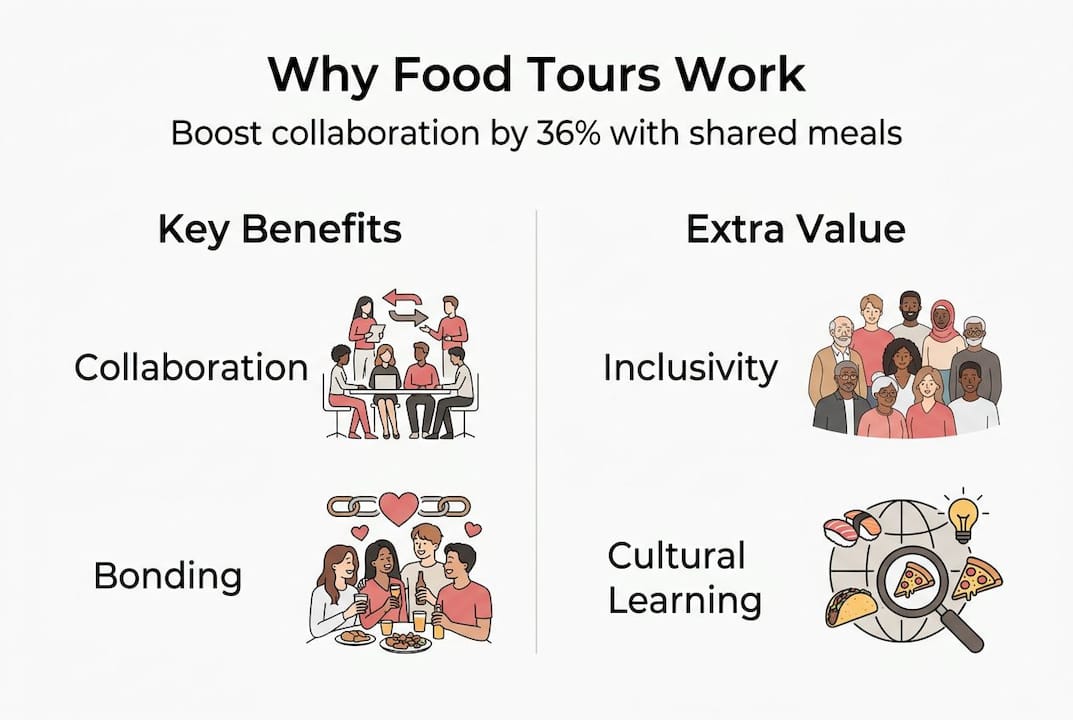
The business case is compelling. shared meals increase collaboration by 36%, and the corporate culinary team-building market is projected to reach $7.6 billion by 2030. Those numbers reflect a shift in how forward-thinking organisations are investing in their people.
| Format | Skills required | Universal appeal | Natural bonding | Cultural learning | Cost range (per head) | | Food tour | None | High | High | High | Mid | | Sports day | Physical fitness | Medium | Medium | Low | Low | | Workshop | Role-specific | Low | Low | Low | Mid | | Virtual quiz | Tech access | Medium | Low | Low | Low | | Chef-led tour | None | High | Very high | Very high | Mid-High |
The table above makes a clear case. culinary tours and team bonding consistently outperform alternatives on the metrics that matter most for lasting workplace relationships.
Why does food work so well as a bonding mechanism? It removes hierarchy. A senior director navigating a new neighbourhood market has no advantage over a junior analyst. Both are learners. Both are experiencing something together for the first time. That equality creates psychological safety, and psychological safety is precisely the environment where real conversations happen.
Key advantages of food tour team building:
- No specialist skill required from any participant
- Low-pressure environment encourages authentic interaction
- Cultural learning adds educational value beyond the fun
- Local chef guidance provides credibility and storytelling
- Small-group formats allow for deeper, more personal connections
Pro tip: Look for unique culinary experience benefits that include local chef narration, not just restaurant visits. The storytelling element dramatically increases engagement and gives colleagues a shared narrative to revisit at the office.
Food tours also benefit quieter team members who might disengage during competitive or performance-based activities. When the main activity is simply walking, tasting, and chatting, introverts often find themselves more at ease than in any other team-building context.
Essential planning steps for a successful food tour workflow
Good preparation separates memorable events from logistical disasters. The planning phase for a culinary team tour is not complicated, but it is sequential. Missing one step creates knock-on problems that can undermine the entire experience.
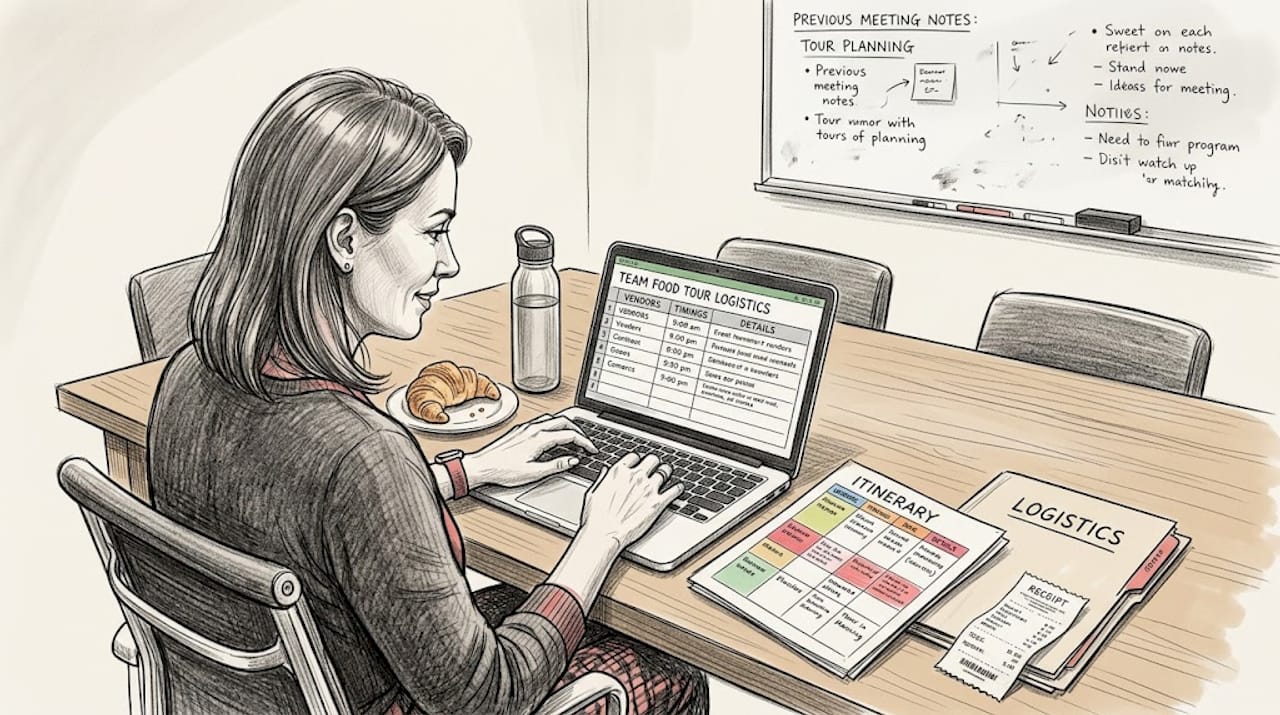
The most common mistake organisers make is leaving dietary and accessibility needs until the last moment. survey dietary restrictions and allergies four to eight weeks ahead of the event, and book your tour four to six weeks in advance to guarantee your preferred date and route. Building indoor stops into the itinerary from the start also protects against unpredictable weather.
| Planning milestone | Timeline before event | Owner | | Initial survey sent | 6–8 weeks | HR or organiser | | Tour booked and confirmed | 4–6 weeks | Events lead | | Final headcount and dietary info | 2–3 weeks | HR or organiser | | Communication sent to team | 1–2 weeks | Manager or comms | | Day-of logistics confirmed | 48 hours | Events lead |
For event planning for culinary teams, here is the core workflow:
- Send a short survey asking for dietary requirements, accessibility needs, and general food preferences.
- Share survey results with your chosen chef or tour provider.
- Book the tour, specifying your group size and any special requests.
- Send a save-the-date with a brief, enticing description of what to expect.
- Follow up with full event details and a meeting point one week before.
- Send a reminder the morning of the event with any last-minute logistics.
“The best corporate events feel inevitable in hindsight. That sense of ease comes from meticulous preparation that no attendee ever has to see.”
For large groups, consult a comprehensive event planning guide and consider splitting into sub-groups of ten to fifteen people, each with their own chef or guide. This keeps the experience intimate. You can also explore organising chef-led food tours with providers who specialise in corporate formats and can tailor the routing and pacing accordingly.
Pro tip: Always have a direct contact number for your chef or tour lead on the day. Clear communication channels between organiser and guide prevent small delays from becoming big disruptions.
Making food tours inclusive and engaging for all team members
Inclusivity is not a box-ticking exercise. When a team member cannot eat a key dish, feels physically excluded from a venue, or simply does not feel seen by the format of the event, the damage to morale is real and lasting. The best culinary team experiences are built around the full diversity of your group from the very start.
dietary accommodations are mandatory for any professional event. Beyond that, hybrid ingredient kits allow remote participants to join virtual tasting elements, and low-pressure formats work particularly well for introverts who may struggle in more performative settings.
Pre-event inclusivity checklist:
- Survey all dietary requirements: vegetarian, vegan, gluten-free, religious restrictions, and allergies
- Ask about mobility or accessibility needs for walking routes
- Check whether any team members are joining remotely and plan virtual touchpoints
- Consider sensory sensitivities when selecting venues with strong aromas or loud environments
- Brief your chef or guide on all requirements well in advance, not on the day
“An event that excludes even one person has failed, regardless of how much everyone else enjoyed it.”
For large or globally distributed teams, finding inclusive chefs who regularly work with diverse groups is invaluable. They bring the experience and flexibility to adapt on the fly when surprises arise.
customising food tours to reflect your team’s specific makeup is not an extra; it is what distinguishes a good event from a great one. When remote colleagues receive a curated ingredient kit and join a live virtual tasting session, they feel genuinely included rather than awkwardly patched in.
Pro tip: Design a short, optional conversation prompt card for each stop on the tour. Questions like “What is the most surprising food you have ever tried?” give introverts a gentle entry point into group conversation without any pressure.
Remember that personalising tour experiences creates the moments teams talk about for months afterward. A customised route through a city’s hidden food markets, narrated by a chef who genuinely loves what they do, is an entirely different proposition from a generic group outing.
Running the event: execution and follow-through for maximum impact
The day of the event is where all your preparation either pays off or unravels. Good execution feels effortless to participants. Behind the scenes, it is anything but.
success depends on professional guides and a post-event debrief that links the experience back to workplace skills. Over-programming the day is one of the most common mistakes. Leave space for organic conversation between stops. The chat that happens while waiting for a tasting to be prepared is often more valuable than the structured activity itself.
Day-of execution checklist:
- Brief your chef or guide on final headcount, dietary needs, and any last-minute changes.
- Meet participants at the agreed point ten minutes early and account for all attendees before departing.
- Allow the chef to lead; resist the urge to fill every silence with organiser commentary.
- Build in a minimum of two free-roam moments where colleagues can explore and chat naturally.
- Monitor pacing and flag to the guide if the group needs slowing down or if energy is dropping.
- Close with a brief, hosted reflection at the final stop: ask two or three people to share a highlight.
The reflection moment at the end is critical. It transforms a pleasant afternoon into a shared story. That story is what travels back into the office and continues to strengthen relationships.
For choosing the best group food tour, prioritise providers whose chefs understand the corporate context and can naturally weave teamwork themes into their narration without it feeling forced.
Post-event follow-through matters just as much as the event itself. Share a short summary with photos within 48 hours. Include a one-question feedback survey. Then, in the next team meeting, spend five minutes discussing what the experience revealed about working together.
Pro tip: Ask your chef to include one stop that challenges the group to make a collective decision, such as selecting a shared dish or voting on a local ingredient. Small collaborative moments during the tour reinforce building team bonds with food and give the post-event debrief real material to work with.
What most team-building guides overlook: the subtle power of food tours
Most corporate event guides focus on logistics and outcomes. What they rarely address is why food tours produce the results they do at a psychological level.
The truth is that rigid, programmed team events often fail because they signal to participants that their natural behaviour is not good enough. The structure itself becomes the obstacle. Food tours work differently. They place people in an unfamiliar, stimulating environment and simply let them respond. The organic bonding in food tours that emerges from this context is qualitatively different from anything a structured exercise can produce.
Eating together has been a mechanism for building trust across cultures for thousands of years. When a senior manager and a new starter share a plate of something unfamiliar, narrated by a local chef with genuine passion, the hierarchy dissolves. What replaces it is curiosity. And curiosity is the foundation of every high-performing team.
The impact of culinary events on workplace culture is often underestimated precisely because it is hard to measure in a spreadsheet. But the effects, increased openness, reduced silo behaviour, stronger cross-functional relationships, are entirely real.
Take the next step: create exceptional team culinary experiences
You now have a complete workflow, from survey to debrief, for running a food tour that genuinely moves the needle on team cohesion. The next question is who guides the experience.
At The Chef’s Tours, we specialise in chef-led food tour differences that make corporate events genuinely memorable. Whether your team is heading to Paris with Chef PJ, exploring the markets of Berlin or Mexico City with Chef Karl, or discovering the flavours of San Sebastian with Chef Karl, our chefs know exactly how to create the conditions for real connection. Browse our culinary experiences to try and speak with us about tailoring a private tour to your team’s size, culture, and goals. Our corporate culinary team benefits page outlines exactly how each experience can be customised.
frequently asked questions
What is the ideal group size for a team building food tour?
Most food tours work best with 10 to 40 people, but groups up to 500 can be split into smaller teams with adjusted routes for a smooth experience.
How far in advance should we book a culinary team tour?
Plan to book your event four to six weeks ahead and survey dietary needs four to eight weeks before the chosen date.
Can food tours include remote or hybrid team members?
Yes, you can include remote staff with hybrid ingredient kits and virtual tastings for a fully inclusive experience.
What happens if there is bad weather?
Most food tours include indoor tasting stops or flexible routing so they can run rain or shine, as indoor stops for weather are a standard planning consideration.
How do food tours support business outcomes?
Culinary team events can boost productivity up to 25% and increase collaboration by 36%, especially when followed by a structured workplace debrief.