

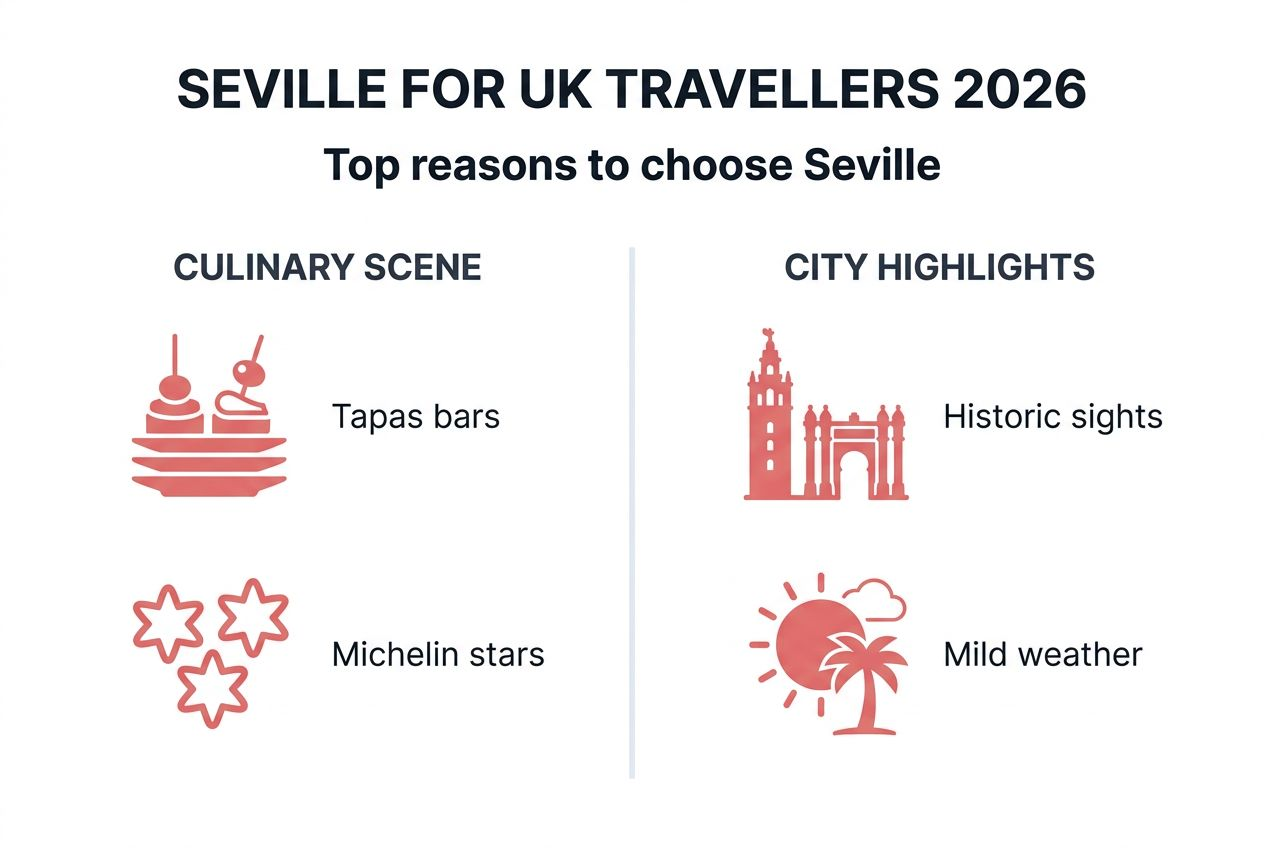
While most UK holidaymakers still flock to Madrid and Barcelona, a remarkable shift is underway. Seville has emerged as the premier Spanish destination for British travellers in 2026, driven by its unmatched culinary scene, rich cultural tapestry, and exceptional value. This Andalusian gem now rivals Europe’s established capitals by offering authentic experiences that blend centuries-old traditions with contemporary innovation, all wrapped in perfect spring weather and accessible prices.
Table of Contents
- Seville’s Evolving Culinary Scene: Tradition Meets Innovation
- Immersive Cultural And Historical Experiences Complement Food Tourism
- The Perfect Climate And Value Make Seville Irresistible For UK Travellers
- Luxury And Local Charm: Seville’s Unique Balance
- Discover Immersive Culinary Experiences With The Chef Tours
Key takeaways
| Point | Details |
|---|---|
| Culinary excellence | Seville blends traditional Andalusian taverns with innovative modern restaurants, creating unique food experiences. |
| Cultural immersion | Historic landmarks, Flamenco shows, and walkable streets enrich every culinary adventure. |
| Perfect timing | March temperatures averaging 21°C provide ideal conditions for outdoor dining and exploration. |
| Outstanding value | Accommodation and dining costs significantly undercut Madrid and Barcelona without compromising quality. |
| Luxury meets authenticity | High-end hotels coexist with vibrant local eateries, offering comfort alongside genuine cultural experiences. |
Seville’s evolving culinary scene: tradition meets innovation
Seville’s food landscape captivates visitors by honouring its past whilst embracing the future. New gastronomy spots coexist with centuries-old Andalusian taverns, creating a distinctive culinary identity that sets the city apart from Spain’s other major destinations.
Century-old establishments preserve traditional recipes passed down through generations. These timeless venues serve classic tapas prepared with techniques refined over decades, offering authentic tastes of Andalusian heritage. Yet the city’s gastronomic identity extends far beyond preservation.
A new generation of chefs transforms local ingredients using modern methods whilst respecting regional flavours. Notable newcomers reshape the dining landscape:
- Casa Orzáez brings contemporary twists to traditional Sevillian recipes
- Sr. Cangrejo specialises in innovative seafood preparations
- Leartá showcases seasonal Andalusian produce with creative presentations
- Barra Baja merges cocktail culture with inventive small plates
Established favourites like Cañabota, Jaylu, Casa Ruperto, and Yebra continue attracting both locals and international visitors. This coexistence creates a dynamic dining scene where you can savour centuries-old recipes at lunch and experimental cuisine at dinner. The diversity appeals to travellers seeking both authentic Sevillian culinary culture and cutting-edge gastronomy.
Pro Tip: Visit traditional taverns during lunch hours when locals gather for leisurely tapas, then explore modern establishments for evening dining to experience Seville’s full culinary spectrum.
This blend positions Seville uniquely amongst European food capitals. You gain access to genuine Andalusian traditions whilst discovering innovative interpretations that push culinary boundaries. For UK travellers seeking must-try Seville dishes, this variety ensures every meal becomes memorable.
Immersive cultural and historical experiences complement food tourism
Seville’s culinary appeal gains depth from its extraordinary cultural landscape. Rich cultural experiences with art, architecture, and cuisine create an immersive environment where every meal connects to centuries of history.

The city’s architectural treasures provide stunning backdrops for culinary adventures. The Cathedral, Europe’s largest Gothic structure, towers over winding streets lined with tapas bars. The Alcázar palace complex showcases Moorish design elements that influenced Andalusian cooking techniques. The Archivo de Indias preserves documents chronicling Spain’s culinary exchanges with the Americas.
Narrow cobbled lanes reveal hidden plazas where locals gather at outdoor tables. These atmospheric settings transform simple meals into cultural experiences. You dine surrounded by centuries-old buildings whilst absorbing the rhythms of Sevillian life.
Evening entertainment enhances the gastronomic journey:
- Traditional Flamenco performances in intimate venues capture Andalusian passion
- Vibrant nightlife extends dining into late hours, following Spanish customs
- Street festivals and cultural events celebrate local traditions throughout the year
- Live music venues blend contemporary and classical Spanish sounds
The city’s compact layout encourages spontaneous discoveries. Unlike sprawling metropolises requiring extensive transport, Seville’s walkable centre lets you stumble upon unexpected culinary gems. A post-dinner stroll might lead to a century-old pastry shop or a modern wine bar tucked behind a historic façade.
This accessibility makes Seville Spain’s most beautiful city for food lovers. You experience authentic Andalusian culture not as a spectator but as a participant, sharing spaces with residents who maintain traditions whilst welcoming curious visitors.
Every restaurant visit becomes richer when paired with cultural context. Understanding the Moorish influences on Sevillian spice use or the Atlantic trade routes that shaped local ingredients transforms meals into cultural food experiences that educate as they delight.
The perfect climate and value make Seville irresistible for UK travellers
Practical considerations cement Seville’s position as the top UK traveller destination in 2026. March temperatures averaging 21°C provide a welcome escape from Britain’s grey spring weather, creating perfect conditions for outdoor dining and exploration.
This pleasant climate transforms the culinary experience. You can enjoy leisurely lunches on sun-drenched terraces, explore food markets in comfort, and stroll between tapas bars without battling harsh weather. The mild temperatures encourage the relaxed pace essential to Sevillian dining culture.
Cost comparisons reveal remarkable value advantages:
| Category | Seville | Madrid | Barcelona |
|---|---|---|---|
| Mid-range hotel (per night) | £75-95 | £110-140 | £115-145 |
| Three-course dinner for two | £40-55 | £65-80 | £70-85 |
| Glass of local wine | £2.50-4 | £4.50-6 | £5-7 |
| Taxi from airport | £20-25 | £30-35 | £35-40 |
Money goes further in Seville compared to Spain’s larger cities, allowing you to upgrade experiences without inflating budgets. The savings enable additional culinary adventures, whether booking chef-led tours or sampling premium wines.
March’s lower tourist density creates additional benefits. Restaurants serve locals alongside visitors, maintaining authentic atmospheres rather than catering exclusively to tourists. You gain genuine experiences at often better prices than peak season rates.
The compact city layout reduces transport costs. Most culinary destinations sit within walking distance, eliminating expensive taxi rides or metro tickets. This walkability not only saves money but encourages spontaneous detours to discover hidden eateries.
Pro Tip: Book accommodation in Santa Cruz or El Arenal neighbourhoods to position yourself within walking distance of Seville’s best restaurants and historic sites, maximising both time and budget.
For UK travellers seeking outstanding value without compromising quality, Seville delivers exceptional returns. The combination of agreeable weather, affordable pricing, and authentic experiences makes it the smart choice for 2026 culinary holidays. Discover essential travel hacks to maximise your Seville adventure.
Luxury and local charm: Seville’s unique balance
Seville distinguishes itself through a rare equilibrium between upscale offerings and authentic local character. Seville is edging into Spain’s top tier of luxury city breaks whilst maintaining its genuine Andalusian atmosphere, a balance many established destinations struggle to achieve.
International luxury hotel brands have recognised Seville’s appeal, establishing elegant properties that cater to discerning travellers. High-end restaurants showcase innovative gastronomy alongside Michelin-starred establishments that interpret Andalusian cuisine through refined lenses. Expected to become Spain’s third most significant luxury destination, Seville offers sophistication without pretence.
Yet the city resists homogenisation. Vibrant street life continues uninterrupted by tourism growth:
- Family-run tapas bars serve generations-old recipes to neighbourhood regulars
- Local markets buzz with residents purchasing daily ingredients
- Traditional festivals maintain authentic celebrations rather than tourist spectacles
- Neighbourhood plazas remain genuine gathering spaces for Sevillians
This duality creates unique opportunities for UK travellers seeking both comfort and cultural immersion:
| Experience Type | Seville | Madrid | Barcelona |
|---|---|---|---|
| Luxury hotel density | Growing selectively | Highly concentrated | Highly concentrated |
| Authentic local eateries | Abundant throughout | Concentrated in specific areas | Often tourist-focused |
| Street life vibrancy | Strong local presence | Mixed tourist/local | Heavily tourist-oriented |
| Cultural authenticity | Preserved traditions | Modern metropolitan | International influence |
You can enjoy five-star amenities then step outside to discover genuine neighbourhood life. This proximity between luxury and authenticity proves difficult to find in larger European capitals, where upscale districts often feel isolated from local culture.
The balance appeals particularly to travellers wanting comfort without sacrificing immersive experiences. You retreat to elegant accommodations after days spent exploring authentic markets, traditional taverns, and local festivals. Seville delivers both worlds without forcing compromises.
Explore Seville food and wine tours that navigate this landscape expertly, connecting you with both high-end gastronomy and beloved local establishments that epitomise Andalusian character.
Discover immersive culinary experiences with The Chef Tours
Understanding why Seville captivates UK travellers is just the beginning. The Chef Tours transforms this knowledge into unforgettable culinary adventures through expertly guided experiences in Seville’s dynamic food scene. Led by Chef Crestani, our Seville tours reveal hidden restaurants, traditional markets, and authentic tapas bars that most visitors never discover.
We specialise in immersive culinary experiences that blend traditional Andalusian flavours with insider cultural insights. Our small-group tours connect you directly with local chefs, artisans, and producers who share their passion for Sevillian cuisine. You gain access to secret venues and exclusive tastings unavailable through standard tours.
Whether you’re planning a culinary vacation focused entirely on food or seeking to enrich a broader Seville visit, our Seville food and wine tours deliver authentic experiences tailored to curious UK travellers. Discover why Seville has become the premier destination by experiencing its culinary soul with expert guidance.
Frequently asked questions
Why is Seville considered the top destination for UK culinary travellers in 2026?
Seville combines an evolving culinary scene with perfect spring weather, exceptional value, and rich cultural heritage. The city balances traditional Andalusian taverns with innovative modern restaurants whilst offering better prices than Madrid or Barcelona. Its compact, walkable layout and authentic local atmosphere create ideal conditions for immersive food experiences.
When is the best time for UK travellers to visit Seville for food experiences?
March offers optimal conditions with average temperatures of 21°C, ideal for outdoor dining and market exploration. Spring also brings lower tourist numbers, ensuring authentic restaurant atmospheres and often better pricing. The mild weather allows comfortable walking between tapas bars and culinary destinations throughout the day.
What makes Seville’s culinary scene different from other Spanish cities?
Seville uniquely preserves centuries-old Andalusian cooking traditions whilst embracing contemporary gastronomy. You find family-run taverns serving traditional recipes alongside innovative restaurants using local produce with modern techniques. This coexistence creates dining diversity rare in European capitals, appealing to travellers seeking both authentic flavours and culinary innovation.
How does Seville maintain authenticity despite growing tourism?
The city’s strong local culture and vibrant neighbourhood life resist homogenisation. Residents continue frequenting traditional establishments, markets remain genuine provisioning centres, and festivals preserve authentic celebrations. Unlike heavily touristed areas in Barcelona or Madrid, Seville’s dining scene serves locals and visitors equally, maintaining cultural integrity.
What budget should UK travellers expect for a culinary-focused Seville trip?
Seville offers remarkable value with mid-range hotels from £75-95 per night and quality dinners for two around £40-55. Local wine costs £2.50-4 per glass, significantly less than other European capitals. The compact layout reduces transport costs, allowing budget reallocation towards enhanced culinary experiences like chef-led tours or premium tastings.
How do cultural experiences enhance Seville’s culinary appeal?
Historic architecture, Flamenco performances, and walkable streets create atmospheric contexts for dining. Meals gain depth when experienced alongside cultural landmarks and traditions that influenced Andalusian cuisine. The integration of art, history, and food transforms simple restaurant visits into immersive cultural experiences that educate whilst delighting.