

TL;DR:
- Choosing an authentic food tour requires verifying that a professional chef leads the experience and that the group size is small.
- Selecting a theme aligned with your interests enhances engagement and leaves you with meaningful culinary insights.
- Prioritizing safety, vendor vetting, and personalized conversations guarantees a memorable and trustworthy food exploration.
Booking a food tour sounds simple enough, yet the results can vary wildly. Some tours drop you at tourist-packed restaurants where the “local chef” is simply a rehearsed guide with a microphone. Others place you at a marble counter beside a genuine Parisian chef, slicing charcuterie and explaining why the neighbourhood butcher matters more than the Michelin star two streets away. That gap between expectation and reality is exactly why careful selection matters. If you want to truly taste a city, not just photograph it, you need to know precisely what to look for before you book.
Table of Contents
- What makes a food tour truly authentic?
- Comparing group and private food tours
- Safety, compliance, and food hygiene: what to check
- Aligning food tour themes with your interests
- What most people miss about choosing a food tour
- Ready to discover your perfect food tour?
- Frequently asked questions
Key Takeaways
| Point | Details |
|---|---|
| Ask about chef access | Direct interaction with a local chef defines truly authentic food tours. |
| Check for safety controls | Verify operator hygiene practices and compliance, especially when street food is involved. |
| Match tour to your needs | Choose tour type and theme based on dietary, cultural, and experiential priorities. |
| Small groups boost authenticity | Smaller tours make it easier to connect with chefs and enjoy tailored experiences. |
What makes a food tour truly authentic?
Authenticity is one of the most overused words in travel, yet in the context of food tours it has a very specific meaning. An authentic experience gives you access that you simply could not manufacture on your own: a market stall owner who saves the best seasonal produce for the guide, a restaurant table in a back room that does not appear on any booking app, or a chef who explains, in their own words, why a particular spice arrived in their city three centuries ago and never left.
The chef’s role is central to all of this. When a qualified, working chef leads your tour, the conversation is fundamentally different. They notice fermentation smells, comment on knife technique, and spot ingredients that no history-focused guide would even recognise. Exploring food culture with chefs rather than with generalist guides is arguably the single biggest indicator of a quality experience.
Tour size shapes the depth of that experience considerably. Large groups of twenty or more people tend to move quickly, stay near main streets, and rarely allow for spontaneous detours. A smaller group lets the chef slow down, answer personal questions, and occasionally improvise when something extraordinary appears at a market stall. Personalised food tours consistently receive higher satisfaction ratings precisely because they allow that kind of flexibility.
Key attributes that signal a truly authentic food tour:
- The lead is an active or former professional chef, not a generalist guide
- The group size is ten people or fewer
- The itinerary includes at least one venue not listed on mainstream travel platforms
- Cultural context is woven into every tasting, not added as an afterthought
- The operator is transparent about chef credentials and tour route
“Food tours are a strong first-trip ‘taste the city’ onboarding mechanism; theme alignment is recommended for a more personalised experience.”
Pro Tip: Before booking, email or call the operator and ask a direct question: “Will a professional chef be present throughout the entire tour?” If the answer is vague or redirects you to marketing language, keep looking.
Theme selection also plays a bigger role than most travellers realise. A wine-focused tour in Seville will attract a different crowd and follow a completely different rhythm than a tapas crawl through the same city. Choosing a theme that genuinely excites you means you arrive with relevant questions, engage more deeply with the chef, and leave with context that enriches the rest of your trip.
Comparing group and private food tours
Once you understand what authenticity looks like, the next practical decision is whether a group or private tour best fits your situation. Both formats have real advantages, and the right choice depends on your travel priorities, dietary needs, and how much flexibility you want.
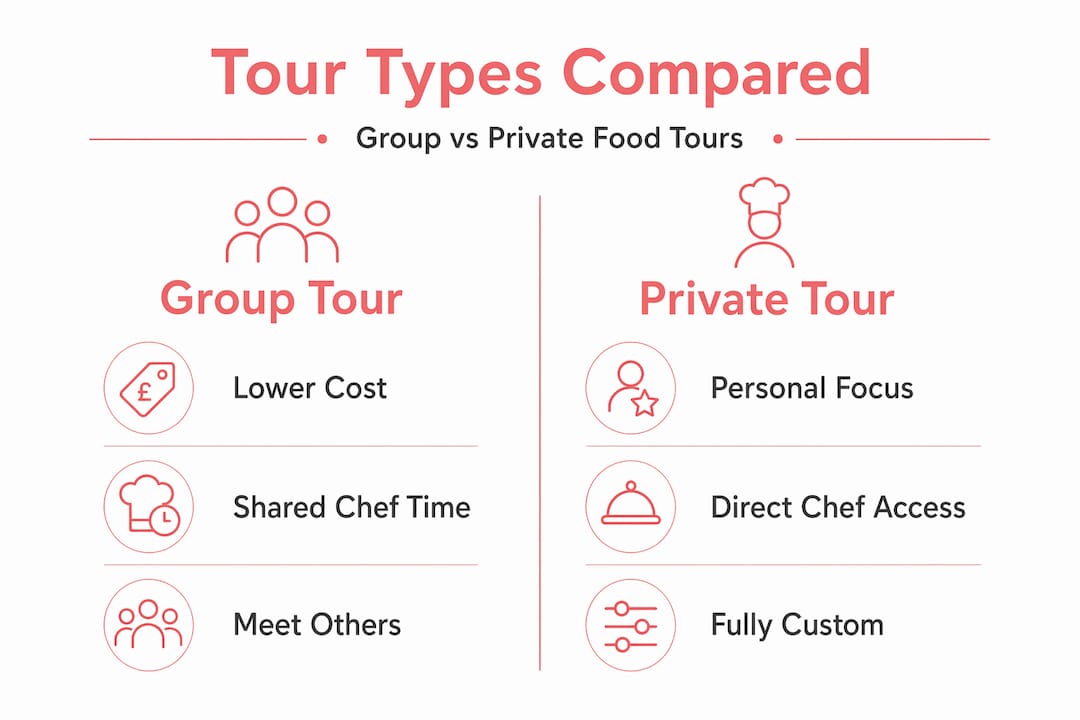
| Feature | Group tour | Private tour |
|---|---|---|
| Cost per person | Lower | Higher |
| Chef interaction | Shared with group | Dedicated to your party |
| Itinerary flexibility | Fixed | Fully customisable |
| Dietary accommodation | Limited | Comprehensive |
| Spontaneity | Low to moderate | High |
| Ideal group size | 4 to 10 | 1 to 6 |
Group tours work very well when you are travelling solo or as a couple and enjoy meeting other food lovers. They also tend to have set tasting menus and predictable timing, which suits travellers with busy itineraries. The social energy of a well-run group tour can actually enhance the experience, sparking conversations about food memories and cultural comparisons that you would not have alone.
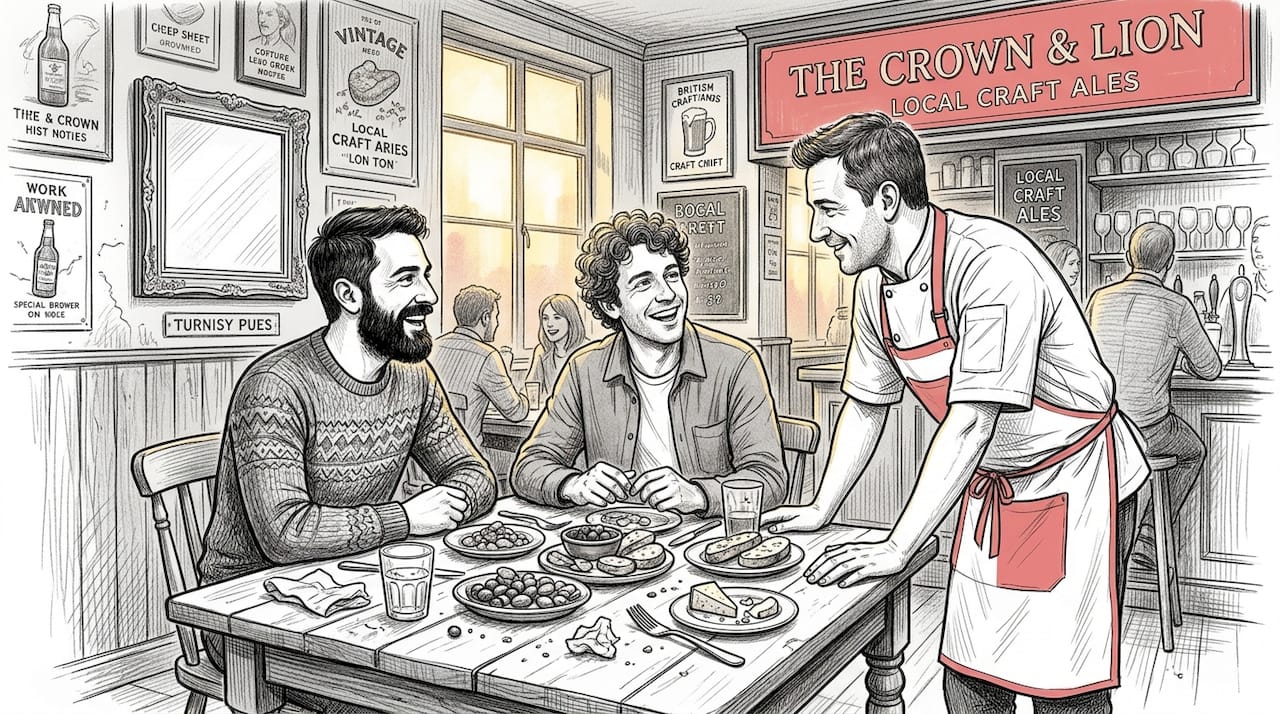
Private tours become essential in several specific circumstances. According to guidance on group versus private tours, private options are recommended for severe allergies, specialised menu planning, or when travellers require extra guidance. A nut allergy in a city where groundnut oil is a staple ingredient is not a minor inconvenience; it requires a chef who can personally vet every stop, speak to kitchen staff, and reroute the tour when necessary. The unique benefits of private food tours also extend to language, pace, and depth of storytelling.
How to assess which format suits you best:
- List your non-negotiables. These include dietary restrictions, mobility requirements, and any languages spoken.
- Define your goal. Are you seeking broad exposure to a city’s food scene, or deep knowledge of one cuisine?
- Set a realistic budget. Private tours in cities like Paris or Mexico City typically cost two to three times more than a comparable group experience.
- Check the small group food tours offered by your preferred operator and confirm how they define “small group.”
- Read recent reviews specifically from travellers who share your dietary or mobility requirements.
- Compare at least two operators using the how to compare food tours framework before committing.
Pro Tip: Always disclose dietary requirements and mobility considerations before booking, not on the day of the tour. A reputable chef-led operator will appreciate the notice and adjust the route accordingly. A less reputable one will reveal itself by treating your requirements as an inconvenience.
Safety, compliance, and food hygiene: what to check
Choosing your preferred tour style is only part of the decision. The safest tours are not always the most obvious ones, and food safety considerations become especially important when a tour includes street food, informal market vendors, or pop-up kitchens. These settings are often where the most extraordinary flavours live, but they also require extra scrutiny.
Research published as a street food safety field report confirms that safety and compliance should form part of your selection criteria when tours include street food or informal vendors. Specifically, operators should be able to speak to sanitation practices, temperature control, and the vetting process they use for each vendor on the route.
| Safety checkpoint | What to look for | Red flag |
|---|---|---|
| Hand hygiene | Handwashing stations or sanitiser available | No visible hygiene provision |
| Food temperature | Hot food served hot, cold food chilled | Lukewarm dishes at street stalls |
| Vendor vetting | Chef can explain why each vendor was chosen | “Everyone loves this place” with no further context |
| Allergen awareness | Clear labelling or verbal disclosure at each stop | Staff unsure of ingredients |
| Regulatory compliance | Vendor holds visible food licence or permit | No documentation or evasive answers |
Observable green lights are easy to spot once you know what to look for. A chef who pauses before each tasting to describe the ingredient source is demonstrating the kind of care that typically extends to food safety as well. Vendors who maintain clean counters, covered ingredients, and separate utensils for raw and cooked food are following the kind of basic protocols that matter enormously in warm climates.
When finding safe, local food tours in cities where you do not read the local language, look for operational signals rather than signage. A well-organised stall with a steady local clientele, a visible refrigerator, and gloved food handlers is often a stronger indicator of safety than a printed certificate in a language you cannot read.
Questions worth asking any food tour operator before you book:
- How do you vet the vendors and restaurants on your route?
- What is your protocol if a guest experiences a reaction or illness?
- Do your street food vendors hold current food hygiene licences?
- How frequently do you update the tour route to reflect changes in vendor standards?
Aligning food tour themes with your interests
Safety and format handled, the final dimension of choosing the right tour is matching the theme to what genuinely excites you about food. This sounds obvious, but many travellers default to the most popular or most reviewed tour in a city, rather than the one that speaks directly to their culinary passions.
Studies and top food experiences research consistently recommend selecting food tours that align with your theme and personal preferences, rather than chasing highest volume or lowest price. A traveller who is obsessed with natural wine will find a standard tapas tour underwhelming, even if the food is excellent. The same person on a wine-led tour through Seville’s oldest bodegas, guided by Chef Crestani who knows every producer personally, will almost certainly consider it a highlight of their travels.
Popular food tour themes by city:
- Paris: Fromage and charcuterie, classic bistro culture, patisserie and viennoiserie, market and producer visits
- Seville: Traditional tapas, sherry and wine pairings, historical Moorish food influences, olive oil tasting
- Berlin: Immigrant food influences, modern European small plates, craft beer and food pairings, street food diversity
- Mexico City: Ancient ingredient history, street taco technique, mole and complex sauce traditions, mezcal pairing
The theme also shapes what you remember. A tour built around food tour themes gives every tasting a narrative thread, which means you leave with a coherent story about a city’s food culture rather than a collection of disconnected flavours. Chef PJ’s tours in Paris, for example, consistently weave the history of a neighbourhood into each tasting, so that a single bite of a ripe Camembert carries the full context of a Norman dairy tradition.
Research into traveller preferences reveals that food tourists who select theme-specific experiences report significantly higher satisfaction than those who choose tours based solely on price or convenience. If you are planning a trip around food, exploring local cuisine through a themed lens is the most reliable way to ensure that the experience matches your expectations.
Starting with a thematic tour also improves the rest of your trip. When you understand why a particular ingredient or technique matters in a city, you recognise it again in restaurants, markets, and even supermarkets throughout your stay. The knowledge compounds.
What most people miss about choosing a food tour
Here is the perspective that most booking guides will not give you: the majority of travellers choose a food tour the same way they choose a hotel, by filtering for price and star rating. Both inputs are useful, but neither tells you whether the tour operator genuinely cares about your experience or is simply processing numbers through a schedule.
The real differentiator is almost always the quality of the conversation you have before you book. A truly exceptional operator, the kind who runs chef-led tours with genuine insider access, will ask you questions. They want to know your food background, your interest level, whether you have allergies, and what you are hoping to feel at the end of the tour. That curiosity is the same quality that makes a great chef. It signals that the experience is being built around you, not delivered to you.
Many travellers assume that any tour described as “chef-led” delivers genuine, direct interaction with a working chef throughout the full experience. That assumption is frequently wrong. Some tours use “chef-led” as a marketing label when in practice a guide handles 90% of the tour and the chef appears briefly at one venue. Ask specifically how much time you will spend directly with the chef and at how many stops they will be personally present.
Prioritising small groups and clear allergy handling from the outset helps avoid itineraries that optimise for convenience over personal needs. This is not a minor logistical detail; it is the foundation of whether the experience feels personal or transactional.
The most rewarding food tour memories almost always come from moments of genuine spontaneity, a vendor who offers an off-menu bite because the chef asked, a story about a grandmother’s recipe that explains an entire cuisine in one sentence. Those moments only happen when the guide is truly embedded in the food community, not reading from a script. The way to find that kind of tour is to ask the right questions, prioritise smaller groups, and choose operators who clearly love food at least as much as you do. Everything else follows from experiencing local cuisine through people who have genuinely dedicated their lives to it.
Ready to discover your perfect food tour?
Everything covered in this article points towards one practical conclusion: the best food experiences are the ones designed around you by people who know their city’s food culture from the inside out.
At The Chef’s Tours, our culinary experiences are led by working chefs with deep local roots. Chef PJ leads intimate tours through the streets and markets of Paris. Chef Crestani brings Seville’s tapas and sherry culture to life in ways no standard tour can replicate. Chef Karl Wilder covers both Berlin and Mexico City with the kind of insider knowledge that only comes from years of cooking professionally in each city. Whether you are looking for a small group experience or a fully private tour, explore our chef-led tours or get practical guidance on how to choose a tour that fits your exact interests and requirements.
Frequently asked questions
How do I check if a food tour can handle food allergies?
Ask the operator directly before booking and request specific details on how they accommodate allergies or special diets. Private tours are recommended for severe allergies, as they allow for fully customised menu planning.
What safety standards should a food tour follow?
Reputable operators should be able to explain sanitation practices, food handling procedures, and how they vet each vendor. Look specifically for sanitation and operational controls such as handwashing provisions and clear allergen disclosure at every stop.
Are small group tours always more authentic?
Small groups generally allow far more personalised interaction with the chef and greater flexibility in the itinerary. Prioritising small groups reduces the risk of tours that prioritise convenience over your individual experience, though guide quality and theme remain equally important factors.
How do I choose the best food tour for my interests?
Identify your culinary theme first, whether that is wine, pastry, historical food traditions, or street food technique, then select a tour that explicitly centres on that focus. Aligning tour themes with your personal interests is one of the strongest predictors of a memorable and satisfying experience.